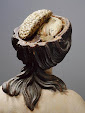
A wonderful photo of the death mask and gloves of Martin Luther.
Via Yoganga.


Cosmas and Damian were twin brothers who lived in Syria during the 200s CE. Under the influence of their devout mother, they embraced the Christian religion that was still outlawed by the Roman authorities. They were both physicians and, unlike colleagues, are said to have provided free treatment. Their growing fame brought them to the attention of the Roman consul, who ordered them to make a sacrifice to the gods. When they refused, they were executed.Via the Science Museum's unrivaled "Brought to Life" web exhibition.
Over 48 miracles were credited to the twins, including, amongst others, the development of remedies against plague, scabs, scurvy, kidney stones and bed-wetting. Their most famous miracle involved the alleged replacement of a diseased leg of a white patient with the leg of a recently deceased black man. This legend became increasingly popular from 1200 onwards, and contemporaries would have been in no doubt that it was a miraculous procedure. While amputation was a known, if extreme, procedure, there is no way that a limb from a corpse could have been successfully transplanted to an ailing donor, who then went on to live.
Cosmas and Damian are regarded as saints by the Roman Catholic, Eastern Orthodox and Coptic Christian churches. Roman Catholics consider them the patron saints of medicine and their skulls are venerated as holy relics in a shrine at a church in Madrid. Their saints’ day is 26 September.


...Observatory celebrates the eccentric and nurtures the curious; its oddities delight the eye as well as the mind.Thanks to Melissa Stern for loving Observatory--the arts/event space I run with 6 other people in the Gowanus neighborhood of Brooklyn, New York--enough to write a charming piece about it for this week's Time Out New York.

The Clay Animation of Jimmy PickerTo find out more about the "Oxberry Pegs Presents: Animators Are God?" series, and to see a full list of participants scheduled thus far, click here. If you would like to recommend a participant, or are interested in participating yourself, email gfnewland@gmail.com. You can get directions to Observatory--which is next door to the Morbid Anatomy Library--by clicking here. You can find out more about Observatory here, join our mailing list by clicking here, and join us on Facebook by clicking here.
Screening and conversation with Academy Award winning animator Jimmy Picker
Date: Saturday, May 29th, 2010
Time: 8:00 P.M. Admission: $5
Day one of the Oxberry Pegs Presents Series
This Saturday, May 29th, Oxberry Pegs presents the first night of our Animators are God? Series, featuring the clay animation of Jimmy Picker. Nestled in the bustling Flatbush neighborhood of Brooklyn, is Motion Picker Studios, where Jimmy Picker has been making hand-made films for nearly 30 years. He’s received several Academy award nominations along the way, and won the Oscar in 1983 for “Sundae in New York”, a musical animated short, with characters modeled on iconic New Yorkers, and staring a plasticine Ed Koch. Upon receiving the famed golden statuette, Picker remarked, “Now no one can say I’m a bum!” And how, Mr. Picker!
So, come to Observatory this Saturday and meet Jimmy Picker in person. Hear him talk about the art of clay animation, see his award winning shorts, and gawk as his lesser known cult-favorite clips, like those dancing hamburgers from the film Better Off Dead starring John Cusack. He will also screen his latest work, the “Age of Ignorance,” a clothing-optional creation story!


They all have to go as the federal government cleans out the National Wildlife Property Repository, a vast warehouse crammed with 1.5 million miscellaneous items containing bits of creatures great and small...Anyone who has lost a bird dome, a stuffed crow, or an anthropomorphic fox to U.S. Customs over the year take note: your chance to retrieve your lost merchandise--legally!--might have come!
Uncle Sam Wants You to Bid on This Fine Weasel Fur CoatYou can read the full article and see the full slide show--from which the above images, by Matt McClain, were drawn--by clicking here. The action house dealing in this merchandise--Lone Star Auctioneers--can be accessed by clicking here.
Confiscated Wildlife Goods Are Auctioned; Boon or Bane for Conservation?
By STEPHANIE SIMON
COMMERCE CITY, Colo.—Uncle Sam is having a clearance sale, and it's heavy on genuine cobra-skin boots.
Also, python boots. Ostrich boots. And stylish footwear made from lizard, eel and kangaroo.
They all have to go as the federal government cleans out the National Wildlife Property Repository, a vast warehouse crammed with 1.5 million miscellaneous items containing bits of creatures great and small.
All the goods in the warehouse, from the shaggy Cape buffalo head to the beribboned walrus penis, have been seized at ports of entry by agents of the U.S. Fish and Wildlife Service for violating laws regulating international trade in wildlife.
Warehouse supervisor Bernadette Atencio sends much of the contraband to schools, zoos and museums for exhibits. Ho-hum items that don't have much educational value are destroyed; she recently sent dozens of lizard-trim eyeglass cases to the incinerator. Ms. Atencio also disposes of all the medicinal potions that cross her desk—and the occasional bug-infested trophy leopard.
But she can never catch up. The Congressional Research Service pegs the illegal trade in wildlife products at more than $5 billion and perhaps as much as $20 billion a year world-wide. Nearly 200,000 items came into the warehouse last year, overwhelming Ms. Atencio's staff of four.
The solution? Clean house.
In a rolling online auction that started in February and will run through the summer, the Fish and Wildlife Service is selling off 300,000 items.
A dozen fur coats made from Siberian weasel sold for $4,450. A box of 270 acrylic key chains, each encasing "one small black salamander," went for $35. There are table lamps made of clam shells, drums covered with unspecified mammal skin, watches festooned with mother-of-pearl.
And a curious collection of clay dwarfs decorated with bits of python skin.
"What do you call those little figurines, the strange ones?" Ms. Atencio asked her colleague Doni Sprague.
Ms. Sprague had spent the afternoon sorting a jumble of new arrivals: 21 boxes of medicine containing dried sea horse; an antique sword inlaid with sea turtle shell; several bottles of foul-looking wine—purportedly good for treating arthritis—with pickled snakes coiled inside.
She looked up, casting about for a proper name for the figurines.
"They've got big hats," she said finally. "They're bizarre."
The auction disturbs some animal-rights activists who say an agency in the business of confiscating illegal goods shouldn't turn around and sell them because that only spurs demand. But Fish and Wildlife officials say they will use the money to preach conservation, and they've won some key backers.
The agency "needs more resources," said Crawford Allan, regulatory director of Traffic North America, a nonprofit organization dedicated to stopping the illegal wildlife trade. "Rather than burn these things and create excess carbon," Mr. Allan said, "it's fine to sell them."
By law, the government can't sell anything containing, or even suspected of containing, an endangered species. Ms. Atencio also holds back items she thinks are crass.
That includes a belt made from the spotted fur of a Margay, a South American jungle cat. The unlucky creature's head, stuffed and glassy-eyed, is still attached, whiskers and all. It serves as the buckle. "That's just wrong," Ms. Atencio says.
She feels the same about a handbag made from a whole toad—tanned and shellacked, with a zipper down its belly. And about a knickknack made from a crocodilian reptile known as a caiman, posed with a pipe in its mouth and an ashtray in its claws. Looking at it, Ms. Atencio winces. "This is so degrading," she says. "And it's a waste of the resource—just to sit on someone's end table."
Much of the merchandise seized by inspectors is more pedestrian: belts, coats, wallets, jewelry and footwear, including top name brands (though the agency can't vouch for their authenticity). Such items are typically legal to import to the U.S.—but only with the proper paperwork.
When documents are missing, the goods end up here, in a 22,000-square-foot warehouse outside Denver.
Last time the government sold off surplus from the repository, at a live auction in 1999, it raised $500,000 for wildlife conservation.
Ms. Atencio hopes to match that take with the online bidding, run by Lone Star Auctioneers. The Texas company focuses on surplus government property, selling everything from bulldozers to diamond rings to Elvis Presley collectible coins.
Fish and Wildlife items—all sold as is—are posted online in batches, several dozen a week.
Jeremy Reed, an insurance salesman in Spring, Texas, stumbled across the site while looking for used-car auctions. He was drawn to some snazzy ostrich boots. Starting bid: $225 for 19 pairs, none his size. Mr. Reed figured he could resell them to a friend who owns a Western-wear store.
"I'm kind of entrepreneurial," says Mr. Reed.
By the time he started bidding, the price was up to $325. He went to $375—then watched in dismay as four new bidders jumped in. A week later, the boots were sold for $825.
Mr. Reed was disappointed. "There are people with really deep pockets," he says. "That kind of ruins it for bargain shoppers like me."
It's perfectly legal to resell most items bought at auction, so many pop up on eBay as soon as they leave federal control.
That angers Ashley Byrne, a senior campaigner with the animal-rights group PETA.
Ms. Byrne argues that the sale just stimulates demand for weasel coats and python-trimmed figurines. Instead, she says, the agency should donate the merchandise to PETA. She has laid in quite a store of fake blood to splash on the shiny green snakeskin shoes and the weathered leather jackets trimmed with fox fur. She would like to put the bloodied goods on display anywhere she can, next to video monitors rolling footage of "animals being skinned alive or bludgeoned to death."
The juxtaposition will make would-be shoppers queasy, Ms. Byrne promises. "As opposed," she says, "to perpetuating the idea that it's OK to turn an animal into a keychain."

Hand-carved of hardwood; these chairs were apparently modeled after a rare 18th-century chair which sold for over $100,000 at a New York auction. By oral tradition, they were part of a set custom-ordered by actor Vincent Price. However, Price died before they were delivered. In any case, they make a wonderful conversation piece! Excellent condition. Each measures 54" x 24" x 24".Text from the Heritage Auction's description for the lot; text and image Via Anonymous Works.

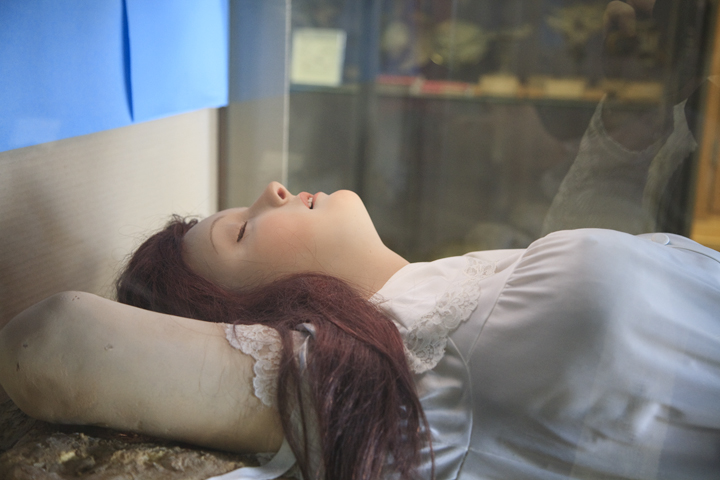
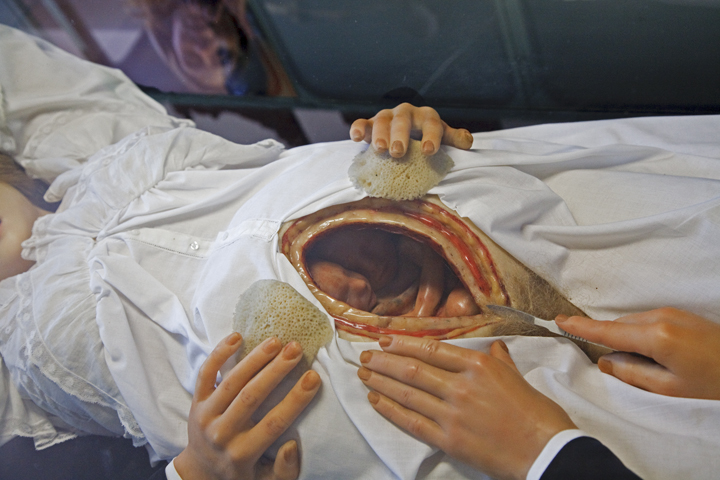
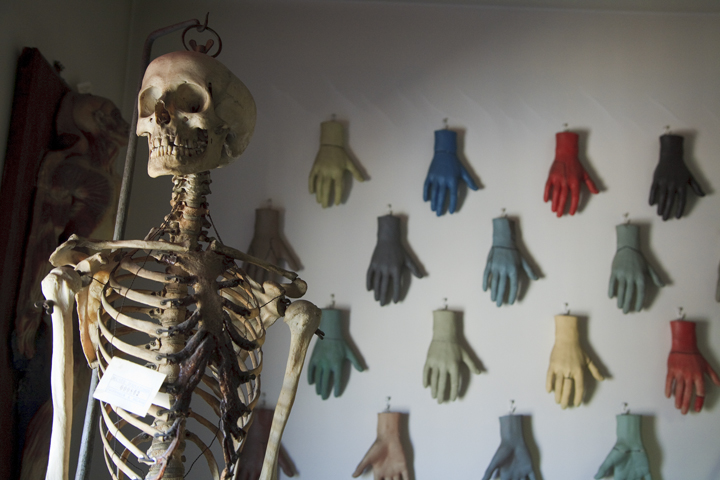
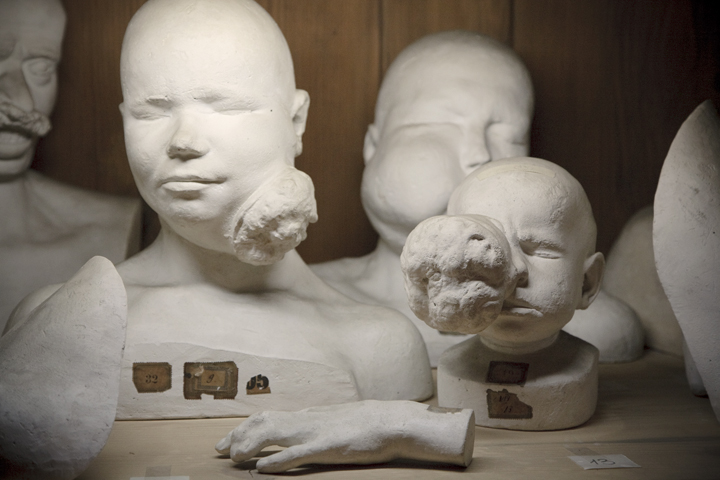
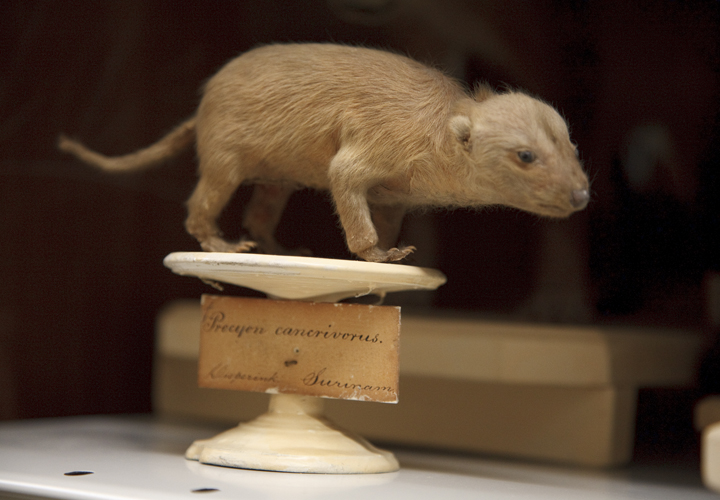
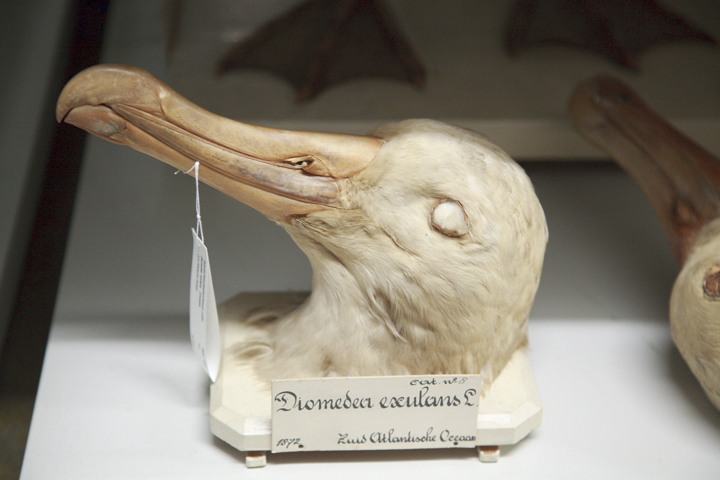
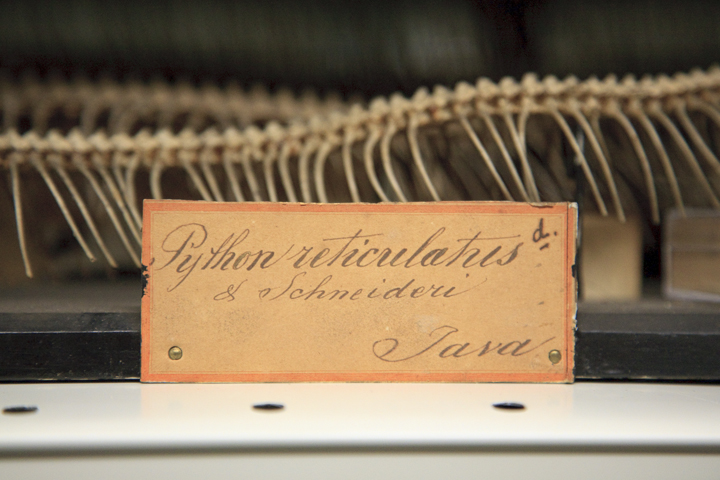


MANY DEAD THINGS – THE SPECIMENS OF ALEX CFTo find out more, visit the exhibition website by clicking here. To visit Suzanne's amazing Wurzeltod website, click here; to visit her equally if not more amazing Tumblr, click here.
27 May – 2 June 2010
Opening reception: 27 May, 6 – 9 PM | 28 May – 2 June, 12 – 6 PM daily
Superette Gallery
66A Sclater Street, Off Brick Lane
London, E1 6HR, United Kingdom
In his first solo exhibition, following the release of his monograph, artist Alex CF offers the public a unique opportunity to see his bizarre specimens in person – objects that have so far only been witnessed by private collectors, such as Maxime Chattam (author) or Reece Shearsmith (actor, League of Gentlemen) who wrote the foreword for his book, and will be lending pieces from his own collection for the show.
Alex has spent the last five years crafting wondrous relics of an alternate past – a rich tapestry of 19th century cryptozoological artifacts and creatures that challenge our understanding of the natural world: The mummified remains of a vampire child, the taxidermied corpse of a 7-foot-tall adult werewolf, the trappings of scientists and archaeologists pertaining to the study of these species in the form of antique research cases, amongst many other fascinating objects.
The show will encompass a number of works including 6 new pieces and Alex will be signing his book.
Alex’s work has been featured in a number of well-known publications both online and in print, such as Weird Tales, Bizarre, BoingBoing, and io9. His work has also been featured on book covers, and in a number of independent films.
Click here to download press release.


The Secret MuseumTo see the entire exhibition in a virtual, on-line fashion, click here. To find out more about Observatory, including directions, click here. For more about the Atlantic Avenue Artwalk, click here. For more about the Morbid Anatomy Library, click here. For more on Anatomical Theatre, an exhibition about medical museums, click here. For more about Private Cabinets, an exhibition about privately held collections, click here.
April 10 - June 6th
3-6 Thursday and Friday
12-6 Saturday and Sunday
An exhibition exploring the poetics of hidden, untouched and curious collections from around the world in photographs and artifacts, by Joanna Ebenstein, co-founder of Observatory and creator of Morbid Anatomy.
Photographer and blogger Joanna Ebenstein has traveled the Western world seeking and documenting untouched, hidden, and curious collections, from museum store-rooms to private collections, cabinets of curiosity to dusty natural history museums, obscure medical museums to hidden archives. The exhibition “The Secret Museum” will showcase a collection of photographs from Ebenstein’s explorations–including sites in The Netherlands, Italy, France, Austria, England and the United States–which document these spaces while at the same time investigating the psychology of collecting, the visual language of taxonomies, notions of “The Specimen” and the ordered archive, and the secret life of objects and collections, with an eye towards capturing the poetry, mystery and wonder of these liminal spaces.
To download press release, which includes sample images, please click here.


Starting in 1939, Nazi henchmen and art dealers bought and stole thousands of paintings, sculptures, tapestries and other objects from private collections across Europe, then stockpiled them. Hitler helped draw up architectural plans, which megomaniacally grew to include a theater and an opera house, a hotel, a library and parade grounds. Photographs show him, pencil in hand, pondering plans and gazing raptly on the model for the site...Just in time for International Museum Day (which was yesterday, actually!), a fascinating story in the New York Times which details the ill-fated story of Adolf Hitler's never-realized Führermuseum, an art gallery he planned to establish in his hometown of Linz, Austria.
It’s hard to overstate how seriously [Hitler] took the whole project. Art collecting obsessed him for years; his staff endured nightly soliloquies, Hitler droning on about art while Germany collapsed around him. He fussed even about how the rooms in the museum should be decorated.And goes on to comment:
The jury is out over whether the 'disproportionate amount of time and energy,' as the head of the Allied art-looting investigation unit put it after the war, that Hitler demanded go to amassing art, diverted German resources from the war effort, hastening its end, or the reverse — whether Hitler’s obsession with Linz, and with collecting generally, in some measure motivated him to press on.Full story follows; really fascinating stuff, and well worth a read!
Strange Trip for a Piece of Nazi PastYou can view the full article by clicking here, and see the related slide-show--from which the above image, captioned "Hitler at work on plans for his museum in Linz, Austria," was drawn-- by clicking here.
By MICHAEL KIMMELMAN
BERLIN — Robert Edsel, author of “The Monuments Men,” came to town the other day with a heavy album bound in green Moroccan leather. “Gemäldegalerie Linz XIII” was embossed on the spine. Inside were black-and-white photographs of mostly obscure 19th-century German paintings.
The album was one of the long-missing volumes cataloging the never-built Führermuseum in Linz, Austria, which Hitler envisioned someday rivaling Dresden and Munich. Starting in 1939, Nazi henchmen and art dealers bought and stole thousands of paintings, sculptures, tapestries and other objects from private collections across Europe, then stockpiled them. Hitler helped draw up architectural plans, which megomaniacally grew to include a theater and an opera house, a hotel, a library and parade grounds. Photographs show him, pencil in hand, pondering plans and gazing raptly on the model for the site.
“And so they are ever returning to us, the dead,” the German novelist W. G. Sebald wrote in “The Emigrants.” “At times they come back from the ice more than seven decades later and are found at the edge of the moraine, a few polished bones and a pair of hobnailed boots.” He was recalling a long-forgotten Alpine climber, whose remains a glacier in Switzerland suddenly released, 72 years after the man had gone missing.
But really Sebald was describing the past, which everywhere turns up unexpectedly, jolting us from our historical amnesia. A German publisher, Berliner Verlag, just released a book of photographs of postwar Berlin that had somehow languished in its archives. I know a man in Spain who has been accumulating long-forgotten photographs and other private relics from the war: a mesmerizing and mysterious stash of soldiers’ snapshots and letters, and documents scrawled with Hitler’s notes. The missing Linz album surfaced not long ago outside Cleveland, of all places. An 88-year-old veteran, John Pistone, who fought with Patton’s army, picked it up in 1945 while rummaging through the Berghof, Hitler’s retreat in the Bavarian Alps. Like other soldiers, he wanted a souvenir to prove he’d been there. He didn’t know, or particularly care, what the album was, and only learned its significance when a contractor installing a washer-dryer in his house noticed the volume on a shelf, hunted for information via the Internet, then called Mr. Edsel.
Mr. Edsel heads the Monuments Men Foundation for the Preservation of Art, an organization dedicated to preserving the legacy of the 350 or so Allied soldiers tasked with looking after cultural treasures in Europe. A 53-year-old, white-haired former oilman, Mr. Edsel isn’t the sort of person who takes no for an answer, and he persuaded Mr. Pistone to relinquish the volume to the German Historical Museum in Berlin , which has the other extant Linz albums. (This makes 20; 11 are still missing.)
Hitler was presented with the albums every Christmas and on his birthday. They featured reproductions of the latest art to go into the museum. The books were a virtual museum-in-waiting, a museum without walls. You imagine him cradling the bulky volumes, ogling bucolic scenes of a bygone German countryside now in ruins, imagining himself the next Medici.
It’s hard to overstate how seriously he took the whole project. Art collecting obsessed him for years; his staff endured nightly soliloquies, Hitler droning on about art while Germany collapsed around him. He fussed even about how the rooms in the museum should be decorated.
“I never bought the paintings that are in the collections that I built up over the years for my own benefit,” he took pains to write in his brief will, just before putting a pistol to his head, “but only for the establishment of a gallery in my hometown of Linz.”
A model of Linz had already been moved to the bunker in Berlin so it would be among the last things he saw.
Volume XIII, Mr. Pistone’s album, contains reproductions of 19th-century German and Austrian pictures, the art Hitler admired most. He may have bought some of these works with royalties from “Mein Kampf.” They’re mawkish idylls by painters largely obscure even to Germans and Austrians today. The best pictures are by Adolph von Menzel and Hans Makart, with whose early underappreciation Hitler perversely identified.
Time whitewashes evil, or not. Mr. Edsel expressed his opinion this week that more and more curios like Mr. Pistone’s album would surface now that the last surviving veterans are dying.
“Emotional value doesn’t transfer across generations,” is how he put it. “People don’t inherit passions.” One man’s private memento becomes another’s opportunity to sell something on eBay, notwithstanding that German and American authorities insist that artifacts like the Linz album are cultural property that shouldn’t be sold. Regardless, he meant that in the process of passing between generations, the object gains new life.
In a ceremony on Tuesday, Volume XIII was delivered to the German Historical Museum here, joining other Linz albums on display behind glass, like contaminated evidence. The jury is out over whether the “disproportionate amount of time and energy,” as the head of the Allied art-looting investigation unit put it after the war, that Hitler demanded go to amassing art, diverted German resources from the war effort, hastening its end, or the reverse — whether Hitler’s obsession with Linz, and with collecting generally, in some measure motivated him to press on.
Historians can thrash that out. Meanwhile, there are the 11 unaccounted-for albums. Presumably they’re still out there, like Sebald’s polished bones.


Morbid Magicians, Demented Doctors, and Sinister Swamis: The Golden Age of the American Spook ShowYou can find out more about this presentation here. You can get directions to Observatory--which is next door to the Morbid Anatomy Library (more on that here)--by clicking here. You can find out more about Observatory here, join our mailing list by clicking here, and join us on Facebook by clicking here. Click on image to see larger version.
An Illustrated lecture by Shane Morton of Atlanta’s Silver Scream Spook Show
Date: Monday, May 17
Time: 8:00 PM
Admission: $5
There was a time when morbid magicians, demented doctors, and sinister swamis ran wild over this country! Audiences packed in to witness live midnight performances of ghosts being conjured above their heads, raging gorillas grabbing women from their seats, and Frankenstein’s Monster stomping loose through darkened movie palaces! The 1930’s-50’s was the golden era of a now virtually lost performance art form. But what resonated with people then, remains powerful to us today. Find out all about the fascinating world of the great American spook show at tonight’s lecture, which will give your goose pimples goose pimples, and scare the yell out of you!
Shane Morton is an artist, performer and musician from Atlanta, Georgia. He runs the Silver Scream Spook Show, the only spook show to exist in over a generation. You can find out more about Morton and his work at http://wwww.silverscreamspookshow.com and http://www.myspace.com/silverscreamspookshow.

Private Eben Smith, Co. A, 11th Maine Volunteers. Wounded at Deep Bottom, Virginia by a conoidal ball, August 16, 1864. Primary amputation by Acting Assistant Surgeon J.C. Morton on September 14, 1864. Amputation at the hip was performed by Acting Assistant Surgeon John H. Packard on January 19, 1865. Illustration by Baumgras.Via Otis Archives, the epic Flickr collection of the National Museum of Health and Medicine, as reblogged by Turn of the Century blog. Click on the image to view larger, lovelier image.
This is one of a set of illustrations (our collection of Civil War Medical Illustrations) done during the Civil War by Army Medical Museum staff.
Selected by Kathleen
The Pennsylvania Medical Humanities ConsortiumTo register, please send an email to RLSoricelli@comcast.net no later than MAY14th midnight. Registration is mandatory for the symposium.
Through the Lens of Time: Perspectives on Medicine and Health Care
May 19 – 20, 2010
Events on Wednesday, May 19, 2010
2 – 4 p.m. Visit the Ars Medica Collection at the Philadelphia Museum of Art’s new Perelman Building (across from the Museum’s main building, corner of Pennsylvania and Fairmount Avenues); Hosted by Peter Barberie, PhD, The Brodsky Curator of Photographs [Note: This tour is now full!]
6:30 – 8:30 p.m. What Mark Twain Might Tell Us (And Ask Us) If He Could Join Us Tonight, K. Patrick Ober, MD, Professor of Internal Medicine and Associate Dean for Education, Wake Forest University School of Medicine, Winston-Salem, NC; author of Mark Twain and Medicine: Any Mummery Will Cure.
At the College of Physicians of Philadelphia, 19 South Twenty-Second Street (between Chestnut and Market Streets).
Wine-and-cheese reception to follow. This program is open to the public.
Events on Thursday, May 20, 2010
At The College of Physicians of Philadelphia, 19 South Twenty-Second Street
8 a.m. Breakfast – Mitchell Hall
8:30 a.m. Welcome
Rhonda L. Soricelli, MD – Chair, Program Committee
Paul C. Brucker, MD – President, College of Physicians of Philadelphia
Mary Ellen Glasgow, PhD, RN – Associate Dean, Drexel University College of Nursing & Health Professions
8:45–9:45 a.m. Opening Session – Mitchell Hall
The Medical/Healthcare Humanities: Where We Are; Where We’ve Been; Where We’re Going
Moderator: David H. Flood, PhD9:45–10:15 a.m. Discussion: Flood, Coulehan, Bressler, Garden and Önder
- Humanism Versus Humanities in Medicine: An Historical Perspective, Jack Coulehan, MD, MPH
- Medical Humanism/Professionalism Teaching in a Community Hospital Since WWII, Victor Bressler, MD
- Disability, Medicine, and Representation: Integrating Disability Studies into Medical, Education and Practice, Rebecca Garden, PhD
- American Missionary Health Care Projects in the late Ottoman Empire: Civilization, Hygiene, and Salvation, Sylvia Önder, PhD
10:15 – 10:30 a.m. Morning break – Mitchell Hall
10:30 – 11:30 a.m. Concurrent sessions
1. Cholera and Its Representations – Mitchell Hall
Moderator: Steven J. Peitzman, MD2. Impact of Illness and Disabilty – Gross Library
- Cholera, Commerce, and Contagion: Rediscovering Dr. Beck’s Report, Ashleigh R.Tuite, MHSc(c) and David N. Fisman, MD
- The Epidemic Behind the Veil: Cholera in Fiction, Film and History, Agnes A. Cardoni, PhD; Molly Bridger; Angel Fuller; and Casey Kelly
Moderator: Jennifer Patterson, DO(c)3. The Medical Environment – Koop Room
- Home Sweet Home: The Impact of Poliomyelitis on the American Family, Richard J. Altenbaugh, PhD
- Casualties of the Spirit: The Transatlantic Origins of Post Traumatic Neuroses, Susan Epting, PhD(c)
- Turning a Blind Eye to the Rehabilitation Act: Meaningful Access and the Dollar Bill, Kenji Saito, MD/JD 2010(c)
Moderator: Todd Vladyka, DO11:45 a.m. – Concurrent sessions
- The Anemic Narrative: Will the electronic health record reduce the patient narrative to a footnote?, Valerie Satkoske, MSW, PhD
- Gender Roles and the Changing Face of Medicine, Nina Singh, MD and Gabrielle Jones, PhD
- The Changing Public Image of the American Catholic Hospital, 1925 – Present, Barbra Mann Wall, PhD
12:45 p.m.
4. Exploring the Text – Koop Room
Moderator: Jack Truten, PhD5. Alternative Dimensions in Health Care – Gross Library
- Was Sherlock Holmes a Quack? Or, Why Arthur Conan Doyle’s Medical Stories Matter, Sylvia A. Pamboukian, PhD
- Reaching Back Through Time: Constructing Genealogies of the Not-Neurotypical in Illness, Narratives, Elizabeth A. Dolan, PhD
- Pathographies: Teaching Illness, Creating Theory, Karol Weaver, PhD and
- A Recovery Narrative, Jenny Traig’s Devils in the Details: Scenes from an Obsessive Girlhood, Sara Kern
Moderator: Steven Rosenzweig, MD6. On Stage and Screen – Mitchell Hall
- Cacao: From Ethnobotany to Translational Medicine, William J. Hurst, PhD
- Just Language: The Key to Bridging the Gap Between Physicians and Patients, Kathryn M. Ross, MBE, DMH(c)
- Historical Perspectives on Compensation in Human Subjects Research, Ilene Albala, JD/MBE(c)
Moderator: Joe Vander Veer, Jr., MD12:45 – 1:45 p.m. Lunch with Performance – Mitchell Hall
- Dramatizing the Local History of Medicine: An Early 21st Century Perspective on the Yellow Fever Epidemic of the Late 19th Century, Robert J. Bonk, PhD
- Television’s Images of Health Practitioners and/or Health Care Institutions Through the Ages, Rosemary Mazanet, MD, PhD and Joseph Turow, PhD
My doc’s better than your doc: Medical advertising’s rinse and spin and the lost voice of Arthur Godfrey, Richard Donze, DO, MPH
2:00 - 3:00 p.m. Concurrent sessions
7. Narratives of Illness, Aging and Grief – Koop Room
Moderator: Kimberly Myers, PhD8. The “Art” of Anatomy and Other Collections – Mitchell Hall
- Listening to the Stories of Patients, David Biro, MD, PhD
- MY FATHER’S HEART: A Son’s Reckoning With the Legacy of Heart Disease, Steve McKee
- Imagining Death: Contemporary Grief Narratives, Kate Dean-Haidet, RN, MSN, MA, PhD(c)
Moderator: Jan Goplerud, MD3:15 – 4:15 p.m. Closing Panel – Mitchell Hall
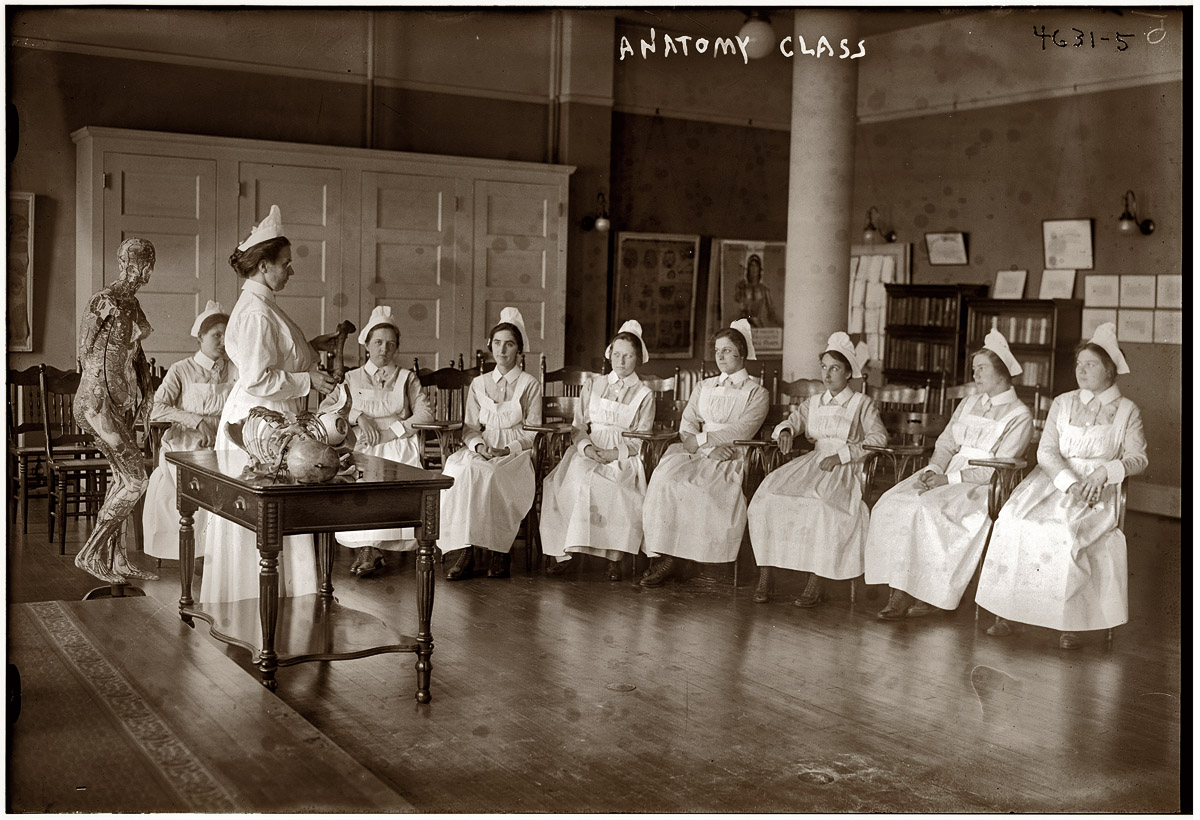
- Joseph Maclise and the Anatomical Arts Tradition, Rebecca E. May, PhD
- The Exquisite Cadaver and the Evolution of the Anatomic Theater, Sherrilyn M. Sethi, MMH(c), DMH(c)
- Constituting the Syphilitic Collector, Elizabeth Lee, PhD
Moderator: Rhonda L. Soricelli, MD
The Virtual and the Real: Medical History at the 21st Century Mutter Museum, Robert Hicks, PhD; Anna Dhody, MA and Karie Youngdahl, BA
4:20 – 5:00 p.m. Wrap-up; future plans for consortium
Program Committee: Andrew Berns, PhD(c), David H. Flood, PhD, Jan Goplerud, MD, Steven J. Peitzman, MD, Rhonda L. Soricelli, MD (Chair), Joseph Vander Veer, Jr., MD and Todd Vladyka, DO.
This meeting is made possible through the generous support of The College of Physicians of Philadelphia’s Francis C. Wood Institute for the History of Medicine and Sections on Medicine and the Arts and Medical History and Drexel University’s College of Nursing & Health Professions and College of Medicine with additional support from the Department of History and Sociology of Science, University of Pennsylvania

The Saddest Object in the WorldYou can find out more about this presentation here. You can get directions to Observatory--which is next door to the Morbid Anatomy Library (more on that here)--by clicking here. You can find out more about Observatory here, join our mailing list by clicking here, and join us on Facebook by clicking here.
An Illustrated Meditation by Evan Michelson, Obscura Antiques and Oddities, Morbid Anatomy Library Scholar in residence
Date: TONIGHT! Friday, May 7th
Time: 8:00 PM
Admission: $5
Location: Observatory
“The Saddest Object in the World” is a meditation on one particular artifact; an exercise in Proustian involuntary memory, aesthetic critique, and philosophical bargaining.
Sometimes objects have consequences.
Evan Michelson is an antiques dealer, lecturer, accumulator and aesthete; she tirelessly indulges a lifelong pursuit of all things obscure and melancholy. She currently lives in another place and time.