Showing posts with label cemetery. Show all posts

Wednesday, March 6, 2013

The Decorative Tomb Skulls of Tuscany : Pisa's Camposanto Monumentale


Above are a few decorative tomb skulls--and a corpse-themed tomb sculpture--that Evan and I encountered yesterday at Pisa's Camposanto Monumentale (Monumental Cemetery). Sadly, Buonamico Buffalmacco's magnificent fresco "The Three Dead and the Three Living and The Triumph of Death" (1338-39)--also housed by the Camposanto--was much damaged by allied bombing in 1944, though what remains is wonderfully evocative; you can see what remains and learn more about it by clicking here.

Monday, January 7, 2013

Eros and Thanatos at Milan's Cimetero Monumentale: "Dedizione: Don't Tell Anyone The Cause of my Death," Funerary Monument, Piero da Verona, 1914

On a recent trip to Italy with Evan Michelson--co-star of TV's "Oddities" and Morbid Anatomy Library scholar in residence--we paid an impromptu, jet-lagged visit to the wonderful Cimetero Monumentale in Milan. We were both struck by the over-the-top--and, for a cemetery, odd--sexiness of so many of its funeral monuments, particularly the one shown above. I was trying to get to the bottom of this peculiar phenomenon when I came across the following lengthy discussion of the very monument in the book Italian Memorial Sculpture 1820-1940: A Legacy of Love; As it is quite fascinating, I quote it here in its entirety here:
Milan has one of the most enigmatic of erotic monuments. Conceived by Piero da Verona ... for Maria Beruccinia in 1914, it is subtitled Dedizione and inscribed 'Non dire ad alcuno perché sona morta' ... Dedizione translates as "devotion' in English, but in Italian its earlier meaning was 'surrender' or 'submission' and, by extension, 'self sacrifice.' Our curiosity is further incited by the inscrutable inscription 'Don't tell anyone why I'm dead' or, more liberally, 'Don't tell anyone the cause of my death.' The particular kind of graceful femininity was preceded in the works of Canonica and of Domenico Trentacoste... Da Verona must also have been receptive to the sensuality of the 'Genoese Symbolist School"... while the pose may specifically reflect contemporary photography, ranging from artistic poses to soft pornography.... One's immediate reaction is to ask what on earth a sculpture like this is doing in a cemetery. Is there malice in its presence there or in the eye of the beholder?
Evan and I will be returning to Italy in mid-February to finish our project, so expect many more posts like this one. And please--if anyone knows of any must-see Italian Catholica or Anatomica that we should make sure to work into our itinerary, shoot me an email at morbidanatomy [at] gmail.com!

This book, and many other books like it, resides in The Morbid Anatomy Library. The library will be open to the public next Saturday from 2-6. Image is ©Joanna Ebenstein, 2012; click to see larger, more detailed version.

Sunday, May 29, 2011

"The Bones of Tenants Whose Burial Rental Was Not Renewed--Santa Cruz Cemetery, Manila," Stereograph, Circa 1899


Title: The bones of tenants whose burial rental was not renewed--Santa Cruz Cemetery, Manila
Creator(s): Strohmeyer & Wyman.,
Date Created/Published: New York : Strohmeyer & Wyman, publishers, c. 1899.
Medium: 1 photographic print on stereo card : stereograph.
Summary: Two men examine a skull from pile of exhumed skulls and bones in cemetery.
From the Library of Congress, Stereographic Card Collection; Via Defrag Tumblr.

Tuesday, November 16, 2010

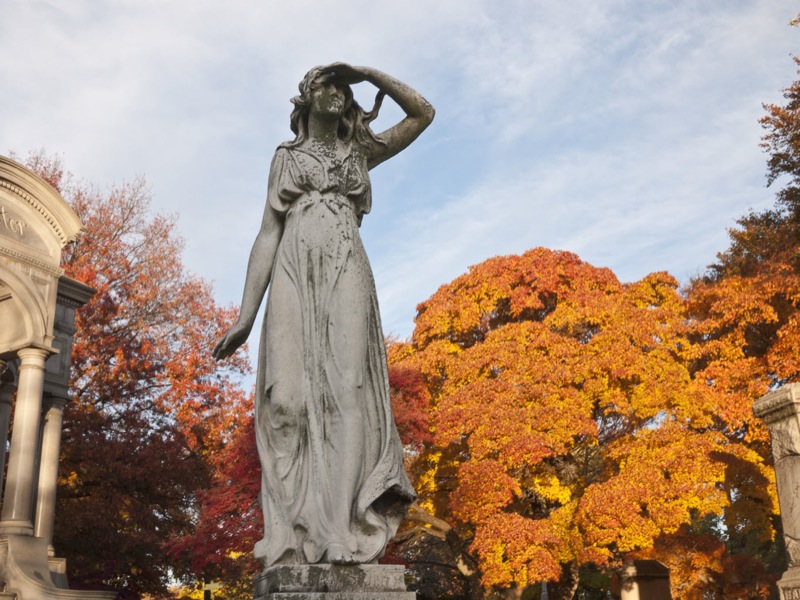
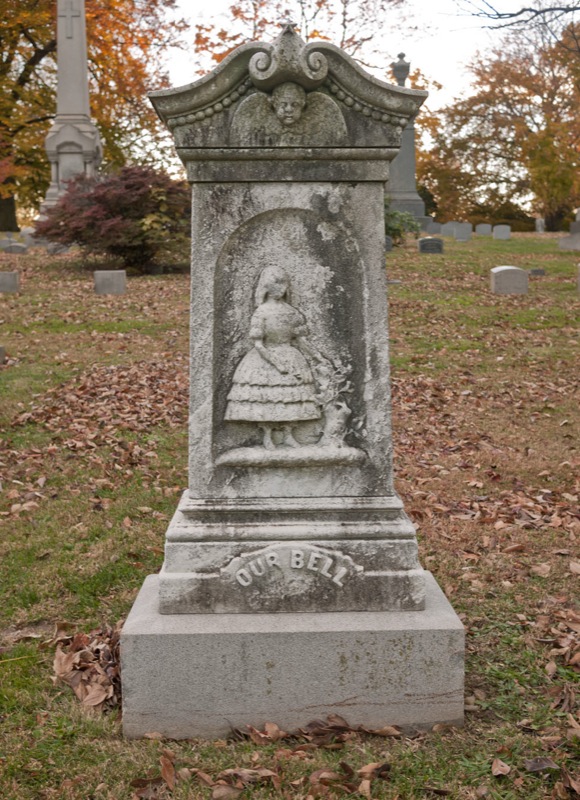
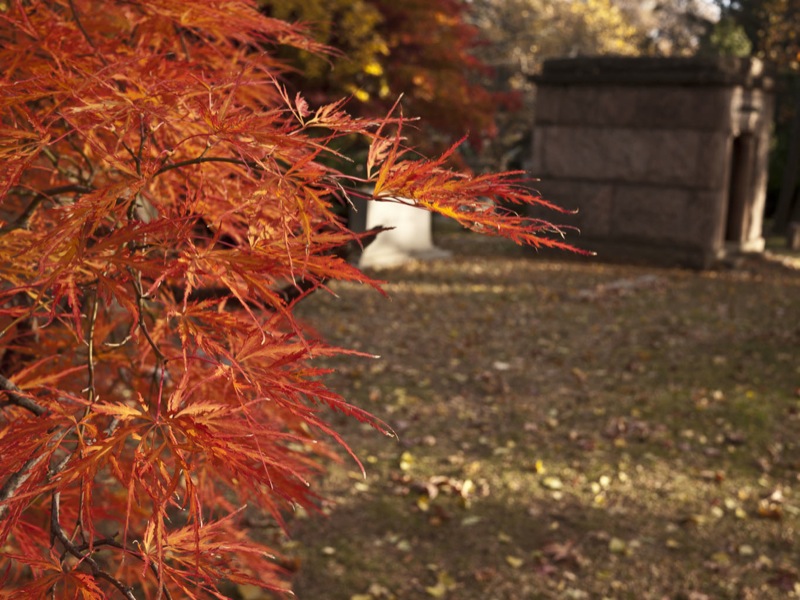
An Autumnal Interlude: The Inimitable Woodlawn Cemetery in the Bronx


We in New York have been enjoying the last unseasonably warm days of a spectacular autumn. In my opinion, there is simply no better place to enjoy the autumn colors in the area than in the "400 acres of rolling lawns, spectacular trees and impressive memorials" that comprise the epic Woodlawn Cemetery in The Bronx.

You can find out more about this fantastic cemetery--founded in 1863--by clicking here. You can see more photos--all of which I took on a visit my boyfriend and I made last Sunday--by clicking here, and can see larger version by clicking on the images.

Tuesday, August 11, 2009

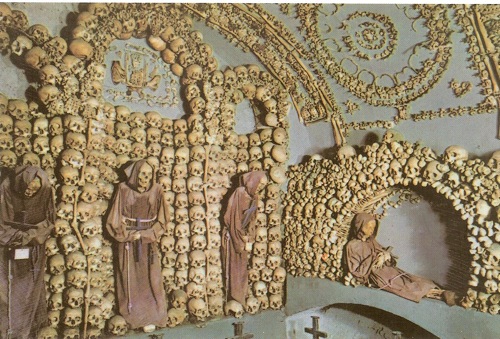
More Dery on Boing Boing, Crypt of the Capuchin Monks


Mark Dery has just uploaded his latest fascinating Boing Boing guest-post which examines and riffs on the crypt of the Capuchin monks in Rome. His post begins "In the dream life of 18th and 19th Europe, Italy and the Gothic were conjoined twins..." And trust me--it just gets better from there.

Click here to view the entire post. More on Dery's guest-blogging stint here .

Tuesday, May 19, 2009

St. Roch Cemetery and Chapel, New Orleans


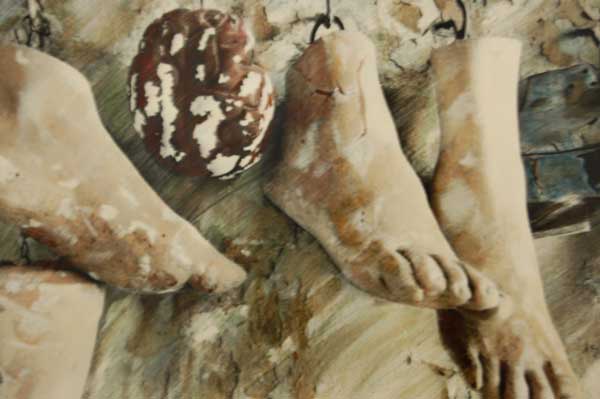
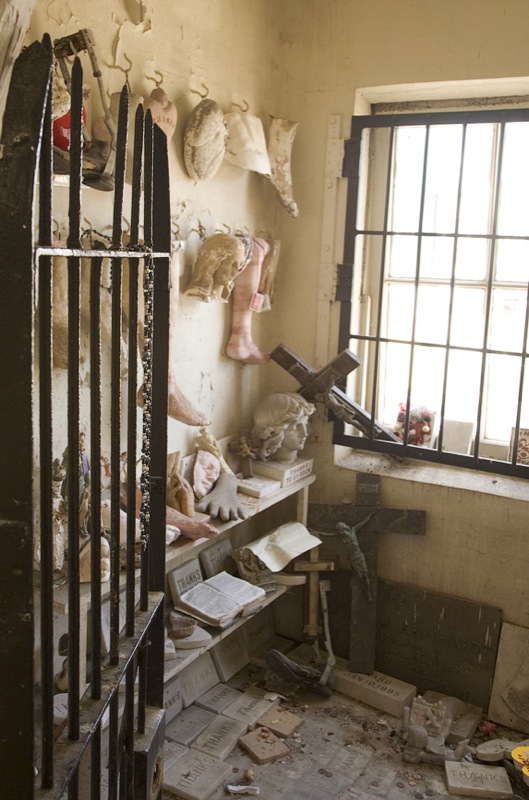
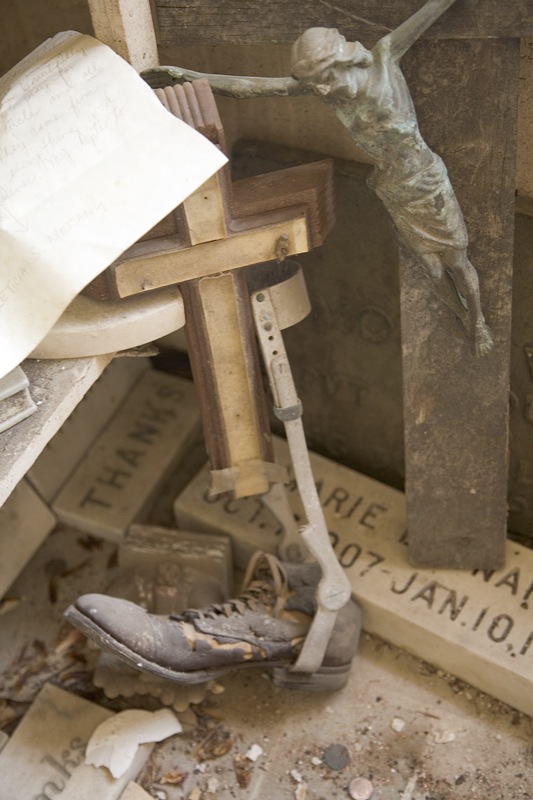
New Orleans is famous for its cemeteries. St. Louis Cemetery #1 and #2 are big tourist draws, and rightfully so; they are elegant and fascinating, veritable cities of the dead. But it was not until I saw the work of one of the artists in the Morbid Anatomy Cabinet show (Amie Davis' silver gelatin print; click here to see the work) that I learned about New Orleans' St. Roch Cemetery and its wonderful chapel (see above images).

The St. Roch chapel--located in a Gothic revival chapel in a lonely, stark cemetery--is hushed and poignant, filled with an unsettling rotting smell; the walls are covered with a lavish, decaying collection of cast-off prosthetics, anatomical-themed votives, and crutches, accented by casually draped rosaries; the floor is littered with dozens of cockroach carcasses, which lie among the pennies, candles, crucifixes, hand-scribbled notes, and "thank-you" bricks (see above).

The chapel feels more like a forgotten museum than a chapel persay, a missing link between the worlds of medicine and religion in their shared appeals to the gods of health, using surprisingly similar objects as supplicants; To get a sense of what I mean, check out the Wellcome Collection's "Medicine Man" exhibit--displaying extremely similar objects in a very different context--by clicking here.

The cemetery and chapel also have a wonderful genesis myth all their own; as the Greater New Orleans website explains:
At the height of the yellow fever epidemic of 1867, a German priest named Rev. Peter Leonard Thevis arrived in New Orleans. Faced with the severity of the yellow fever epidemic, he turned to God invoking the intercession of St. Roch, the patron of good health. He promised that if no one in his parish should die from the fever, he would erect a chapel in honor of the Saint. Amazingly, not one member of Holy Trinity died from yellow fever, either in the epidemic of 1867 or 1878.

In thanks, Rev. Thevis’s conviction was to build not only a chapel as a shrine to St. Roch, but also a mortuary chapel in a last resting place for members of his flock. The cemetery was called the Campo Santo (resting place of the dead). Rev. Thevis traveled to Europe to study the architecture and construction of many beautiful shrines and chapels before building the chapel. The chapel, completed in 1876, was considered a beautiful example of Gothic architecture.
People came to the shrine in large numbers to ask St. Roch for help in cases of affliction, disease and deformities. At one time, the celebration of All Saints Day attracted thousands of people to the Shrine seeking guidance and help for themselves and others in distress. A small room on the side of the chapel holds a number of offerings left by visitors to the chapel. The tradition was to leave accouterments of the illness or disability (including, in the past, eyeballs, crutches, and false limbs!) in gratitude for recovery.
Another New Orleans tradition related to St Roch that took place for many years is that on Good Friday young girls made a pilgrimage to St. Roch’s chapel because of a local legend, which promised a husband before the year was out to the maiden who said a prayer and left a small sum at each of nine churches. It was considered doubly lucky if St. Roch’s chapel was the end of the pilgrimage.
The neighborhood got its current name in 1867 with the dedication of the St. Roch shrine and cemetery. St. Roch Chapel and Cemetery are a very important part of the history of the St. Roch neighborhood. At the height of the yellow fever epidemic of 1867, a German priest named Rev. Peter Leonard Thevis arrived in New Orleans. Faced with the severity of the yellow fever epidemic, he turned to God invoking the intercession of St. Roch, the patron of good health.
To see the full collection of photographs of the cemetery and chapel, click here. Click here to read the full story.

Tuesday, July 29, 2008

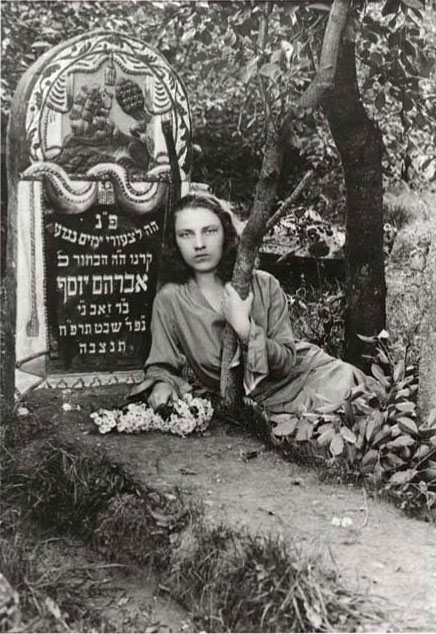
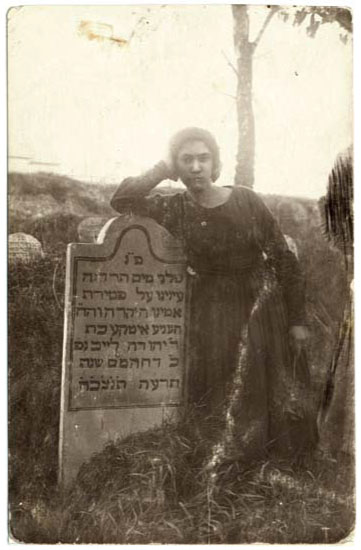
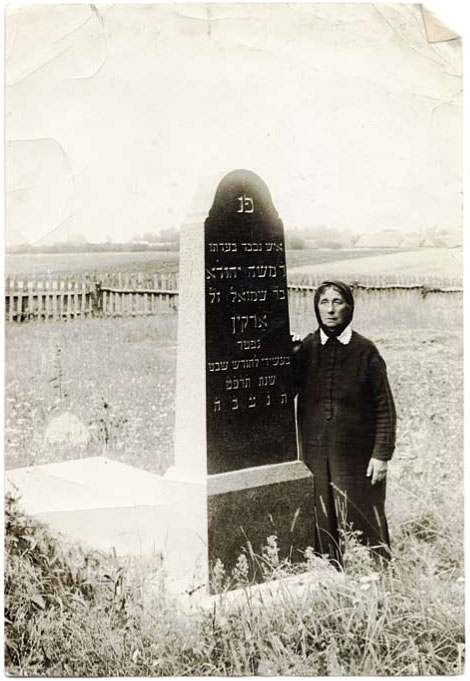
Graveside Portrait Photography, 20th Century


These images are drawn from an article entitled "Ghost World: A Selection of Graveside Portrait Photography from the YIVO archives" featured in Guilt and Pleasure Magazine's current Death Issue. You can read the whole article (and see all the images) here.