Showing posts with label collection. review. Show all posts

Wednesday, August 21, 2013

The Wonderful Museum of Witchcraft, Boscastle, Cornwall


A few days ago, I had the pleasure of visiting the Museum of Witchcraft in Boscastle, Cornwall. This fascinating and utterly charming museum was established by occult researcher, collector and practitioner Cecil Hugh Williamson (1909 - 1999); it is said to house the largest collection of witchcraft- and Wicca-related artifacts in the world.

Founder Cecil Williamson was a rather interesting character, somewhat in the school of idiosyncratic folklore collector Edward Lovett (1852-1933). He became interested in witchcraft as a small boy, when, as the story goes, he became friends with a local witch after coming to her aid against a group of thugs attacking her. Soon after, at boarding school, he met a "wise woman" who taught him some "simple yet effective" magic against the school bully, who then went on to break his leg in a skiing accident. Later, as a young man he traveled to Rhodesia to work on a tobacco plantation, where he met and studied the African Witchdoctors who he found to be using startlingly similar techniques to English "wayside witches" he knew so well from childhood.

In 1930, he returned to the UK and continued his studies--and presumably, collecting--of the occult, developing relationships with such experts as E. A. Wallis Budge of the British Museum, Egyptologist and anthropologist Margaret Murray, and historian Montague Summers. Soon after, he was recruited by the British Secret Intelligence Service (M I 6) to do undercover research on the occult interests of the leaders of the Nazi party, which led to the formation of his "Witchcraft Research Center." He went on to develop friendships with legendary occultist Aleister Crowley and Gerald Gardner, the founder of modern Wicca, who became "Witch in Residence" of the Museum of Witchcraft for some time until the two went their separate ways over differing visions for the museum's future (Sources 1, 2, 3, 4).

The Museum of Witchcraft was founded in 1951, the same year in which laws against the practice of witchcraft were finally repealed in Britain. It is a charmingly homespun and, at the same time, obsessively encyclopedic, intensely human and incredibly well researched museum. Located atop a ridiculously picturesque and windswept Cornish harbor, within you will find a mind boggling collection of artifacts, images, artworks and texts organized along such themes as "Depictions of Witches" (old hags, devil worshipers, mysterious beauties in paintings, advertisements and figurines); "Persecution" (a 17th century copy of King James I's Daemonologie, historical texts, torture instruments); "Divination" (black mirrors, tarot cards, crystal balls); "Amulets, Protection Magic and Charms" (bees in a bag, moles feet, protections from the evil eye); "The Devil and the Horned God" (the development of the Christian Devil from hooved and horned pagan gods); "Healing Magic" (herbs, potions, healing figures and wax poppets); "The Magic of Christianity" (exploring the irony that most of the people persecuted during the witch hunts were Christians utilizing sacred objects of Christianity in their spell such as holy wafers with special writings, votive offerings, and statues of the saints); and, the most fascinating--and somewhat chilling and surprising--"Curses or Natural Justice," with its many dolls, wax poppets and photos stuck through with pins; birds skulls in a nest; wax poppets in coffins; and a wax-entombed sparrow in a "sexy red shoe."

Museum captions throughout were fascinating, informative and accessible, and the whole was kind of a strange combination of homey and subversive. In short, this is one of my all time favorite museums, a truly idiosyncratic flowering of installation, scholarship, humanity and personal obsession. Truly an inspiration to aspiring museologists (like myself).

All photos above are my own; you can see a full set by clicking here and larger versions by clicking on them. You can find out more about the museum by clicking here. You can download a copy of the museum guide--which has much more information about the history adn exhibits--by clicking here.

Thanks so much to Mark Pilkington, Mike Jay and Chiara Ambrosio for so rightfully urging me to make the pilgrimage to this wonderful place.

Saturday, March 16, 2013

From 18th Century Private Natural History Cabinet to Early Museum: The Spallanzani Museum, Reggio Emilia, Italy; Guest Post by Alessandro Molinengo, Nautilus Shop, Modena

 
Friend Alessandro Molinengo, co-proprietor of the Modena's amazing Nautilus Antiques, brought Evan Michelson and I one rainy night to visit to Spallanzani Museum in Reggio Emilia, Italy. The origins of this museum stem from a "small collection of natural products" opened by priest, biologist and physiologist Lazzaro Spallanzani in his home in 1770; today, the collection--some still in their original cases!--is located in the Civic Museum of Reggio Emilia.

I asked Alessandro to write a guest post telling the readers of Morbid Anatomy more about this astounding collection, which had Evan and I literally gasping aloud as we turned each corner; All images are my own; you can see many many more by clicking here or here:
Lazzaro Spallanzani (10 January 1729 – 12 February 1799) was an Italian Catholic priest, biologist and physiologist who made important contributions to the experimental study of bodily functions, animal reproduction, and essentially animal echolocation. His research of biogenesis paved the way for the investigations of Louis Pasteur. 
Since 1771 he had managed to create a Museum of Natural History in Pavia, which over the years acquired a great reputation, even internationally, and was even visited by the Emperor Joseph II of Austria. 
In 1785, while on a trip to Constantinople and the Balkans, he was accused by the custodian of the Museum of Pavia (instigated by some colleagues) of stealing artifacts from the museum: the story ended after one year with the demonstration of the complete innocence of Spallanzani and punishment of slanderers. 
His indefatigable exertions as a traveler, his skill and good fortune as a collector, his brilliance as a teacher and expositor, and his keenness as a conversationalist no doubt aided largely in accounting for Spallanzani's exceptional fame among his contemporaries; his letters account for his close relationships with many famed scholars and philosophers, like Buffon, Lavoisier, and Voltaire. 
His life was one of incessant eager questioning of nature on all sides, and his many and varied works all bear the stamp of a fresh and original genius, capable of stating and solving problems in all departments of science. 
He died from bladder cancer on 12 February 1799, in Pavia. After his death, his bladder was removed for study by his colleagues, after which it was placed on public display in a museum in Pavia, where it remains to this day. 
Since 1770, Lazzaro Spallanzani set up in the rooms of his home in Scandiano a "small collection of natural products,"which today is located in the Civic Museums of Reggio Emilia. 
It’s a rare and precious document in the history of collecting naturalistic ranked according to scientific knowledge at the end of the eighteenth century. It includes zoological, with particular reference to marine life, paleontological, mineralogical, lithological and botanical gardens, as well as decorative objects, such as pictures, tables and ornaments, testifying, in its diversity, the variety of interests of the scientist. The materials are the result of purchases, exchanges and collections made during the many trips Spallanzani during the summer months, to conduct scientific experiments, and to procure materials for the Museum of Natural History of the University of Pavia.
Purchased by the Municipality of Reggio Emilia in 1799, at the death of scientist, collection has been preserved in its original consistency, finding final location in the Palazzo of St. Francis from the 1830. The current layout of the exhibition is related to the reorganization of collections in 1883 by Alfredo Jona, displayed in several cabinets, some of which are original furnishings of the Spallanzani’s house, following the Linnaean system in use in the late eighteenth century.
You can find out more about the by the Spallanzani Museum of Reggio Emilia by clicking here. All images are my own (click on image to see larger versions); you can see many more by clicking here or here. You can find out more about the Nautilus Shop by clicking here, and can "like" the shop on Facebook by clicking here. The shop is open on Saturdays from 3 until 7 PM or by appointment, and is located at via Cesare Battisti 60 in Modena, Italy.

Tuesday, December 28, 2010

"The Keeper of Curiosities" Royal Ontario Museum in the Wall Street Journal


A nice appreciation of the cabinet of curiosity approach to contemporary museum curation in today's Wall Street Journal:
At the [Royal Ontario Museum, aka ROM ], objects taken from its separate collections (fine and decorative arts, history, textiles, archaeology, geology, mineralogy, paleontology and zoology) are often mixed and matched in highly interdisciplinary displays to create a narrative not often seen in the more specialized museums that we are used to. For example, English dresses and slippers from the late 18th and early 19th centuries are displayed next to African and Asian clothing of the same era, alongside printing blocks and a wall-text description of berries used to produce dyes, because one of the points being made is how colors and patterns were dyed or printed onto these fabrics. Comparisons are being drawn about widely divergent cultures and industrial practices.

"In so many museums, curators are telling the story of the objects on display—why this is in the collection, why that is an important piece—while we're trying to use the objects in our collections to tell a story about how people go about their lives here and elsewhere around the world, and often about the intersection of the natural and cultural worlds," she said.
Here's another example: A display contains ceramic vases, silver, clocks, weathervanes and furniture from the 18th century, across from painted portraits of men, women and children who lived in Canada back then. None of the individual objects have their own labels, and only some wall text describes life in that time. Who were those people in the portraits? Who painted them? Where were those chairs and vases made? Did those people own that silver? Presumably, the curators know and aren't telling us. At the ROM, the point isn't so much the individual objects as creating a big-picture view of life at a certain time and place. "We encourage visitors to make connections in their own minds," Ms. Carding said...

The ROM is in some ways a throwback. Before people traveled so much or had such wide access to books and photographs (in short, an education), 18th- and 19th-century museums were cabinets of curiosities that provided a world of collected knowledge, a walk-in encyclopedia of objects both natural and man-made, practical and artistic. It is rare to find this type of institution anymore; museums now are more and more specialized...

Like the original cabinets of curiosities, there is a little something for everyone, but not so much as to bore people. Known as the "Stair of Wonders," the landings between floors have their own miniature displays—seashells or insects or battalions of metal toy soldiers—to perk up interest when it may be flagging. There's also a life-size, walk-through diorama of the St. Clair Cave in Jamaica, with its plaster-cast hanging bats, insects and stalagmites (based on ROM scientists' work at the site). "People here talk about their old favorites; so many people just love the bat cave," Ms. Carding said.
You can read the full article--from which the excerpt is drawn--by clicking here.

Image via Ddrees Art.

Wednesday, September 1, 2010

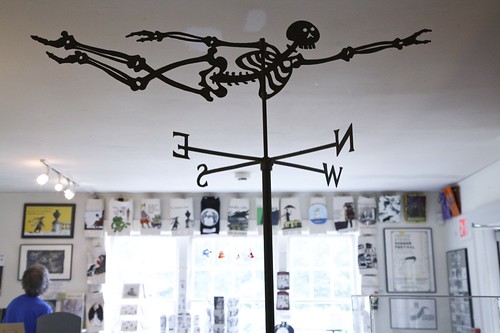
The Edward Gorey House Museum, Yarmouth Port, Massachusetts


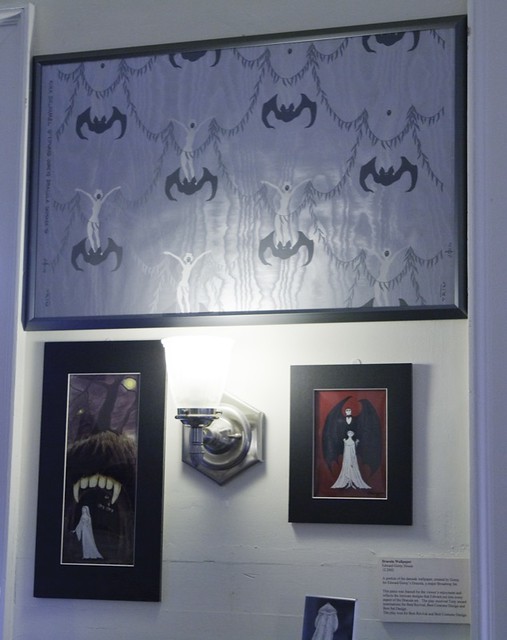
My boyfriend and I finally made a much-anticiated pilgrimage to the wonderful Edward Gorey Museum in Yarmouth Port, Massachusetts a few weeks ago. We were far from disappointed by what we found!

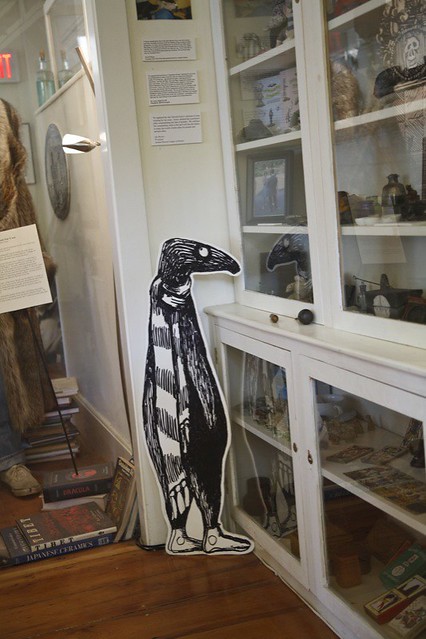
The museum (see photos above) is located in the home of the recently deceased author/illustrator/eccentric Edward Gorey. The home has, sadly, largely been cleared of Gorey's legendary clutter--though a few tantalizing fragments from his private collection can be found scattered about--and transformed into a compact house-museum dedicated to the man's life and work.

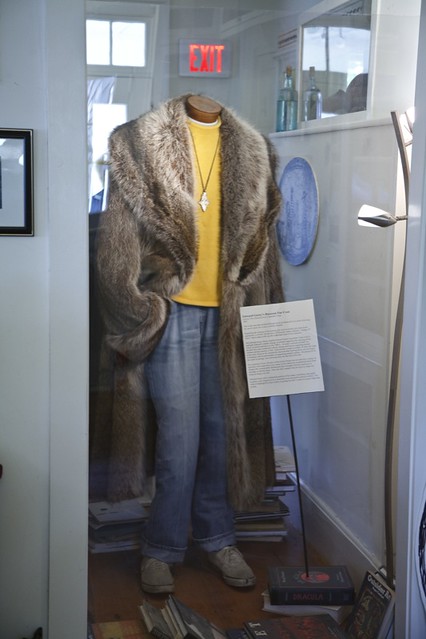
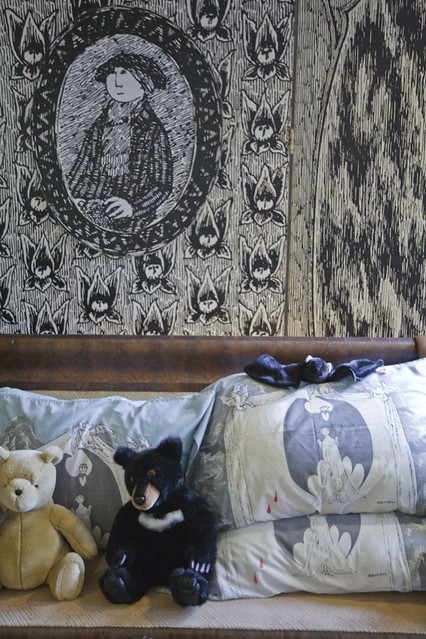
Part of me wishes they had simply left the place as it was at Gorey's death, and allowed visitors the opportunity to wander around the famously idiosyncratic environment in which the man produced so many of his iconic works. However, I was quickly won over by the museum's small-town- quirky charm, and the pretty great displays, which included original drawings and half-finished inked works, reproductions of his sketchbooks, amazing ephemera and souvenirs from Mystery and his Broadway production of Dracula, one of his raccoon fur coats, many of his Doubleday book covers, a number of his handmade stuffed animals, many coveted rare works such as his fantastic peepshow, and scores of other artifacts. The gift-shop was also seriously incredible--with scores of Gorey-themed souvenirs I had never seen before--and the folks running the museum were lovely to talk to, knowledgeable and passionately devoted to the man and his work.

In all, the museum really managed to capture the atmosphere and spirit of Edward Gorey's peculiar and alluring universe, with all its whimsy, quirkiness, and elegance; one gets the feeling that Edward Gorey himself might almost have approved, if he had been capable of approving of any museum devoted to his own life and work.

If you are a fan of Mr. Gorey, I cannot more highly recommend making a pilgrimage of your own to the Edward Gorey House Museum. You can find out more about it--including hours and directions--by clicking here; you can visit their awesome gift shop by clicking here. If you would like to make a virtual visit, you can view the full set of photos documenting my own trip--from which the sample above is drawn--by clicking here.

Tuesday, May 4, 2010

Kabinett des Grotesken ("Cabinet of the Grotesque"), Berliner Medizinhistorisches Museum der Charité, Spiegel Online


My friend, German journalist Michael Kneissler, just sent me a link to an article and an amazing short film celebrating the world famous Berliner Medizinhistorisches Museum der Charité on its 300th birthday, prompted by a new exhibition at the museum entitled "Charité--300 years of medicine in Berlin."

Following is an excerpt from the article--found on Spiegel Online and entitled "Kabinett des Grotesken" ("Cabinet of the Grotesque")--via a sloppy Google Translation:
Human malformations, surgical instruments, the Dildo-box of a sex researcher: The Collection of the Berlin Charité shows the dazzling variety of medical research. To mark its 300th anniversary Clinic presents highlights from the world famous now its archive.

Hands upset, steal: impossible. In the showcases the treasures of the Lord Virchow are safe. Very safe. And yet the guards sneak past every now and again. Ready to intervene immediately. They know that the temptation is to press for the issue "Charité - 300 Years of Medicine in Berlin" on the trigger...

Brains, livers, lungs, testes, ovaries removed - from the different and peaceful perished miserably, preserved in jars for viewing, Educate and quenching. An exhibition of the Interior, without taboos. Even human fetuses are also included. One with legs fused together, one with eyes grown together in the middle of the forehead. A Cyclops. Unreal and yet real.

Virchow himself called this collection - eagerly gathered for medical students and the public in order to warn of an unhealthy lifestyle - his "favorite child", for some visitors to the house if these preparations now the favorite image design: "Krass," it escapes some...
This dazzling looking exhibition is on view at the Berlin-based Medizinhistorisches Museum der Charité until February 2011; very much hope to see it before it comes down!

You can read the whole article and watch the wonderful video walk-through on the same page (just click the play button!) by clicking here. You can find out more about the museum in English by clicking here. Image above is drawn from the video.

Thanks so much to Michael Kneissler for sending this along!

Friday, January 29, 2010

"The Museum of Criminal Anthropology Cesare Lombroso"


Alessandro Molinengo--purveyor of Nautilus Scientific Antiques and Old Oddities of Turin, Italy (my favorite shop I've not yet been to!)--just emailed me about the newly re-opened "Museum of Criminal Anthropology Cesare Lombroso" at the University of Turin. Following is more about this amazing sounding museum, originally established in 1876 by infamous criminologist and physiognomist Cesare Lombroso, from the Nautilus website:
The Museum of Criminal Anthropology, dedicated to Cesare Lombroso, has reopened after years of restoration and access to specialist researchers only. The institution was founded by Lombroso in 1898 under the name "the Museum of Psychiatry and Criminology," documenting his beliefs and research into detecting criminality through physiognomy.

The 400 skulls in his collection, including one belonging to the brigand Giuseppe Villella, were used by Lombroso to develop his theory of the "median occipital fossa," a cranial anomaly that he believed contributed to deviant behavior.

On show are drawings, photos, criminal evidence, anatomical sections of "madmen and criminals" and work produced by criminals in the last century. The exhibits also include the Gallows of Turin, which were in use until the city's final hanging in 1865 and the possessions of a man known as White Stag, a renowned impostor who convinced Europe he was a great Native American chief. "But it is not a museum of horrors," insisted Giacomo Giacobini, coordinator of the "Museum of Man" project that the Lombroso collection will be part of. Rather, the museum is intended to recall positivistic era in science, in which Turin played a key role, starting with Cesare Lombroso's work.

The creation of the museum collections involved extensive interdisciplinary research by Lombroso in the fields of criminology, anatomy, psychiatry,psychology, sociology, ethnology, anthropology, linguistics, law, fine arts and medicine.

Lombroso's own head is also on display, a century down the line, perfectly preserved in a glass chamber.
Yet another reason to return to Italy! I hope very much to have the opportunity to visit this museum sooner rather than later, and the fabulous looking Nautilus Antiques as well!

All above images are drawn from the Nautilus Antiques write-up of the museum; to see many more images, and to learn much more about the museum, you can visit this original post by clicking here. You can visit the official "Museum of Criminal Anthropology Cesare Lombroso" website, and take a virtual tour of some of the artifacts, by clicking here. To check out the incredible Nautilus website (and see why I love it so!), click here. To find out more about Cesare Lombroso, click here. To read an earlier related Morbid Anatomy post, click here.

Friday, October 9, 2009

The London Hunterian Museum Rated "Museum of the Month"


Congratulations, Hunterian Museum, for so deservedly being rated "Museum of the Month" by The Londonist last month! Its really nice to see a medical museum being singled out for its excellence by a mainstream publication.

You can read the review, and see more images, by clicking here. You can visit the Hunterian's website by clicking here. Thanks to Phoebe of the Wellcome Library for drawing this to my attention.

Sunday, August 9, 2009

Wellcome Library: 16th C. Anatomical Fugitive Sheets, With Animations Demonstrating Functionality


The amazing Wellcome Library (which I finally had the opportunity to visit this trip to London; more on that soon) has just made their collection of 16th Century anatomical fugitive sheets available on the web. Best of all, the online versions mimic the functionality of the originals; still images are available of the prints at each level of "dissection" (as seen above); you can also watch the prints self-dissect in short, time-lapse films, demonstrating the raising and and lowering of flaps with nary a human hand in sight.

More on anatomical fugitive sheets and their history, in the words of the Wellome Libary Blog:
[Anatomical Fugitive Sheets] depict the human body through labelled illustrations, often using a three-dimensional 'pop-up' device of superimposed flaps, which can be raised in sequence to display the internal anatomy of the male or female figure. The fugitive sheet thus mimics the act of dissection. They were a popular instructional aid in the 16th century and many were produced in vernacular languages which could be read by a lay audience interested in the workings of the human body.
To read the full original post and learn more about anatomical fugitive sheets, click here. You can watch the videos by clicking here. You can view the still images by clicking here and typing in "anatomical fugitive sheet."

Image, from Wellcome Images:
L0017547 Credit: Wellcome Library, London
Anatomical fugitive sheet; female.
Hand-coloured woodcut, Anatomie tresutile pour congnoistre les parties interieures de la femme
Published: Alain de MatonniereParis circa 1560
Collection: Rare Books
Library reference no.: EPB 292/9

Thursday, July 23, 2009

The Magnificent Collection of the Museum Boerhaave, Leiden

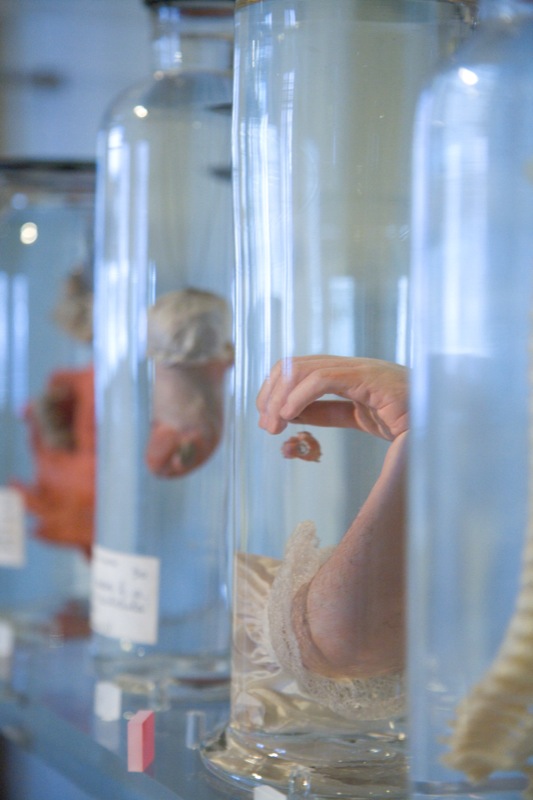
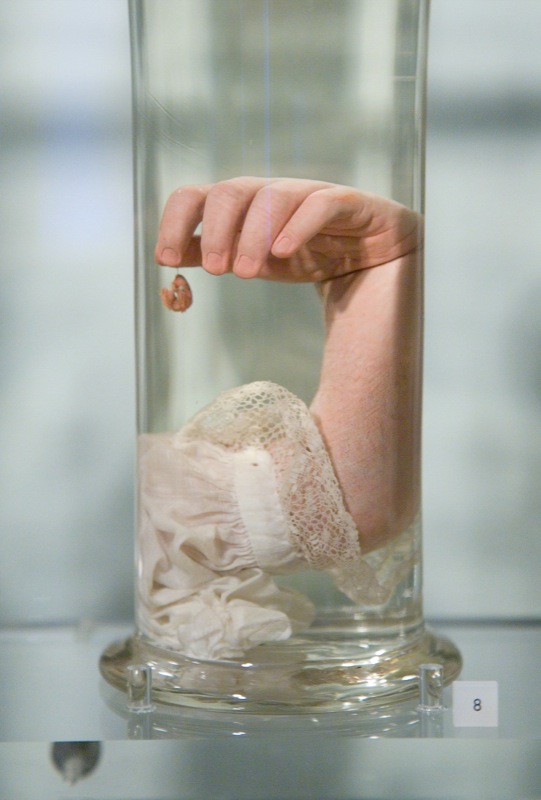
I have just processed a batch of photographs from two recent trips to one of my favorite museums in the world, the venerable Boerhaave of Leiden, NL. The museum's collection magnificently demonstrates the richness of the history of medicine, anatomy and science as it played itself out in the Netherlands. Some of my particular favorite displays: An assortment of incredibly life-like, thoughtful, and uncanny wet preparations (circa 1730) from the collection of famed anatomist Bernardus Siegfried Albinus, (best remembered for his majestically illustrated monumental tome Tabulae sceleti et musculorum corporis humani):


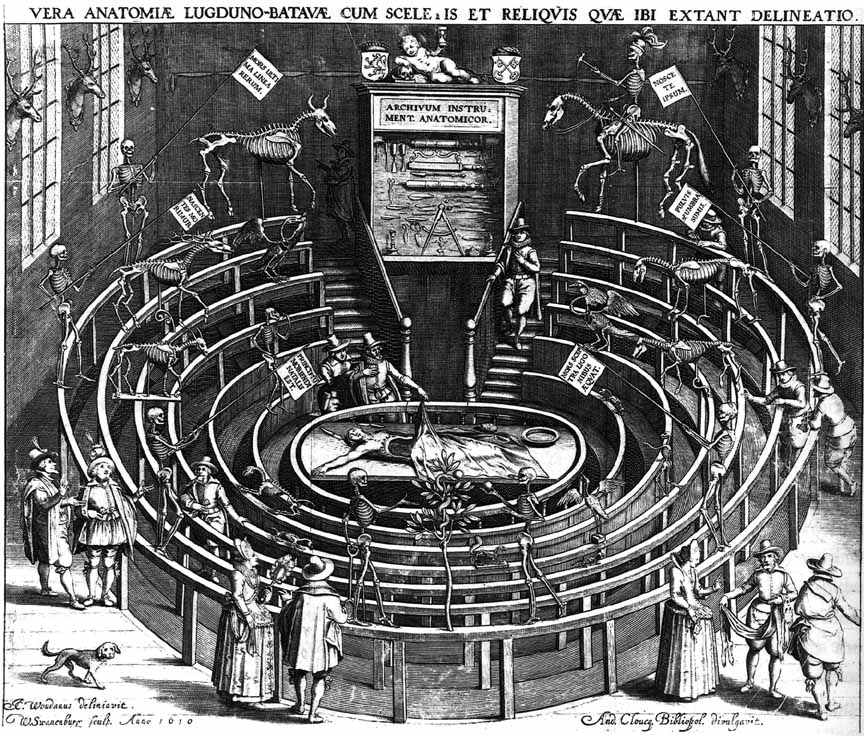
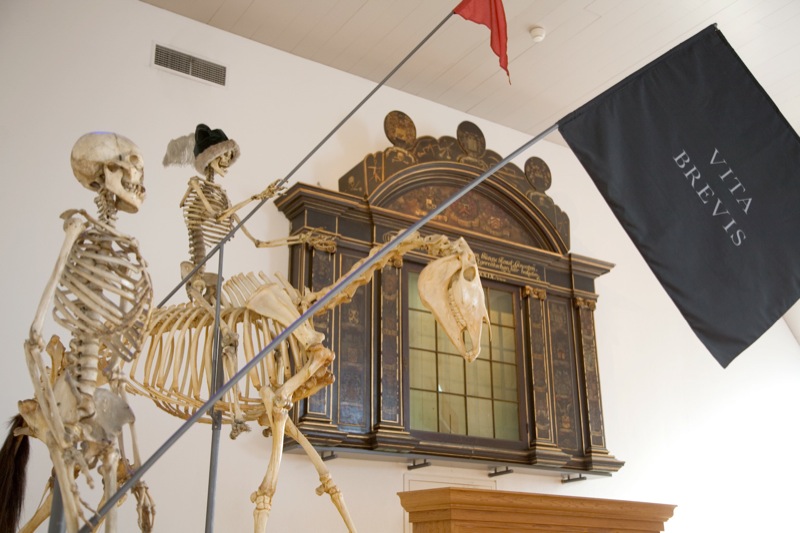
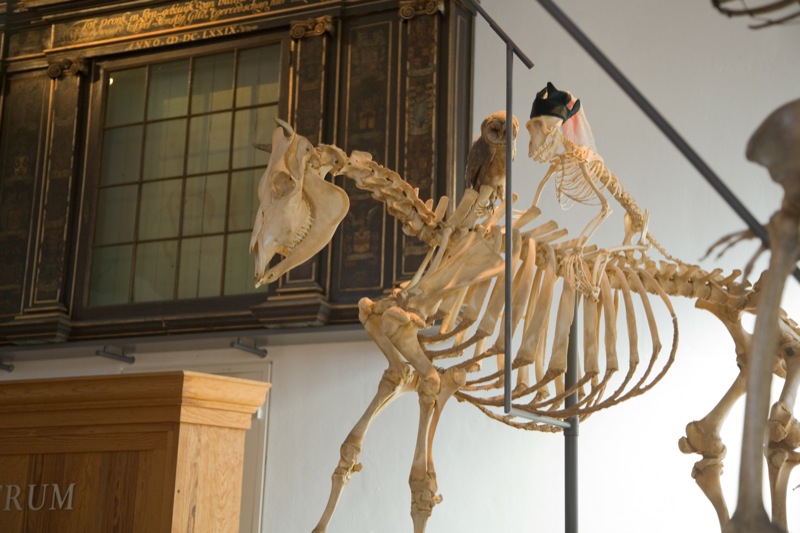
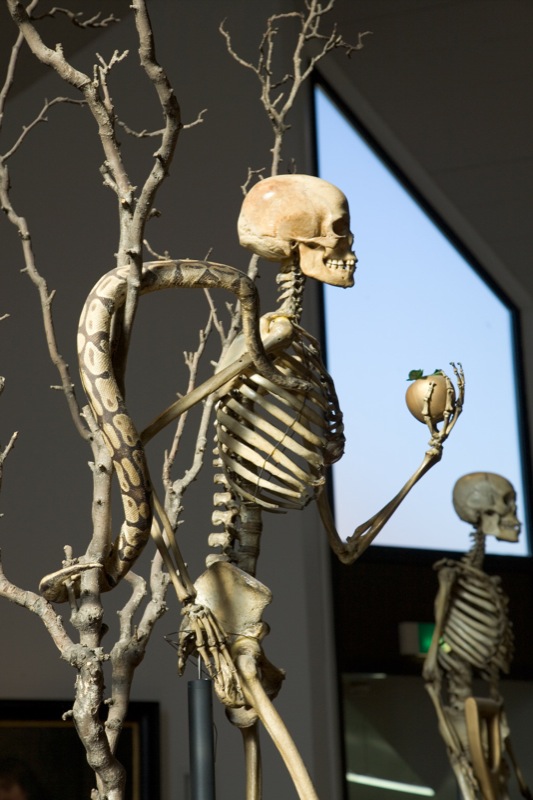
A recreation of the Leiden anatomical theatre as it looked in the 17th Century (as memorialized in W. Swanenburg's 1610 engraving; see following image) complete with historically-accurate allegorically composed skeletons and a glossary of the Latin memorial phrases the banners they hold:


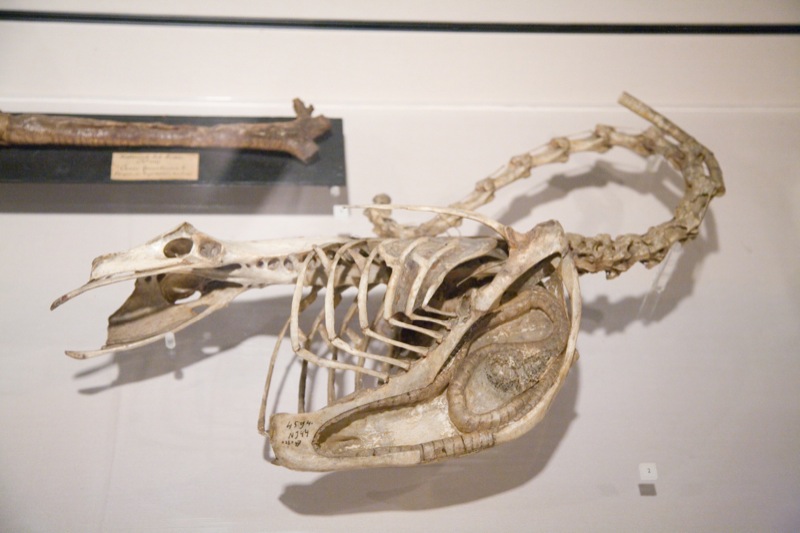
And loads of other wonderful odds and ends from the history of science and medicine including ancient skeletal material:


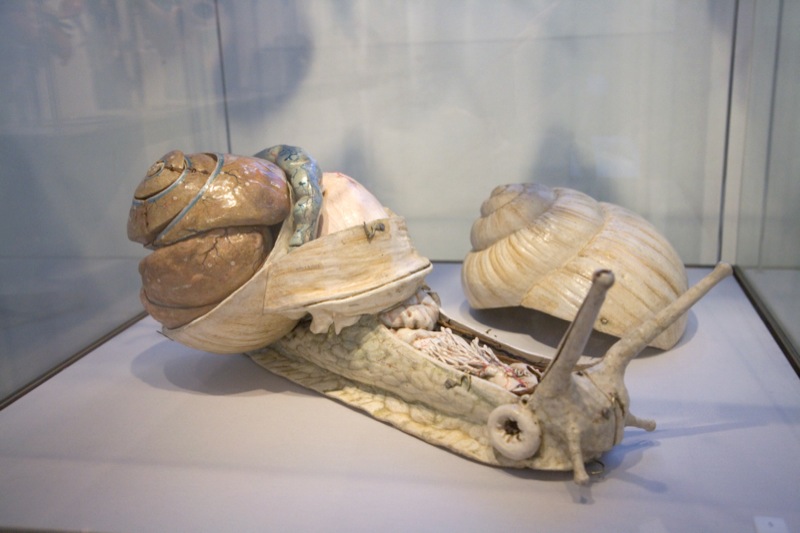
an impressive collection of recently refurbished Auzoux models:


Anatomically oriented artworks such as this 1803 watercolor "Petrus Koning with his Master" by J.H. Prins (as featured in a previous post):


And elegant natural history artifacts, such as this butterfly cabinet, attributed to "Sepp," from 1760:


These images are just the tip of the iceberg; you can see many more photos (and find out a great deal of information about them all) by clicking here; you can also view larger versions of the images by clicking on them. Photo-collections of similar museums can be viewed here. You can visit the Boerhaave website by clicking here.