Saturday, March 14, 2015

The Lost Museum Symposium: Providence, Rhode Island, May 6-8, 2015

We are very excited to announce an upcoming conference taking place at Brown University and The Rhode Island School of Design in Providence, Rhode Island from May 6-8 on the topic of "Lost Museums."

Speakers will include Morbid Anatomy Museum creative director Joanna Ebenstein with "Notes on a Speculative Recreation of the Lost Cabinet of Dutch Anatomist, Moralist, Museologist and Artist Frederik Ruysch; UCL's Petra Lange-Berndt with "Pedagogy of the Ruin: Mark Dion’s Academy of Things, Dresden 2014; former Coney Island Museum director Aaron Beebe on "Enthusiasm, Wonder, and “Stuff” in the New Dime Museum;" and a keynote by Rosamund Purcell. 

Tickets, which appear to be free, can be found here. Details and full schedule follow; you can find out more here. Hope very much to see you there!
Held in conjunction with the year-long exhibition project on Brown’s lost Jenks Museum, the symposium addresses the history of museums from a new direction: not their founding, but their disappearance. We know a great deal about how museums are born and how new collections come into being, but not nearly enough about how these fragile institutions pass out of existence, how artifacts decay and disappear as times and interests change.

What happens to a collection when once-prized objects are no longer seem valuable? Or when ethical standards shift, as in the movement to repatriate cultural artifacts to the peoples or nations from which they were taken? How and why are specimens and artifacts deaccessioned or traded away? How do changing ideas about the evidentiary, educational, and research values of artifacts affect what seems worth saving? How do wars, natural disasters, and other cataclysmic events shape collections and impact institutions of heritage, preservation, memory, and knowledge production? What can we learn from museums that have been forgotten and then revived in a new cultural context? Is permanence a virtue, or might we embrace notions of ephemerality in museums?
SCHEDULE

WEDNESDAY, MAY 6

TALK and RECEPTION @ Edna Lawrence Nature Lab
5:00 – 6:00 P.M. Andrew Yang | Gleaning New Meaning: Reintegrating Collections with the Expanding Ecology
6:00 – 7:00 P.M. Reception

THURSDAY, MAY 7

LIGHT BREAKFAST Pastries and fruit provided
8:30 – 9:00 A.M. 
SESSION 1: COLLECTING THE EPHEMERAL @ Joukowsky Institute for Archaeology
9:30 – 11:15 A.M.
  • Eric Crosby | Uncollectable: Walker Art Center Commissions
  • Hanna Holling | On the Relative Duration of the Impermanent and the Aesthetics of Change in Museums
  • Anthony Marcellini and Emily Zimmerman | The Museum of Obsolescence
  • Christine Delucia | Fugitive Collections in New England Indian Country: The Afterlives of an Early American Museum at Yale College
KEYNOTE @ Joukowsky Institute for Archaeology
11:30 A.M. – 12:15 P.M.
  • Elizabeth Merritt 
LUNCH Lunch provided 
12:15 – 1:00 P.M.
SESSION 2: SOCIAL CHANGE and REVOLUTION @ Joukowsky Institute for Archaeology
1:00 – 2:30 P.M.
  • Jenelle Davis | Filling the Void: Ars Aevi Museum of Contemporary Art and the Struggle for Recovery in Post-Conflict Sarajevo
  • Eloisa Dodero | The Musaeum Kircherianum at the Roman College in Rome: A Lost Idea of a Museum
  • Petra Lange-Berndt | Pedagogy of the Ruin: Mark Dion’s Academy of Things, Dresden 2014
TEA and TOURS
2:30 – 3:45 P.M. 
SESSION 3: AUTHENTICITY @ Joukowsky Institute for Archaeology
3:45 – 5:30 P.M.
  • Crystal Ngo | Original Copy: Museums and the Economy of Authenticity
  • Ruth Horry | Henry Wellcome’s Lost statues of Babylonian Gods: Undisciplined Objects and Loss of Value in the Museum
  • Joanna Ebenstein | Notes on a Speculative Recreation of the Lost Cabinet of Dutch Anatomist, Moralist, Museologist and Artist Frederik Ruysch
  • Allison Loader | A Short Stop before the Exhibitionary Complex
PUB SESSIONS @ American Flatbread
6:30 – 8:00 P.M.
  • Aaron Beebe | Enthusiasm, Wonder, and “Stuff” in the New Dime Museum
  • Gigi Naglak and Hannah Sisk | Peale’s Museum: An Interactive Curatorial Experiment
  • Otis Nemo
  • Laurel Waycott | The New York Aquarium: A Case Study 

FRIDAY, MAY *

LIGHT BREAKFAST @ John Carter Brown Library Select pastries and; fruit provided
8:30 – 9:00 A.M. 
KEYNOTE @ John Carter Brown Library
9:00 – 10:00 A.M.
  • Rosamund Purcell
SESSION 4: PRIVATE/PUBLIC MUSEUMS @ Joukowsky Institute for Archaeology
10:15 – 11:45 A.M.
  • Andrew McClellan | Death and the Museum: The Case of Edmond de Goncourt
  • Mary Terrall | Delusions of Permanence: The Life and Legacy of Réaumur’s Natural History Collections
  • Courtney Fullilove | The Hair of Distinguished Persons in the Patent Office Building Museum
LUNCH AND 2 SHOWS @ Joukowsky Institute for Archaeology Sandwiches provided
12:00 – 1:30 P.M.
  • Emily Avera and Bryan Markowitz | Reanimating Phenomenal Others: How to Bring Museum Artifacts Back to Life
  • Maia Wright and Kate Jarboe | The George W. Bush Library and Museum Museum
SESSION 5: LOST IN THE MUSEUM @ Joukowsky Institute for Archaeology
1:30 – 3:00 P.M.
  • Mirjam Brusius and Kavita Singh | A Philosophy of Deep Storage
  • Sean Silver | The Kineton Valley Medal, Lost and Found
  • Amy Kohut | More than Birds: Collection Narratives and Cultural History at NMNH 
COFFEE BREAK
3:00 – 3:15 P.M. 
SESSION 6: USING COLLECTIONS @ Joukowsky Institute for Archaeology
3:15 – 5:00 P.M.
  • Ethan Lasser | The Case of the Walrus Tusk: Circulating Specimens and Harvard’s Lost Museum
  • Judy Gradwohl | Intentional Impermanence: Building a National Teaching Collection
  • Maria Zytark | “Overdue Notice: Please Bring Back the Mummy’s Hand”: America’s First Circulating Museum
  • Victoria Cain | The Weight of the Image: Lantern Slides, Education and the American Museum
CLOSING PERFORMANCE @ Edna Lawrence Nature Lab
6:30 – 7:30 P.M.
  • The Jenks Society
  • Hollis Mickey

Tuesday, March 10, 2015

"George's Arms" : A Guest Post by Evan Michelson, Morbid Anatomy Scholar in Residence and Star of TV's Oddities


Following is a guest post by Evan Michelson, Morbid Anatomy Library scholar in residence and star of TV's Oddities. Here, she tells the fascinating story of "George's Arms" (seen above), her contribution to our current Collector's Cabinet exhibition, which closes March 29th.

You can see Evan speak in person about objects in her collection at our closing party on March 29th, on which more here; you can also purchase a full color, illustrated exhibition catalog with texts written by the collectors (only eight dollars!) here.
Antique and vintage prosthetics are uncanny, beautiful objects. They are almost always anonymous, whatever stories they have to tell being limited (at best) to a name inked or carved into the wood. This particular pair of prosthetic arms, however, comes not just with a name, but with an inspiring tale of survival, courage and human resilience. They belonged to Mr. George Hunlock of Danville, PA, a brakeman for the Delaware, Lackawanna and Western Railroad. The railroad carried both freight (primarily coal) and passengers along a busy route from Pennsylvania to upstate New York. These arms date to the turn of the 20th century, but Mr. Hunlock’s horrific accident occurred a bit earlier, sometime in the 1880s. At that time, George Hunlock’s job as railroad brakeman was one of the most dangerous jobs in the world.

In the early days of the railroad brakes had to be gradually, manually engaged on each individual car. This meant that the brakeman had to jump from car to car on the roof of a moving train (often braving the bitter cold and dangerous, icy conditions). On freight lines the brakeman usually rode in an open cabin on the outside of the car; sometimes he simply clung to a ladder, or even rode on the roof. In the summer the brakeman baked in the sun, in the winter he froze in snow and ice. When it rained, he was drenched. It was dirty, exhausting work. The brakes were engaged using heavy wheels or levers; it was a gradual process that involved repeated trips back-and-forth along the length of the train. It was not uncommon for brakemen to be mangled or killed on the job (one early report estimated that 10 brakemen died every day in the US in the performance of their duties). Brakemen were very poorly paid, and the job was often allotted to the illiterate and uneducated (presumably because such people were considered to be the most expendable). In the 19th century the railroad companies were shielded from lawsuits, and the costs associated with injury were often not compensated: even if a brakeman survived his accident, his family was still facing financial ruin.
There is no detailed record of the accident itself, but George Hunlock (like so many before him) apparently slipped underneath a moving railroad car, and his arms were crushed (or possibly severed altogether). Such an accident would be catastrophic today, but in the late 19th century survival itself would have seemed nearly miraculous. Antiseptics, anesthesia and the sterilization of instruments in surgical amputations were still relatively primitive procedures, and pain killers were opiate derivatives that eventually caused addiction. Mr. Hunlock undoubtedly benefitted, however, from advancements made during the recently-concluded American Civil War, which had brought about a revolution in the science of limb amputation.

It is extraordinary, then, that George Hunlock did not just survive his terrible ordeal - he thrived. He was given another job at the railroad, where he served as a watchman at crossings, using his wooden arms to wave a lantern to warn of oncoming trains. His arms (provided by J.Condell and Son) are heavy by today’s standards - stiff, wooden affairs - and the fingers (with the exception of a spring-loaded thumb) are not fully articulated. Despite this lack of prosthetic dexterity, George Hunlock mastered his new limbs: he could eat, light his pipe and (most incredibly) he developed handwriting that was “clear and distinct.” Contemporary newspaper reports say that he wrote “better with his wooden hand than most men can with their natural hands.”

George's prosthetic arms were found at a house sale many years ago, packed in a wooden box labeled “Dad’s Arms.” They were accompanied by newspaper articles detailing Mr. Hunlock’s bravery. Also in the box was all his correspondence with the limb manufacturers, and a stack of old ledgers (signed “George Hunlock”) from George’s second career as a tobacconist. The account books contain neat, precise handwriting that span several years. The dealer who bought the arms was told by a family member that the writing (incredibly enough) is George’s very own.

Monday, March 9, 2015

Help Artist Mark Fairnington Reveal the Horniman Museum’s Hidden World!


Our friend Jo Hatton--Natural History keeper at London's excellent Horniman Musuem--has just alerted me to a wonderful looking project they are attempting to fund via Kickstarter. Your support will also win you a number of lovely rewards including art prints and photo books. Following is a description of the project; for more information, visit the Horniman's Art Fund page, Twitter feed, or website. Please consider supporting this unique and worthwhile project!
We want to stage an exhibition of Mark Fairnington's paintings alongside their inspiration, our collection's hidden taxidermy treasures.
We need your help to fund Mark Fairnington’s autumn exhibition at the Horniman Museum and Gardens, where we will display his paintings alongside the specimens that inspired them. The objects will be presented as they are in storage, evoking the wonder Mark experienced when he found them for the first time. 
Mark Fairnington is a British painter whose work explores the lineage of animal and plant painting, and its relation to how humans understand the natural world. He has been exploring the natural history specimens at the Horniman over the past five years; looking into hidden spaces in our collection and painting the objects he has found. Like many museums, most of our collection is not on public display – thousands of objects are kept boxed and wrapped in storage. These storage depots are full of peculiar, breathtaking and surreal images: taxidermy specimens wrapped in transparent plastic sheets, skeletons perched in wooden boxes, a small pet dog lying in a nest of tissue paper. 
Please help us raise the money so that we can show you more of Mark’s stunning work and reveal the secrets of the Horniman store. In return for your donation, you will receive one of a number of wonderful rewards. These include limited-edition postcards, prints and bags, as well as a chance to meet Mark behind the scenes.

About the artist 

Mark Fairnington has shown extensively in museums and private galleries in the US and Europe. His practice is founded on painting as a primary method of research, and his pictures – which are drawn from many sources, particularly photography – combine obsessive surface detail with sensuous precision. They examine how painting, as a meticulously constructed surface, can interrogate and re-present an image. The subjects of Fairnington’s paintings are made more singular through being painted. He has worked with the Imperial War Museum, the Natural History Museum, the Horniman Museum and Gardens and the Wellcome Collection. Fairnington’s most recent solo exhibition Unnatural History was a retrospective at the Mannheimer Kunstverein and Galerie Peter Zimmermann in Germany. 

Image list
  1. Mark Fairnington. Monkey Face. 2012
  2. Mark Fairnington. Nest. 2012.
  3. Mark Fairnington. The Night Watch. 2007
  4. Mark Fairnington. Zebra. 2004 
  5. Horniman. e-flyer


Monday, March 2, 2015

The Phantasmagoria: An Ancestry Of Fear : Guest Post and New Film by Film Maker in Residence Ronni Thomas


Below, film maker in residence Ronni Thomas--director of The Midnight Archive--explains his attraction to 18th century phantasmagoria magic lantern shows, as explored in his first "Morbid Anatomy Presents" film, starring Mervyn Heard, author, of Phantasmagoria: The Secret Life of the Magic Lantern. You can view the film above; Stay tuned for more episodes which will premiere monthly on our new You Tube channel, which can be found here! P.S.  Happy Birthday, Mervyn Heard!
I confess... In fact, I am proud to admit... When the lights go out, and my family are all safely tucked away to sleep, I scour the internet endlessly searching, in the dark, for... scary videos (what will the neighbors think?). In fact, ever since I was able to change the channel, I would click through ways to put myself through some sort of emotional torment. From 80s slasher flicks, to stories of demonic possession, to forcing myself to go into my basement with all the lights off to find the boogeyman  -I was obsessed with trying to amuse myself with fear as both the protagonist and antagonist. And apparently I was a member of a historical legacy of fear-seekers...
It may surprise you (though it doesn't surprise me), that our ancestors were as addicted to terrifying themselves as we are here in the "enlightened" age. In this film, Mervyn Heard, a historian of the 'Magic Lantern', tells us about the Phantasmagoria shows of the early 1800s. Our 200 year old ancestors would subject themselves to total darkness, floating skeletons and demons, drugs, electrical stimuli and many more sensory abuses, all for a cheap thrill. Preceding cinema by almost 100 years and serving as some of the earliest form of stage magic, the Phantasmagoria shows set out to not only bewilder audiences, but to terrify them, and in big style. Why do we consistently seek out ways to put ourselves through some sort of existential hell? Perhaps, the thrill of fear, is a necessary part of our emotional evolution... Or, perhaps we just like a good scare! The film is the first of the new Morbid Anatomy Museum Presents film series.

Wednesday, February 18, 2015

Happy Ash Wedesday, Where the Tradition of Memento Mori Continues Unabated

Happy Ash Wednesday! The following quote, from "The History and Meaning of Ash Wednesday" By Dr. Richard P. Bucher, makes clear the relationship between traditional memento mori and the Ash Wednesday tradition of ashes on the forehead:
In the typical Ash Wednesday observance, Christians are invited to the altar to receive the imposition of ashes, prior to receiving the holy Supper. The Pastor applies ashes in the shape of the cross on the forehead of each, while speaking the words, "For dust you are and to dust you shall return" (Genesis 3:19). This is of course what God spoke to Adam and Eve after they eaten of the forbidden fruit and fallen into sin. These words indicated to our first parents the bitterest fruit of their sin, namely death. In the context of the Ash Wednesday imposition of ashes, they remind each penitent of their sinfulness and mortality, and, thus, their need to repent and get right with God before it is too late...
--The History and Meaning of Ash Wednesday, By Dr. Richard P. Bucher (sourced here)
Image: Rattenberg (Tyrol). Augustine museum - Memento-mori-painting (1694) from Kitzbühl - detail with inscription: "All skulls are signed but one; write your name on it, it is yours." Sourced here.

Monday, February 16, 2015

The Return of the Repressed: Sick Humor from Both Sides of the Atlantic: Guest Post by A.J. Mell


Following is a guest post by Morbid Anatomy Museum A.J. Mell docent on the mid-20th century phenomenon of "sick humor," as inspired by The Penguin Book of Sick Verse, a book which he suggested for (and which now resides in) the Morbid Anatomy Library. Hope you enjoy!
The Return of the Repressed: Sick Humor from Both Sides of the Atlantic
By A.J. Mell

Among the obscure jewels to be found in the Morbid Anatomy Library is The Penguin Book of Sick Verse, a British poetry anthology which never came out in America and hasn’t been reissued since its publication in 1963.

I first learned about it through a passing reference in Rob Young’s history of the British folk-rock movement, Electric Eden: Unearthing Britain’s Visionary Music (Faber and Faber, 2011). Apparently the collection was a favorite of Fairport Convention founder Richard Thompson, whose own mordant lyrics might fit nicely into an updated edition. (He also set music to one of the book’s offerings, George Painter’s “The Lobster,” which appears on Fairport’s eponymous debut album.) Inspired by the irresistible title and the imprimatur of one of my musical heroes, I sought the book out online and found a well-seasoned but readable copy for about fifteen bucks. 
How sick is it? Well, rather than quote specific poems, I’ll list some favorite entries from the index of first lines, to give an idea of the tone:
A ghost of a mouldy larder is one thing
Ah, dog. Here is my boot. Does it stink good?
I shall never get out of this! There are two of me now
In sad and ashie weeds I sigh
Inert in his chair
It is this deep blankness is the real thing strange
Last night, on coughing slightly with sharp pain
My head is bald, my breath is bad
O hideous little bat, the size of snot
Sometimes just being alone seems the bad thing
The mad girl with the staring eyes and long white fingers
When I died the devils tortured me with icepicks and pliers 
And so on. The book contains no poems in translation, so seemingly obvious candidates like Baudelaire make no appearance, but editor George MacBeth drew broadly and deeply from the miasmic corners of British and American literature with satisfying results. The collection spans the Elizabethan era to the mid-20th century, and is helpfully arranged into eight sections: Illness, Mental Breakdown, Visions of Doom, World-Weariness, Corpse Love, Lovesickness, Cruelty, and Sick Jokes. “What some have called a fascination with obscenity or disaster,” MacBeth writes in his introduction, “may only be a wise foresight, an anxiety to know the worst, an eagerness to explore the most exquisite and the most intense. The extreme situation can be terrible in the form of love; but it can also be a source of wisdom in the form of terror.” Relatively little light verse or scurrilous doggerel finds its way into these pages; the emphasis is on Quality Lit, and venerable names like Auden, Blake, Marlowe, Poe, Shelley and Wilde. Among MacBeth’s contemporaries, he saw fit to include Thom Gunn, Ted Hughes, Sylvia Plath, and a smattering of others.

I am only an occasional poetry reader, and miles from being an expert, but the editor in me can’t help weighing in on possible candidates for a revised, updated edition. Such a volume would almost have to include Stevie Smith’s “Not Waving But Drowning,” for example, or any number of works by that poet laureate of disappointment, Philip Larkin. It might be a poignant touch to include one of George MacBeth’s own later poems, in which he explored the toll taken on his life and marriage by the motor neuron disease that ultimately killed him. Jonathan Swift’s “The Lady’s Dressing Room,” from 1732, was probably still too rancid for general consumption in 1963, but its expression of epic loathing for human (or at least female) physicality makes it a strong candidate for most neurotic poem in the Western canon. Still, if anything is conspicuous by its absence, it’s the “sound and fury” speech from Shakespeare’s Macbeth – for me, the most sonorous, gobsmacking, and profound poem in English. 
On the other hand, I felt personally validated by the inclusion, albeit with slight variations and an anonymous attribution, of the first verse of “Antigonish” by Hughes Mearns. Most people seem to find it innocuous enough – it was adapted into a hit song by the Glenn Miller Orchestra, for God’s sake – but it always struck an existential chill in my heart, like a cross between Edward Lear and Samuel Beckett:
Yesterday, upon the stair,
I met a man who wasn’t there.
He wasn’t there again today,
I wish, I wish he’d go away…
Shudder.
Still, it’s doubtful that a book entitled The Penguin Book of Sick Verse could have been hatched any time other than the late ‘50s – early ‘60s, a time when the concept of “sick” was very much in the air. 
It didn’t take a whole lot to be considered deviant in post-war America, and the word “sick” came to be applied to any form of behavior or artistic expression that questioned the suburban pieties. (If one is to believe the cartoons and sitcoms of the era, the word was also a common term of approbation among beatniks, as in “Sick, man, sick!”) Everyone was busy hypnotizing themselves into believing that everything was perfectly normal, that the war hadn’t really changed anything – when it fact it had changed everything, irrevocably. Combine that with the midcentury vogue for Freudian psychoanalysis, and the stage was set for the Return of the Repressed. Presiding over the emerging chaos was that gap-toothed imp of the perverse, Alfred E. Neuman – a figure whose lineage has been traced back to advertisements from the late 19th century, but who reached his apotheosis in the ‘50s and ‘60s as the mascot for Mad magazine and avatar of an irreverent new age that took nothing at face value. (Nineteen-sixty even saw the debut of a Mad knockoff called. . . wait for it. . . Sick.)

At the other end of the spectrum was Time magazine, then the semi-official voice of mainstream liberalism and guardian of middlebrow “good taste.” In July of 1959, it published “The Sickniks,” which cast a wary and largely disapproving eye on the new generation of anti-establishment comics then making waves in American nightclubs. (As for the title, this was the era when everyone was on edge about the launch of the Russian satellite Sputnik. For awhile, it was trendy among journalists to add a “-nik” suffix to everything they wished to dismiss and/or tar with the brush of Godless Communism; thus “beatniks,” “peaceniks,” etc.)

“They joked about father and Freud, about mother and masochism, about sister and sadism,” the anonymous Time article begins. “They delightedly told of airline pilots’ throwing out a few passengers to lighten the load, of a graduate school for dope addicts, of parents so loving that they always ‘got upset if anyone else made me cry.’ They attacked motherhood, childhood, adulthood, sainthood. And in perhaps a dozen nightclubs across the country. . . . audiences paid stiff prices to soak it up. For the ‘sick’ comedians, life’s complexion has never looked so green.”
The article rounds up an impressively diverse and brilliant array of comics under the “sick” banner: topical comedian Mort Sahl, who drew most of his material from the New York Times; improv master Jonathan Winters (“a roly-poly brainy-zany,” in Time-ese); the neurotic but relatively mainstream Shelley Berman; erudite sketch artists Nichols and May; and acerbic satirist and song parodist Tom Lehrer.

But Time directs its harshest criticism at, predictably enough, Lenny Bruce, whose fate it was to bear the brunt of mainstream hostility and, by falling on his sword, make it possible for future comedians to speak freely without fear. From the article: “Although audiences unquestionably laugh at Bruce, much of the time he merely shouts angrily and tastelessly at the way of the world (on religious leaders: ‘They have missed the boat. “Thou shall not kill,” they say, and then one of them walks comfortingly to the death chamber with Caryl Chessman.’)”. For his part, Bruce fired back in his routine “The Tribunal”: “The kind of sickness I wish Time had written about, is that school teachers in Oklahoma get a top annual salary of $4000, while Sammy Davis Jr. gets $10,000 for a week in Vegas.”

Nowadays, few people would raise an eyebrow at Bruce’s take on religious hypocrisy, but in the Eisenhower and Kennedy eras, the very concept of criticizing organized religion in a comedy routine seemed alien and frightening. What links revolutionary figures like Bruce with a relatively genteel poetry collection from across the pond is that both reflect an era when a handful of brave souls realized that truth-telling mattered more than social decorum. Popular culture no longer aimed to please everybody, all the time; it dared to be divisive, ask tough questions, and look frankly at subjects once considered beyond the pale. And lo and behold, it worked.

In 2015, Jon Stewart and Bill Maher routinely broadcast material that goes beyond what Lenny Bruce was arrested for, both in savagery and profanity, and they are adored by millions. By contrast, the once-safe humor of mainstream icon Bob Hope, rife with casual sexism and homophobia, now seems retrograde and embarrassing in the extreme. The sickniks won, and we’re all the healthier for it.

Friday, February 13, 2015

Happy Valentine's Day From your Friends at Morbid Anatomy

http://morbidanatomy.bigcartel.com/product/love-cults-drugs-and-the-hypnotic-arts-a-valentine-s-day-lecture-and-rare-film-screening
Happy Almost Valentine's Day! Hope to see you at February 14th's Love Cults, Drugs and the Hypnotic Arts with Mel Gordon, author of Voluptuous Panic and Grand Guiginol!

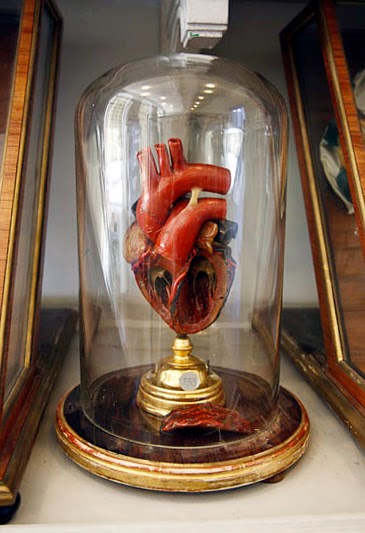
And, to celebrate the day, here is a wax heart as seen at the Josephinum Museum in Vienna, Austria.

Saturday, January 31, 2015

"The Witches’ Cove," Follower of Jan Mandijn, 16th Century, From the collection of Jennifer Butkevich: Prints Now Available!

http://morbidanatomy.bigcartel.com/product/the-witches-cove-jennifer-butkevich-collection-digital-printhttp://morbidanatomy.bigcartel.com/product/the-cat-dance-detail-of-the-witches-cove-jennifer-butkevich-collection-digital-print
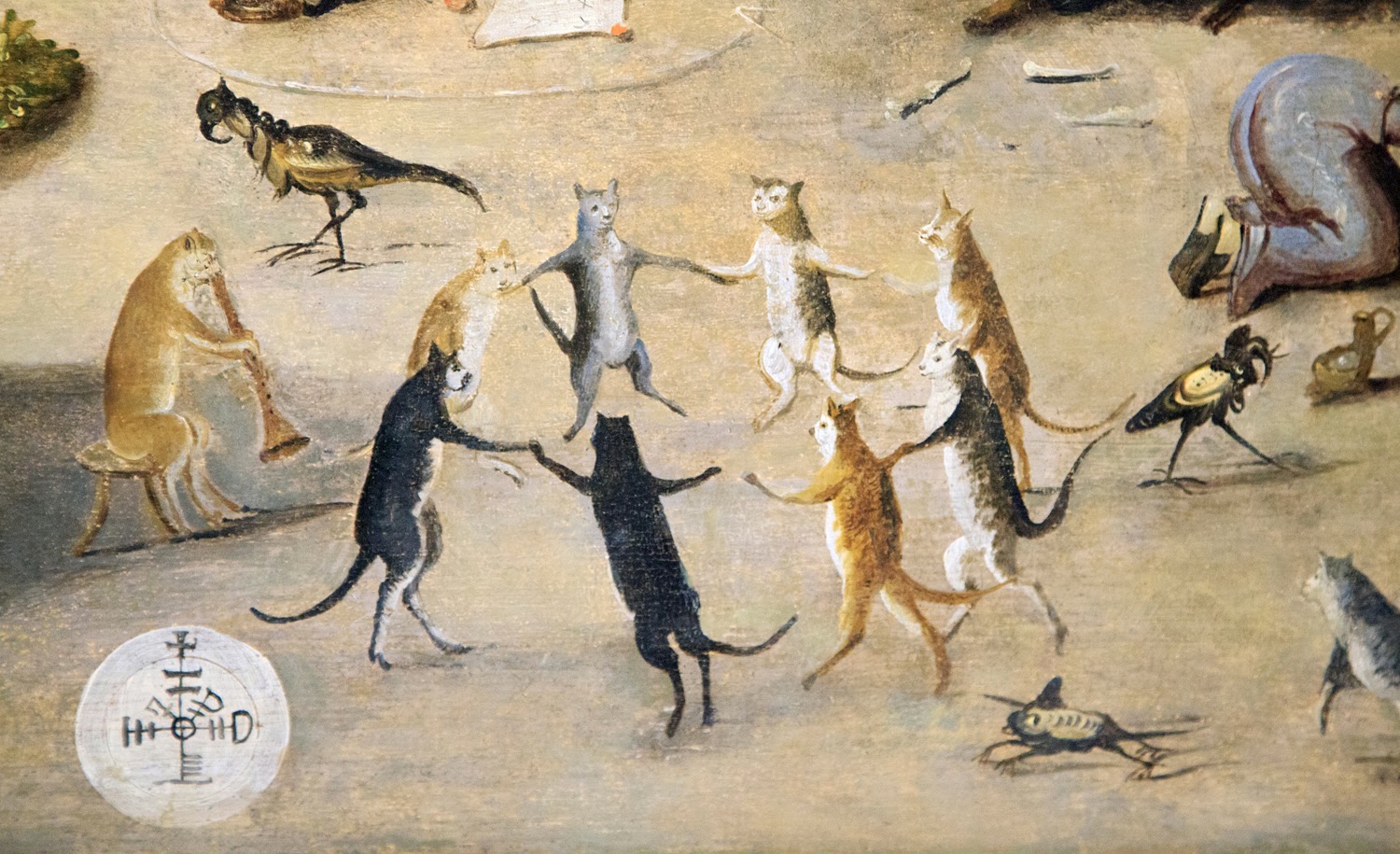
One our favorite pieces in our new Collector's Cabinet exhibition--on view at The Morbid Anatomy Museum through March 29th--is "The Witches’ Cove," a 16th century oil on panel painting depicting a Boschian vision of a witches celebration, complete with unspeakable acts galore and cats dancing in a ring. We know precious little about the painting, which is the work of a follower of Jan Mandijn and resides in the collection of Morbid Anatomy Museum board member Jennifer Butkevich.

Due to popular demand, we have produced prints of both the entire painting and the beloved "Cat's Dance" detail seen above. You can find out--and order prints of your own!--by clicking here.

More on the piece, in the words of its owner:
It has monsters and grotesques and dancing kitties. What else do you need?
It takes me to a fantasy world of another time. It makes you fantasize about what people were thinking back in the 16th century. Its very much a fantasy land. For some people, that might be a nightmare, but for me, its a dream world.

Saturday, January 24, 2015

The Pantheon for the Counts of Buenavista in Malaga: Guest Post by Felipe Trigo Redondo


Our friend Felipe Trigo Redondo (aka "Kaiser Noir")--historian, tour guide, co-organizer of the Barcelona Congress of Curious Peoples and director of Kriminal Kabarett--just sent in the following guest post about, in his own words, "the most spectacular piece of funerary art from all the Spanish Baroque era: the Pantheon for the Counts of Buenavista!" All photos by Angel Trullen; hope you enjoy!
The Pantheon for the Counts of Buenavista in Malga
By Felipe Trigo Redondo
On a journey to Andalusia, the extreme south of the Iberian peninsula, the traveler will always be surrounded by the echoes of an astounding past, between the brightness of transcendental moments for the whole humanity (the superb arts patronized by the Arabian princes and the strength of the poets from the 20th century) and the darkness of terrible cataclysms, such as the medieval wars, the coming of the Inquisition and the "last Crusade": the Spanish Civil War.

Malaga, founded by the Phoenicians and one of the oldest cities in the Mediterranean, is the paradigm of this tragic sense of life in this land praised during Antiquity as the end of the world, the country beyond the Pillars of Hercules. Indeed, the death is omnipresent in the religious beliefs and thoughts of the Andalusian people. We are going to see in depth how these people expressed this collective state of mind during the end of the 17th century, introducing the most spectacular piece of funerary art from all the Spanish Baroque era: the Pantheon for the Counts of Buenavista.

Before the catastrophic fall of Malaga in 1487 (the Christians enslaved all the Muslim inhabitants in the city) the king Fernando V settled his military quarters outside the city walls. After the defeat of the Muslims, this place was consecrated to Our Lady of Victory ("Nuestra Señora de la Victoria") and soon a sanctuary was built to commemorate this day. Malaga, would never recover its former splendor as the main port for the kingdom of Granada. Towards the middle of the 17th century, the disastrous wars for the Spanish monarchy, the economic crisis, plagues and famines devastated the country. This dramatic situation shaped the spirit of pessimism that influenced arts and literature during this time, which was paradoxically, the Golden Age for the Spanish culture.
The church of "Nuestra Señora de la Victoria," built in the Gothic style, was almost ruined in 1680. However, this religious complex would achieve its definitive glory due to the intervention of Juan Francisco Guerrero y Chavarino (1660-1699) a banker from a family of merchants. He supported the Spanish monarchy with his own funds and, for this reason, was appointed governor of Antequera and then ennobled and named count of Buenavista. With an immense fortune, he settled in Malaga to live in a luxurious palace which is today the Pablo Picasso Museum.

As a new aristocrat, he joined the tradition of the most powerful men in Andalucia, being the patron of the sanctuary of "Nuestra Señora de la Victoria," restoring the temple and building his extraordinary museum under the apotheosis of the Virgin. Following the structure of a tower, the count placed his tomb in the lowest level, an oratory in the middle and the sacred chamber for the Virgin on the top, as the church's main altar. This work forms a whole masterpiece as a total allegory of death and resurrection. It is also a political manifesto as a victory against the Devil and the enemies for the Catholic Church.
The pantheon itself is an esoteric treatise carved in stone. The vault is sustained by two massive columns, the symbolic connection between the afterlife and the Paradise. The decoration is extremely complex. The figures in plaster were executed under the direction of Felipe de Unzurrunzaga (1654-1740), the most important Baroque architect in the city of Malaga. He began this work in 1689, under the influence of the macabre art from the funerary chapels in Messina and Palermo, two cities already visited by him and then under Spanish control. A constellation of skulls and bones shines in the black ceiling, while a grotesque Spanish version of the European "Totentanz", the Dance of Death, occupies the walls. All the topics on death in the literature of the Spanish Golden age (very usual for writers as Quevedo, Calderón de la Barca, Gracián) are encircling the tombs for the count and his wife. We also can see the Roman "Parcae,” female personifications of Destiny, often called the Fates in English. The skeletons are holding mirrors to reflect the mortality and the last fate of humankind.
In the words of Juan Temboury (an historian who studied in depth this church) the pantheon for the counts of Buenavista is the definitive depiction of the three states or ages which every human being should follow, from penitence and abstinence to the absolute vision of God. The sumptuous figures in the tombs, dressed in the lavish courtesan fashion, are portraits of the young counts praying in the darkness. This is a perfect example of two literary topics: "Tempus Fugit" and "Carpe Diem" because, despite his economic power and splendorous style of life, the count died quite young, just after the completion of his mausoleum. A gilded cross was erected between the two aristocrats, symbolizing the path to salvation through the Christian alchemy, from the absolute darkness to the divine gold.
Leaving the tenebrous vault, the visitor takes the staircase to the oratory (a chapel of severe austerity) and then the Virgin’s sacred chamber, where a Gothic German sculpture of Holy Mary presides the scene. Here, the sacred trip is completed for the devout souls of the count and his wife, ascending to the ecstasy in the contemplation of God’s Mother. The decoration is an absolute catharsis in baroque style, with elements from botanic and heraldic inspiration (the imperial coat of the Spanish monarchy is also included). This is an extraordinary ensemble which has been identified as the Virgin’s garden in Heaven. The mirrors are also present, but this time reflecting the light of immortality, in an explosion of the last possibilities of baroque art, a genuine Spanish style called “churrigueresco.” This triumph over Death and the demonic forces of sin is a parallel version of Saint James enthroned in the cathedral of Santiago de Compostela, also in the same style “churrigueresco.”
Death was always present in the collective conscience of the Andalusian people. The pantheon for the counts of Buenavista is the last jewel of Spanish funerary baroque, preceded by the morbid paintings by Claudio Coello in the “Hospital de la Caridad” in Sevilla, also a religious foundation sustained by a wealthy merchant. Today, the pantheon is being discovered by curious travelers from around the world and they even have the possibility to visit the crypt during the night by candlelight, as did the count himself, contemplatin the realms of death. This place has been chosen as one of the marvels in the city of Malaga by art connoisseurs and photographers, as Malaga is reaching more and more notoriety for its cultural activity and its iconic museums and collections. 

Sunday, January 18, 2015

Oh Santo Niño Doctor! A Guest Post by Entomologist in Residence Daisy Tainton

Following is a guest post by our entomologist in residence Daisy Tainton about one of the most enigmatic vernacular saints we encountered in Mexico: the lavishly eyelashed Santo Niño Doctor!
Oh Santo Niño Doctor!
Right my wrongs and
Forgive my sins.


This is the prayer on the back of a pamphlet about St. Dr. Baby that I found in a church in Zacatecas, Mexico.

As I write this, it has not been long since my statuette of Santo Niño Doctor flung himself from a low bookshelf in my bedroom and shattered. Was he sick of me? Was he full of my sins and wrongs, such that I no longer need him? Or should I not have put him in the bedroom, considering his youth and purity level?

During the Morbid Anatomy field trip to Mexico in 2014 for Day of the Dead, many of us noticed and were captivated by an unusual demi-saint in the pantheon. Occasionally nestled among the more typical Jesus and Virgin statues, there was a child with dark hair and wide eyes, usually seated on a particular chair with three rays of light radiating from his head, a cushion under his feet, and a Doctor's white coat.

Juarez Market in Monterey yielded a lovely molded plastic statuette of Doctor Baby, or SDB, with lovely false eyelashes and a wide, caring expression. A man with a buzz cut and tattoos all the way up to his eyeballs sold him to me, after extricating him with incredulity from a case crowded with likenesses of the Virgin, Jesus Malverde and Santa Muerte(the latter two especially beloved by the criminal and marginalized elements to which this market evidently catered). Lots of neck tattoos and thick accents in these parts. An older woman with a bag of bundled herbs asked if my friend and I were scared to be there, but I believe we made it clear that nothing seemed threatening below the surface. She demanded to know why we liked Santa Muerte, and said this saint is bad. SDB on the other hand was a saint she could get behind. She nodded her approval of my little statue.

Santos of this sort, smacking of idolatry, have a long tradition in Mexican Catholicism. This spritely saint is actually an alternate Jesus, as he began as a statue of the holy infant that was taken by a nun to a hospital and eventually, in mascot-like fashion, dressed as a child-doctor. The baby Jesus, robed in white hospital garments and accessorized with a stethoscope and black doctor's bag, became a separate entity known as SDB. The infirm, their relatives and loved ones pray to him for health and swore that he provided results. Eventually a cult-like following sprang up, with a yearly procession and celebration in his honor.
Images:
  1.  Cover of Santo Niño Doctor prayer book
  2.  Santo Niño Doctor statuette in Mexico
  3. Santo Niño Doctor statuette belonging in author's home
  4.  Santo Niño Doctor statuette in Mexico City
  5. Santo Niño Doctor earrings made by the author

Thursday, January 15, 2015

Vesalius: Imagining the Body Exhibition, Leuven, Belgium: A Guest Post by Michael Sappol, National Library of Medicine


Following is another guest post by our good friend Michael Sappol--author of A Traffic of Dead Bodies, curator of Dream Anatomy, and historian at the National Library of Medicine--about an excellent looking exhibition in Leuven:
I recently had the privilege of participating in a brilliant three-day international conference on “Bodies Beyond Borders: The Circulation of Anatomical Knowledge, 1750-1950”.  The symposium — a smart mix of well-established scholars and new talent — was held in Leuven, Belgium, an ancient city full of charmingly twisted cobblestone streets and alleys. In the central square, the old town hall is covered from top to bottom with hundreds of stone figures. It’s a “where’s Waldo” exercise to spot anybody in particular, but one of the figures is the founder of modern anatomy, Andreas Vesalius (1514-1564). Vesalius twice studied at the University of Leuven (1530, 1536) before going on to Padua, where he performed dissections, gave lectures, wrote treatises and authored De humani corporis fabrica (1543), the first great illustrated atlas of anatomy.

Leuven also has a wonderful art museum: “M-Museum”. To commemorate the 500th anniversary of Vesalius’s birth, M has put on a brilliant show of anatomical art and objects. As one might expect, there are first editions of Vesalius, along with a register from the 1530s that lists Vesalius as one of the students enrolled in the university. But the exhibition goes from there right up to the present, and features many rare and amazing drawings, paintings, prints, models, sculptures, even the first x-ray “cinematograph” (1898). Highlights for me: Clemente Susini’s exquisite wax sculpture of a dissected cadaveric head (4th image down; 1798); Jan Wandelaar’s bigger than life-size sketches for Albinus’s Tabulae sceleti et musculorum (ca. 1726); a brilliantly hand-colored engraving of a 17th-century Dutch anatomical theater (bottom image); and… (Actually, I loved almost everything on display, and also love the way it was displayed. Congratulations to curator Geert Vanpaemel!)

You probably wish you could go to Leuven to see this show, but you can’t: it closes on January 18. (Boo-hoo.) (Sob.)
Following is more info about the exhibition, from the M-Museum website; you can find out more by clicking here.
From THU 02/10 until SUN 18/01
M-Museum Leuven
Leopold Vanderkelenstraat 28, 3000 Leuven
Curator: Geert Vanpaemel
The exhibition at M is the beating heart and the must see highlight of the citywide project, both for Vesalius experts and novices.

The exhibition highlights various and unexpected sides of Vesalius. You can admire the original version of the voluminous book 'Fabrica' or page through the digital version. Discover all about his life, work and life's work, from his humanist background to his direct influence on his contemporaries.

Discover how Greek sculpture inspired Vesalius, walk among detailed anatomical sketches and wax statues, and meet the famous Glass Man. Be amazed by the 'living' dead who candidly reveal what is concealed under their skin and experience how Vesalius' anatomical knowledge lives on in art and science. For example, even Rodin and Matisse were inspired by Vesalius' muscle men.

The exhibition presents a life-sized replica of an anatomical theatre – the place where live dissections were once performed. The exhibition also focuses on the evolution of medical imaging over the past 500 years. You can see how anatomy developed into a fully-fledged branch of medicine and how the human body gradually revealed its secrets over the centuries. Thanks to the possibilities that 3D modelling now provide, you can also explore the medical science of the future.

Vesalius will get under the skin of all the visitors to M, that much is certain. But you will also be captivated by the other cultural projects related to the world-famous anatomist. So come prepared!
Images:
  1. Franz Tschackert, De Glazen man, 1930 © Deutsches Hygiene Museum, Dresden, inv. Volker Kreidler 1962.
  2. Jacques Gautier D'Agoty , compleat Myologie color and natural size, 1746
  3. Andreas Vesalius, De Tabulae Anatomicae, ca. 1540 © Koninklijke Bibliotheek van België, inv. Imp II 42.417 C Est. 
  4. William Pink, Smugglerius, 1834 (orig. 1775)  © Isabelle Arthuis 
  5. Clemente Susini, De innervatie van het gezicht, 1798. © Muséum national d'histoire naturelle, Parijs - Direction des bibliothèques et de la documentation.
  6. Waxwork by Clemente Susini and painting  Anatomy Lesson of Dr . Frederik Ruysch by Adriaen Backer © Isabelle Arthuis 
  7. Bust of a woman by André -Pierre Pinson and painting ' Anatomy Lesson of Dr . Frederik Ruysch ' from ' Adriaen Backer © Isabelle Arthuis 
  8. Installation photo, © Isabelle Arthuis 
  9. Anatomical theater, Joannes Blaeu Show Neel of the cities of the Vereenighde, Netherlands, with their descriptions 1649 © Royal Library of Belgium , III 94 530 E 1  

"Looking At Death:" A Conversation With Barbara Norfleet : Guest Post by Cristina Preda

We Die and See Beauty Reign by Cristina Preda on Grooveshark
Following is a guest post in which one of our beloved Morbid Anatomy docents, Cristina Preda, delves deeper into one of her favorite books in the Morbid Anatomy Library: Barbara Norfleet's fabulous Looking at Death. In the course of her interview with the author/curator, Norfleet mentioned that she had compiled a tape of death-themed songs to play as accompaniment during the exhibition at Harvard. Inspired by her idea and echoing a couple of her selections, Preda put together a playlist of her own (above); she encourages readers to add their favorite songs about death in the comments.

Looking At Death: A Conversation With Barbara Norfleet
by Cristina Preda 
Photographer, curator, lecturer, and historian Barbara Norfleet’s 1993 book, Looking at Death, which can be found in the research library at Morbid Anatomy, is a collection of black and white photographs spanning more than a century and depicting a vast spectrum of death along with the attitudes surrounding it, from staged death in theater productions and posed Victorian memento moris to crime scene photos, war reportage, and tribal rituals. She was gracious enough to take the time to speak with me from her home in Massachusetts recently just as an all-­too-­short autumn began giving way to cooler temperatures. 
Can you begin by talking a little bit about the book and what the impetus was to create it?
All my photo projects always tend to be something that is sort of new that other people haven’t thought of doing, so I think that was one motivation. But I think the reason I did it is because I was going through all these negatives to set up the archive of candids by professional photographers at Harvard when I took over the role as curator of photography, and it just happened by chance that this whole wealth of material was there for the asking. Professional photographers were just thrilled to be recognized, and they couldn’t have been happier to let me go through all their negatives and take what I wanted. It was in the process of going through negative files on weddings that I found, particularly with the older photographers or second generation photographers, that their files had more pictures of dead people than they did of weddings. If you really go back to the turn of the century I don’t think there was as horrible a feeling about death. The files just were filled with negatives that people had taken of loved ones who had died, and that was for a couple of reasons. One, they saw no reason not to. There was no barrier. And the second thing is, particularly in the beginnings of photography, they did not have a portrait of their loved one so they would take a picture when the person died just to have a memory of them. 
It doesn’t sound like it was too difficult to collect information.
No, it wasn’t difficult, particularly the memento mori pictures. It was much more difficult to collect all the other pictures. For instance, if you take the anthropological pictures of death and the medical pictures, I had to go through enormous archives to pick the ones I would use. The violent death pictures came from medical schools, and I think they had something like 120 volumes. It was the history of crime for a whole period in time.  
In the violent death chapter you talk about how many of the photos you found were a lot more horrifying than the ones that were printed.
When I was younger I used to go to the Oracle meetings for curators. It’s a group of worldwide photographers that got together once a year for three or four days and had meetings about what was going on in the curatorial world of photography. Before I did the death book I brought it up to them because it was so unusual. Nobody had really done a death book except for the one [Stanely] Burns did, and that was about beauty. It wasn’t really about death in the same way mine was in which I tried to show all kinds of death. [His] was a book that might make you sad, but it wouldn’t upset you in any way. When I brought up what I was doing and showed them some of the images I had, an awful lot of curators said that they were too disturbing and I shouldn’t do it, and the head of my department at Harvard said I couldn’t do it unless I also included life. But I did it anyway. 
How long would you say it took from the inception of this idea to actually compiling and publishing the book?
Well, I have a husband and children, and I was teaching at Harvard, running an archive, and doing shows. So, given that, it took as long as it took me to do each book I’ve ever done. It took me about three years. [For the show] what I did, and it was probably one of the most effective things I've ever done, was I made a tape of death music, everything from Bloody Sunday to Requiem to Strange Fruit and spirituals, and that played throughout the whole show. Everyone who came mentioned how important that was. I spent almost as much time making that tape as I did on the show, and a large number of people who came who had just experienced death said the show helped them tremendously. 
Is there a particular time period or historical moment, with regard to its attitudes about death, that you’d like to see explored more today?
It would be interesting to go through why the attitudes changed. When you get up to the 60s, people were still asking professional photographers to photograph everything. It was before everyone had their own camera and took their own pictures. You don’t find [death photos] after that. Those pictures stopped appearing. If you go back to the 19th century, they were much more common than wedding pictures. Wedding pictures were rare, even formal ones. Were people starting to take their own? I don’t think so. In my archive I collected a lot of family scrapbooks, and I never saw a death picture. 
But I do think that we’re beginning to speak about death openly again as a society.
I think there’s a huge movement for a decent death. My feeling is we think death in America is horrible, but we’re beginning to think people have the right to die just as they have right to free speech. 
Where would you like to see that conversation go?
I’d like to see people who were terminally ill be able to die if they wanted to and be helped just as we do with our dogs. Which brings up something you may know the answer to which really has bothered me. 
What’s that?
I’m a dog person. My dog is sitting beside me. I’ve had dogs all my life. When a dog is put to sleep, they inject it and it dies in your arms. It’s so peaceful, it’s just as if it fell asleep. Why haven’t they adopted this when we execute people? They always act like they don’t have another solution. 
I don’t think the people who are for execution intend for it to be peaceful. There’s a big guise that execution isn’t cruel and unusual, but it is cruel and unusual. People suffer greatly. It’s not a slow process.
We certainly have a way of putting people to sleep in a very peaceful way. It seems silly that we don’t use that knowledge when we’re taking somebody’s life away. You’re saying it’s vindictive. We want them to suffer. You’re probably right because the other solution is so easy.
All images from Looking at Death.