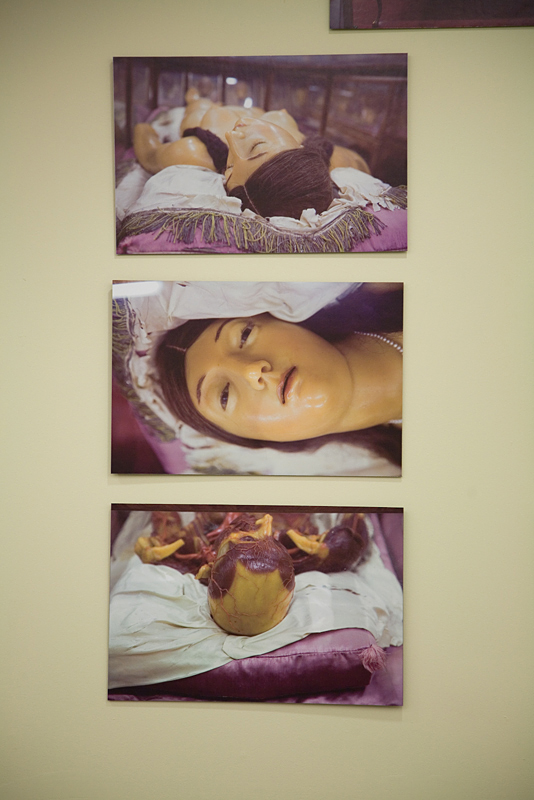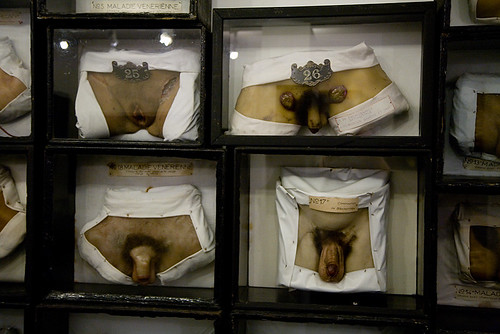
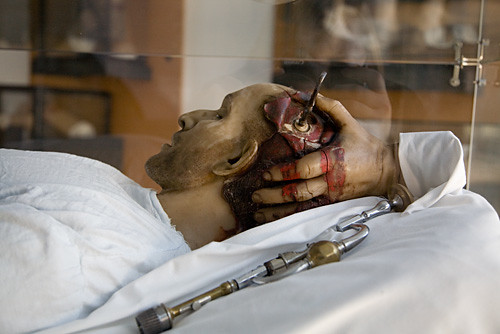
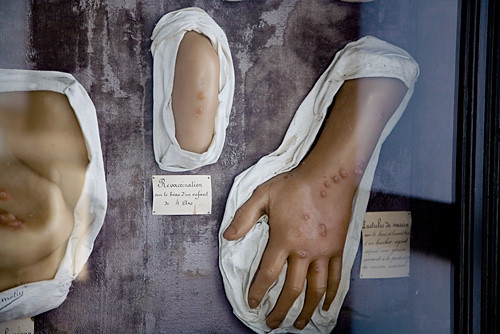

When in Belgium recently, I made a special, very rushed visit to the
Musée de la Médecine in Brussels; I made the trek because I had come across a few tantalizing clues that perhaps some of the infamous Spiztner models had found their way into the collection. The Spitzner collection was a famous grouping of popular anatomical waxes exhibited around European fairgrounds in the 19th Century; The Spitzner models, and other popular anatomical exhibitions, were pruriently lowbrow, ostensibly educational exhibitions of wax anatomical models, with an emphasis on depictions of the unclothed female form, reproductive organs, and body parts ravaged by a variety of sexually transmitted diseases. They were a kind of pop-culture analogue to the academic, ostensibly neutrally scientific anatomical models, of the sort exhibited at
La Specola in Florence.
I am not sure if the models on display at the Musée de la Médecine were actually from the Spitzner collection, but I saw a lot of evidence to suggest that at least some of them were, including what appeared to be original signage from the collection. Sadly, some of the models I had most hoped to see, such as the breathing anatomical woman so important to the surrealistic visions of
Paul Delvaux, were not on display. I was unable to find any human being who might be able to answer my questions, so I am still unsure about the breadth or provenance of the collection. If anyone knows anything about this collection, please let me know!
Pictures above taken in the museum; view more
here. For historical photos of the collection (from the book
Vior-La Collection Spitzner) click
here.For more on the topic: the Spitzner Models are expounded upon quite nicely in a recent post on
Bioephemera and researched wonderfully in Kathryn A. Hoffmann's revalatory
"Sleeping Beauties in the Faiground: The Spitzner, Pedley and Chemisé Exhibits). See Michael Sappol's wonderful
"Morbid Curiosity":The Decline and Fall of the Popular Anatomical Museum" for a history of popular anatomical museums, and
a recent Morbid Anatomy post for information focussing on another collection of such models.