Wednesday, October 31, 2007

Happy Halloween!!


Tuesday, October 30, 2007

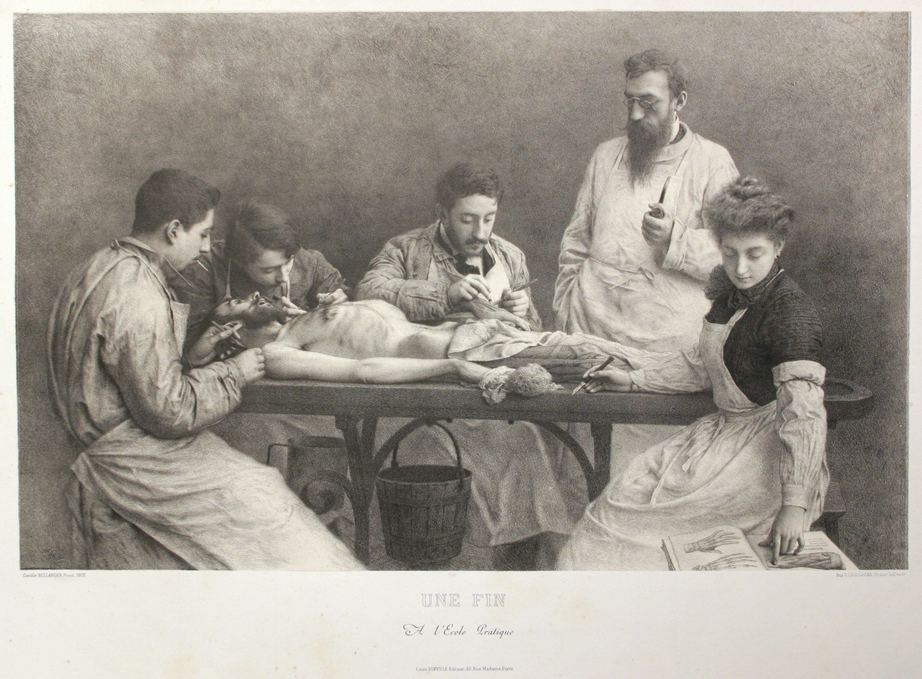
Une Fin A l’Ecole Pratique, Camille Félix Bellanger, 1902.


Thanks to James Edmonson, curator of the Dittrick Medical History Center in Cleveland, Ohio, for sending this really wonderful image of a dissection scene my way. He came across the lithograph at Librairie Alain Brieux; it now resides in his collection.

Mr. Edmonson is seeking further information about this image. If anyone has ever seen this image, knows of an original drawing or painting of it, or has any other information, please let us know, either by email or by a comment to this post. Thanks!

Sunday, October 21, 2007

Skulls in Design


Check out Forever Skull, an interesting article about the use of skulls in design from the AIGA website. Thanks to Susannah McDonald for passing it on. And my apologies for being a poor blogger of late. In Belgium for the Confronting Mortality conference, which has been absolutely amazing. More on that later when I have regained the energy necessary to say anything intelligent about it.

Tuesday, October 16, 2007

"Autopsy", Circa 1900


A disturbing and somewhat prurient image from the Corbis website. Title reads, simply, "Autopsy."

Friday, October 12, 2007

Anatomical Crucifixion (James Legg),1801


"This gruesome figure was cast from the corpse of a murderer, taken straight from the gallows to be nailed to a cross and flayed in order to settle an artistic debate. Three Royal Academicians... conducted this experiment to prove their belief that most depictions of the Crucifixion were anatomically incorrect. " --The Royal Academy of Arts Website

A nice, visceral intersection of religion and anatomy in one lovely object. Entitled "Anatomical Crucifixion (James Legg)," this plaster cast of murderer James Legg was made in 1801 by an unknown maker. Find out more about the history of this remarkable object here. Via Mutant Sloth.

Thursday, October 11, 2007

Mirror World


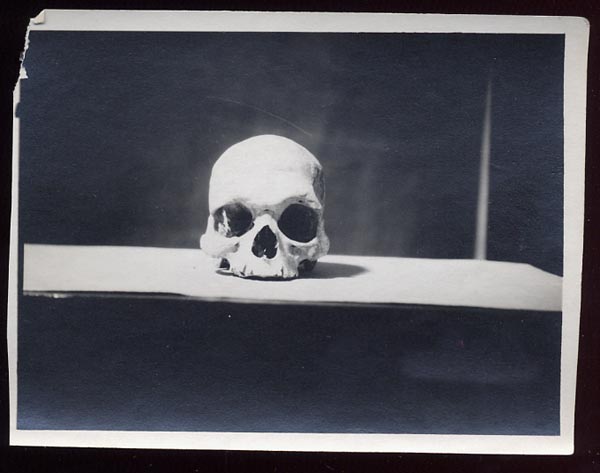
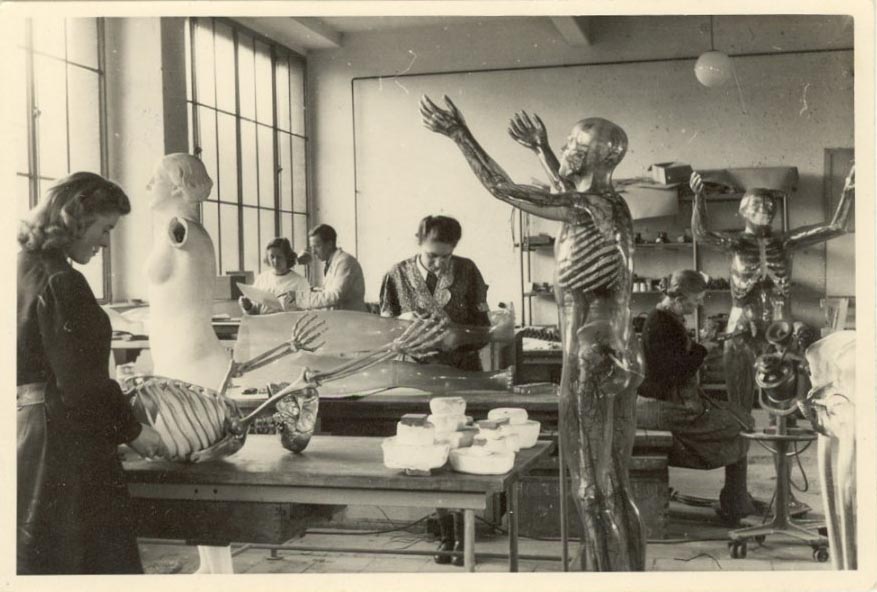
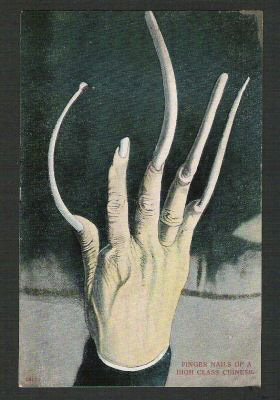
What a wonderful website is "Mirror World: Photographs of Unknown Origin." Filled with enigmatic unlabeled photos and an evocative soundtrack, one could easily get lost in there. Here is a selection of a few of my favorite images, but check them out in context; they are much more moving in their origial habitat (I am especially exctited by the shot from what looks like the Visible Man factory.) Thanks to Herbert Pfostl, of the similarly evocative and mysterious Blind Pony Books and Paper Graveyard websites, for sending this link along.

Wednesday, October 10, 2007

Christie's "Anatomy as Art" Auction, Part IV


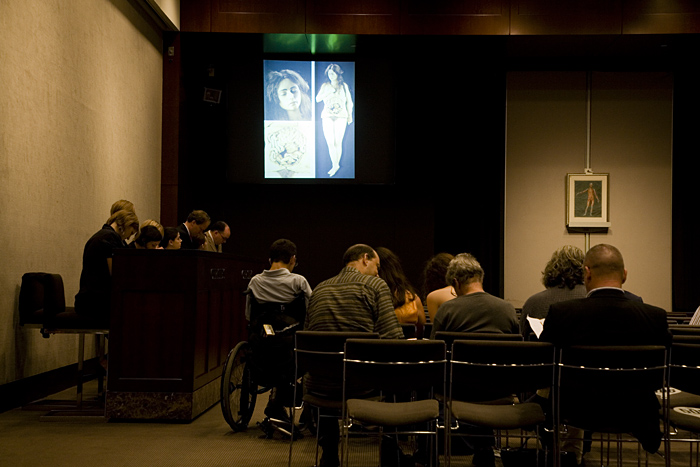
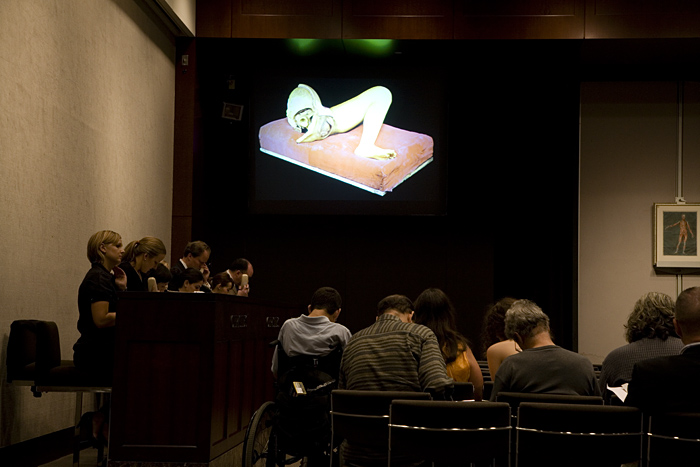
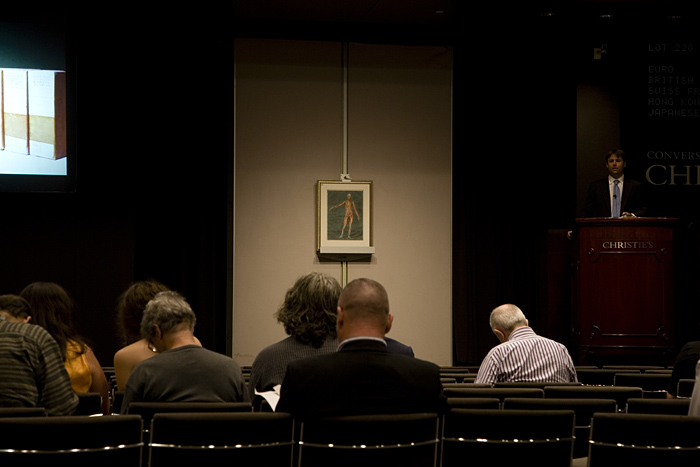
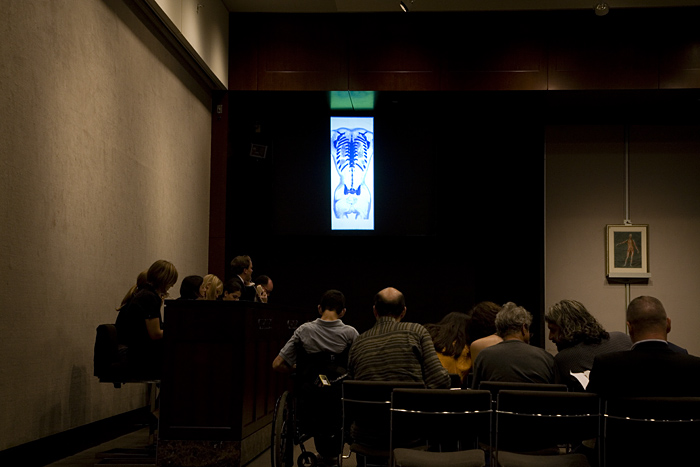
I attended (and photographed, until reprimanded) the Christie's "Anatomy as Art" auction last week. By the time I arrived, rather late in the auction, only 25-30 bidders were in attendance, though there was a full and very active phone bank in effect. When the beautiful Fritz Kahn poster sold ($3,750), the auctioneer adlibbed to the buyer, "you won't regret it." The coveted Ruysch book went for $6,250, the D'Agoty's for $39,400 and $67,000, and the Durer went for a whopping $73,000. The anatomical waxes, alas, did not sell at all. You can find out more details about the auction sales here.

Thursday, October 4, 2007

Christie's "Anatomy as Art" Auction, Part III


I visited the preview for the Anatomy as Art auction at Christie's today (see previous postings here and here for more information.) It was really rather breathtaking to see all those beautiful old books, anatomical waxes, and framed prints in one modest room. The collection was truly awe-inspiring, and the room was filled wth a fascinating assortment of people--collectors with varying accents earnestly paging through huge ancient portfolios, a slew of young goth-esque kids with their mother(?) paging through same, and a bunch of young teens oohing and ahhing over the stereoscopic slides. I had the opportunity page through Frederik Ruysch's amazing Thesaurus animalium primus... Het eerste cabinet der dieren... from 1704, within which I saw many really incredible engravings I had never seen before; Too bad its estimated to go for $6,000 - $8,000...

Sadly, I did not have my camera, but Melanie at Christie's kindly took these snap shots for me (thanks Melanie!) They give you an idea, but do not nearly do it justice. I suppose the catalogue is all I will be able to afford, but it is a pretty great consolation prize, featuring many of the most memorable images beautifully reproduced explicated by excellent scholarly notations by Jeremy Norman.

The auction itself is tomorrow at 10:00 AM. I plan to spend my lunch hour there; it promises to be an interesting scene. I recommend any people in the area to do the same! The collection is truly a wonder.

Tuesday, October 2, 2007

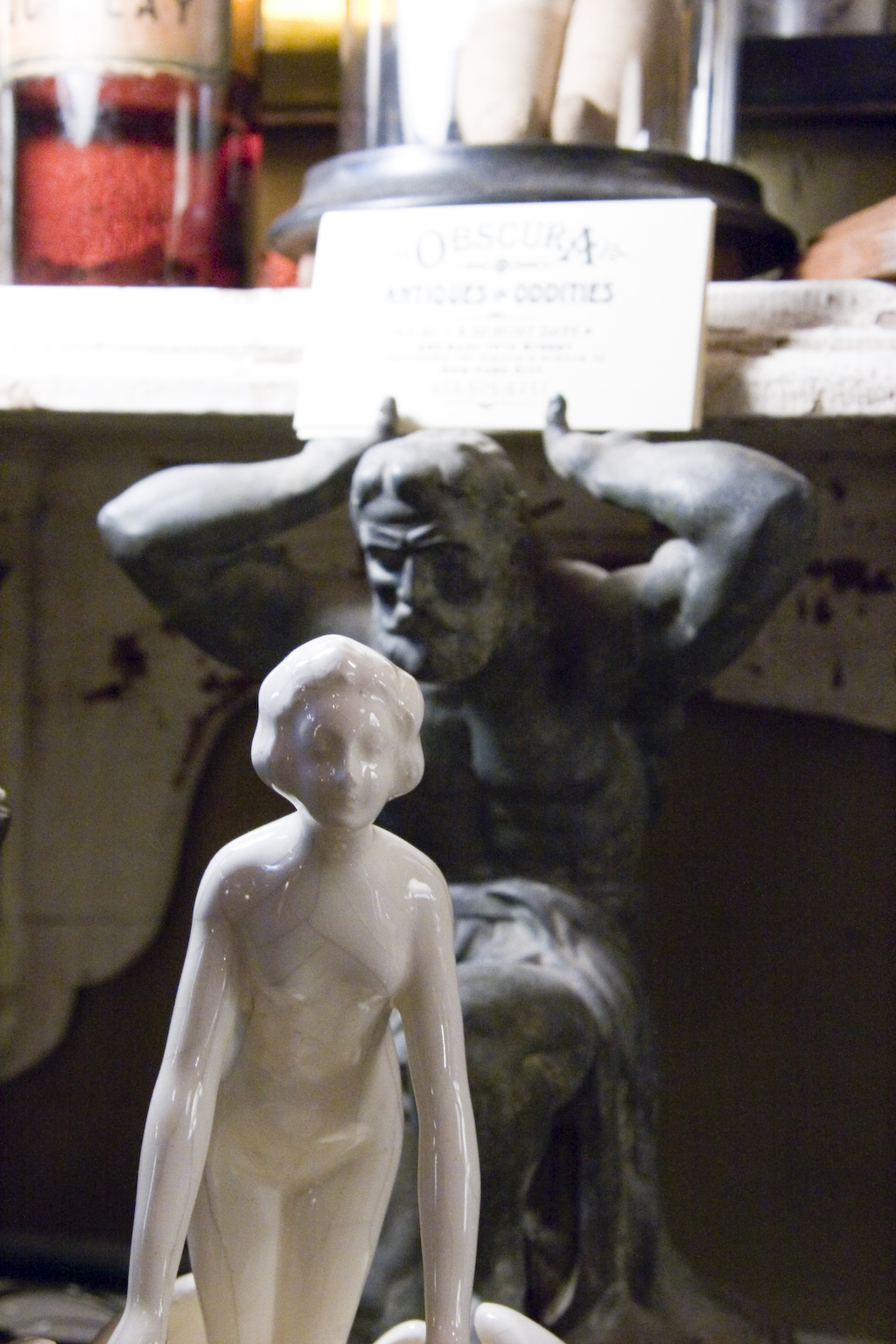
Obscura Antiques and Oddities, NYC


Long before Cabinets of Curiosity made their way to Barney's, Damien Hirst unveiled his diamond-encrusted skull, and Marilyn Manson made news for his compulsive collecting of dead children, there was Obscura Antiques and Oddities. Less a store than a museum you can shop at, Obscura, located in the East Village, is, by far, my favorite shop in New York City.

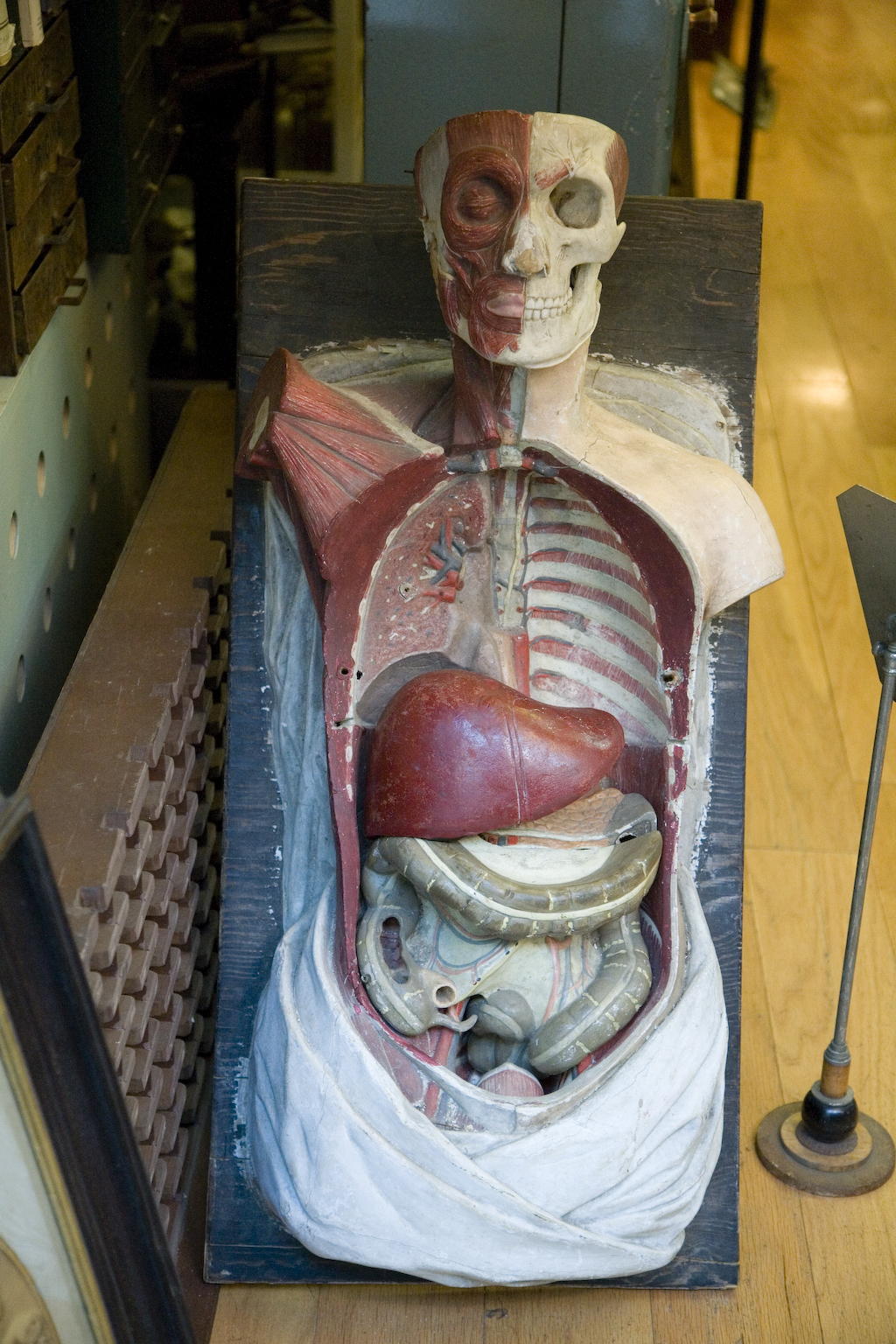
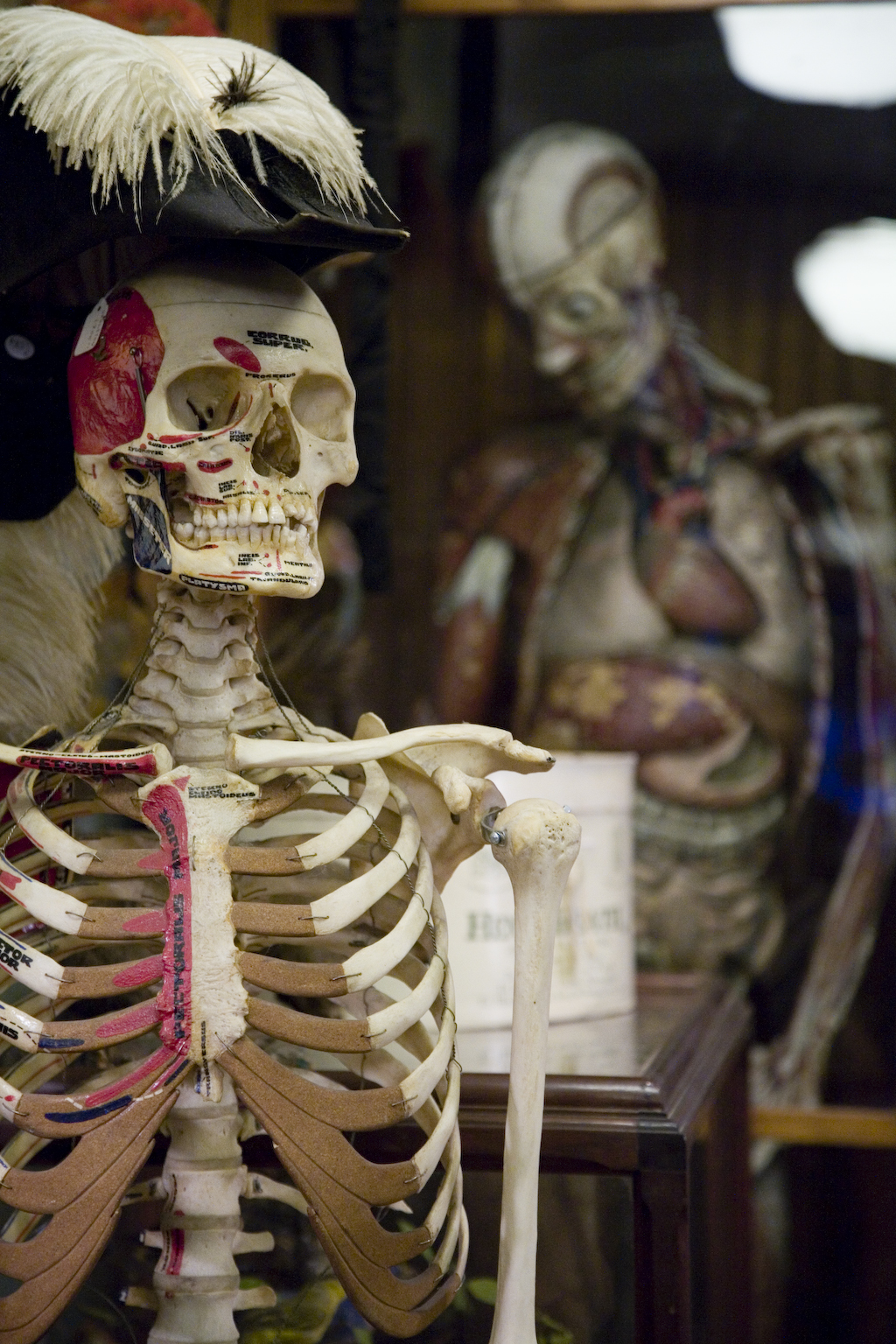
Stock varies, but on a given day, here are some things you're likely to come across: anatomical models, memorial photographs, medical art prints, taxedermied pets, shadow boxes, fraternal organization memorabilia, prosthetic limbs, victorian mourning jewelry, magic lantern slides, collections of pinned insects, funeraral ephemera, stereoscopopic cards, carnival castoffs, two headed fetal pigs, a jar of worms, corsets, top hats, glass fronted cabinets, victorian vitrines ... the list goes on. Don't be intimidated by their celebrity clientele (they feed the habits of The Sedarises and Chloë Sevigny, among others) or the uber-hip east-village customers you might see within; the proprietors are very friendly and extremely knowledgable, and you'll probably leave knowing something you didn't know before. See above photos for details of merchandise over the past few years.

Monday, October 1, 2007

Johann Jakob Haid (18th C)


'Everything is Vanity', a mezzotint by German artist Johann Jakob Haid. Via Bibliodyssey.

Saturday, September 29, 2007

"Confronting Mortality with Art and Science" Conference


"memento homo, quia pulvis es et in pulverem revertis"
(remember man, that dust thou art, and to dust shalt thou return)


Academia seems to be catching up with our interest in art and death. Case in point--the upcoming conference "Confronting Mortality with Art and Science," taking place October 18-20 in Antwerp, Belgium. The conference features a lineup of medical illustrators, scientific illustrators, artists and scientists (inluding myself) presenting lectures, films and artworks on the topic of mortality. Check out the complete schedule here and the work of contributing artists here.

Its a pretty dreamy lineup, including sessions like "Mortality and its Importance for the Artist," "Science as Art; Art as Science," "Unnatural Death: The ‘Art’ and ‘Science’ of Murder," and "'Tremendum et Fascinans': Mortality and Repetition as Object of Desire in the Work of Edgar Allen Poe." If you happen to be around Antwerp on October 19th, stop by--I will be exhibiting some photographs and presenting a lecture/slideshow entitled "Memento Mori: Pathological Portraits, Anatomical Visions, and Medical Museums of the Western World, right after the film Anatomy of Melancholy.

Wednesday, September 26, 2007

Johan Remmelin (1583-1632)


Play with Johan Remmelin's anatomical flap-book Catoptrum Microcosmicum (1619) on this ingenious interactive website produced by the University of Iowa library.

Tuesday, September 25, 2007

I Am As You Will Be: The Skeleton in Art; Chiem & Read, 2007


Skeletons and death are definitely in the zeitgeist at the moment, especially in the fine art world. First Damien Hirst's diamond skull, then Steven Gregory's show at Nicholas Robinson Gallery, and now this: I am as You Will Be: The Skeleton as Art, up at Cheim & Read through November 3rd. This group show features artworks which take the skeleton as subject, and inludes the work of artists as varied as Matthew Barney, Louise Bourgeois, Marcel Broodthaers, Salvador Dali, Paul Delvaux, Marlene Dumas, James Ensor, Damien Hirst, Edvard Munch, Alice Neel, Pablo Picasso, Félicien Rops, Andy Warhol, among many others.

Find out more about the show here. Special thanks to another wonderful artist working with skull imagery, Rob O'Neill, for sending this my way!

Monday, September 24, 2007

Steven Gregory (2007)


My friend Amy just turned me onto the work of artist Steven Gregory. The descriptions of the pieces are part of the fun. Example: Bone Orchid, 2007; Human bones, glass beads, plaster and wax (this applies to the bottom image) A modern day Frederik Ruysch? Above images from his solo exhibition Bone Stone Bronze, up till Novevmber 3rd at Nicholas Robinson gallery. Thanks, Amy!

Sunday, September 23, 2007

Popular Anatomical Waxworks Auction, Christie's, 2001


"A UNIQUE collection of 350 anatomical wax models which once travelled Europe as a carnival sideshow is expected to raise at least £300,000 at Christie's in London later this month."
--The Telegraph, December, 2001

"I saw men enter blind drunk and leave stone-cold sober."
--Lily Binda, remarking on her collection of anatomical waxes.

I think I am in love with Christie's Auction house. Today I came across an auction they hosted in 2001 called The William Bonardo Collection of Wax Anatomical Models, a private collection of anatomical waxes with a fascinating back story that amounts to a nice snapshot of the changing uses of anatomical waxes over time.

The William Bonardo Collection was originally assembled by Swiss Painter Leonce Schiffman in the early 20th century, and consisted of a variety of waxes covering topics from treppaning to syphillus and from childbirth to siamese twins, many of which were manufactured in Germany in the 19th century.This collection was later inherited by carnival freak show owner Lily Binda, who exhibited them at her show until legislation in the 1960s outlawed such displays. Binda then took her show on the road, creating an itinerant exhibition that toured the fairgrounds of Europe. Binda died 1980s; her husband put the collection, which had been stored at a warehouse in Switzerland, up for auction in 2001.

The collection looks like it was amazing, from what remains on the Christie's website and from the snapshots compiled on a website called "Corkscrew Balloon;" it is all the more remarkable for the fact that most popular anatomical artifacts were destroyed, seen as pornograpic or, at the least, unsavory, and this one appears to have survived intact and in excellent condition. I wonder where these objects now reside?

You can read more about the collection and its history in the Telegraph article Medical waxwork horrors come under the hammer. To read more about popular anatomy in general, check out Michael Sappol's amazing Morbid curiosity: The Decline and Fall of the Popular Anatomical Museum.