Friday, March 14, 2008

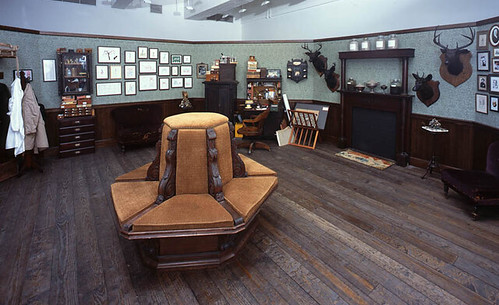
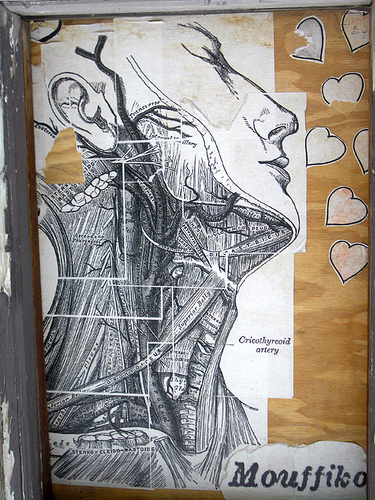
"The Octagon Room," Mark Dion, 2008


I know this is late notice, but if you get a chance, go check out Mark Dion's "Octagon Room" (pictured above) installation at Tanya Bonakdar Gallery. Tomorrow is your last chance (it closes on March 16th), but it is well worth a visit if you can fit it in. Dion deals with taxonomies, "natural history", and humankind's relationship with nature in visually intriguing ways, often through the evocative clutter of historical and accumulated objects; he is one of my favorite contemporary artists. You might want to check out his Flickr presence as well.

"Amazing Rare Things: The Art of Natural History in the Age of Discovery," David Attenborough, 2008


"There is a common denominator that links all these artists. It is the profound joy that all feel who observe the natural world with a sustained and devoted intensity" --Sir David Attenborough

An amazing looking exhibition called "Amazing Rare Things: The Art of Natural History in the Age of Discovery" and curated by the venerable David Attenborough is showing though September 28th at The Queen's Gallery in Buckingham Palace.

The exhibition features the work artists Leonardo da Vinci, Wenceslaus Hollar, Alexander Marshal, Maria Sibylla Merian and Mark Catesby, as well as many works from the "paper museum of collector Cassiano dal Pozzo." What a wonderful concept, a "paper museum"... Not surprisingly, this "paper museum" is the source of some of the strongest images in the show.

To see the full gallery of images, click here. To read a nice (and more thorough) discussion of the show, check out a recent post by Bioephemera. Read a review of the show at the London Independent here. Check out the book which preceded the show, Amazing Rare Things: The Art of Natural History in the Age of Discovery,here.

Thursday, March 13, 2008

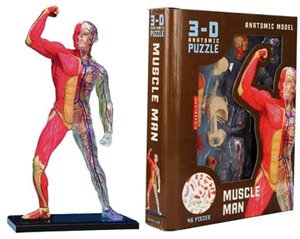
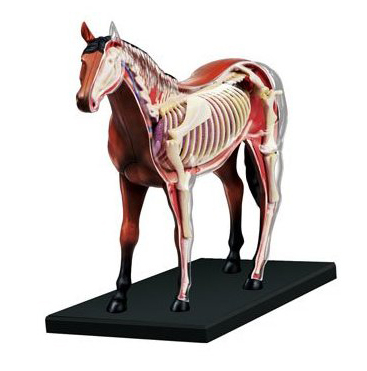
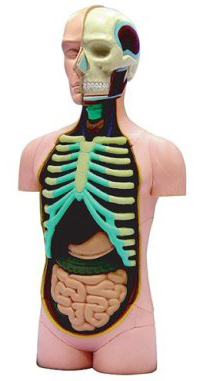
Kikkerland Design Anatomical 3D Puzzles


The enigmatic Kikkerland Design has produced a slew of 3D puzzles of anatomical models (is that the way to word it?), among other odd and intriguing things. I think I want the horse...

Check out the complete Kikkerland collection here. Visit their website here.

Oh! Just heard from the Kikkerland folks themselves, who have informed me about places in NYC where you can purchase these puzzles: MXYPLYZYK, EXIT 9 and what is possibly my favorite place in the world (and where I spend much of my time as a volunteer)--the American Museum of Natural History.

Tuesday, March 11, 2008

"A Repository for Bottled Monsters" Weblog, 2008


If you have not already found your way over, I highly recommend you visit The National Museum of Health and Medicine's new (and picturesquely titled) blog "A Repository for Bottled Monsters." However did they come up with that name, you may ask? From the website:

It's historical. I found it in a quote from one of the former curators... He closed with the complaint, "We still suffer under the connotation museum, an institution still thought of by many as a repository for bottled monsters and medical curiosities. To be sure, we have such specimens. As is required by law, we maintain an exhibit open to the public, but in war time, at least, the museum per se is the least of our functions, and we like to be thought of as the Army Institute of Pathology, a designation recently authorized by the Surgeon General."

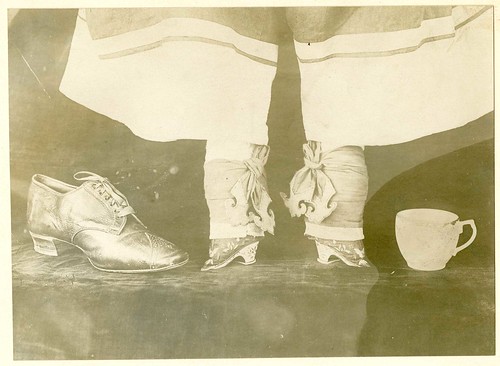
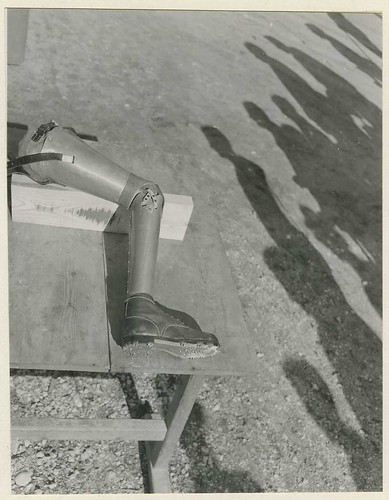
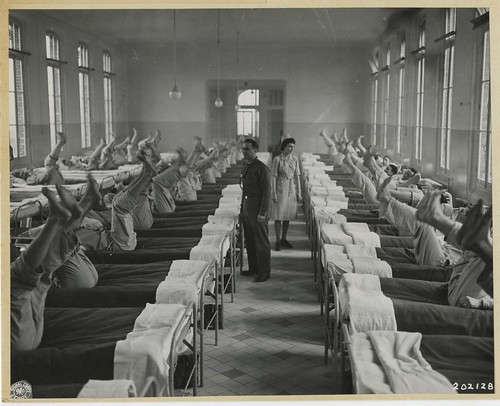
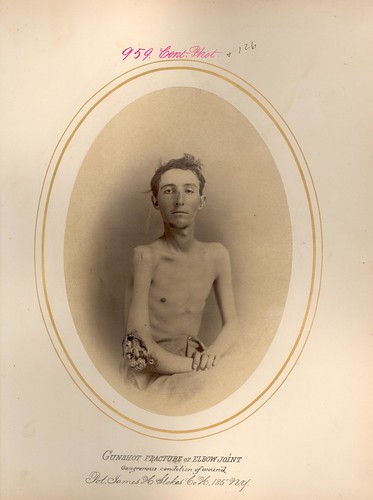
Visit the blog to read the complete quote, as well as postings on WWII Venereal Diseases, book and museum reviews, news on upcoming exhibitions, and much more. Also, don't forget to visit (and revisit!) their Flickr pages, which are updated daily and contain an amazing number of wonder-inducing images, complete with informative captions. You can find them here, here, and here.

All above images from "Bottled Monsters" and NMHM's Flickr pages.

International Anatomical Graffiti


Vanessa Ruiz of Street Anatomy has compiled a nice collection of anatomical graffiti. Above are some of my favorites; check out the entire gallery here.

Monday, March 10, 2008

Helmie van de Riet (Born 1961)


Find out more about anatomical-inspired artist Helmie van de Riet's work (if you speak Dutch, that is) here. (And hey--if you are able to figure anything out, please let Morbid Anatomy know. We are dying to know more!)

Sunday, March 9, 2008

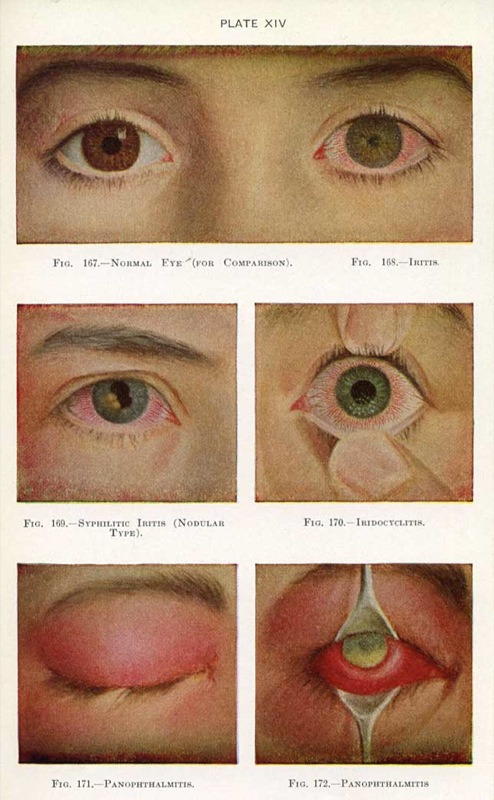
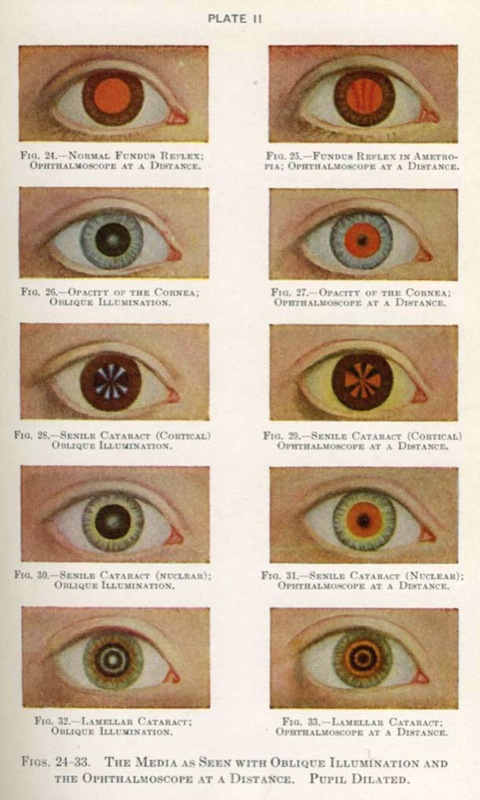
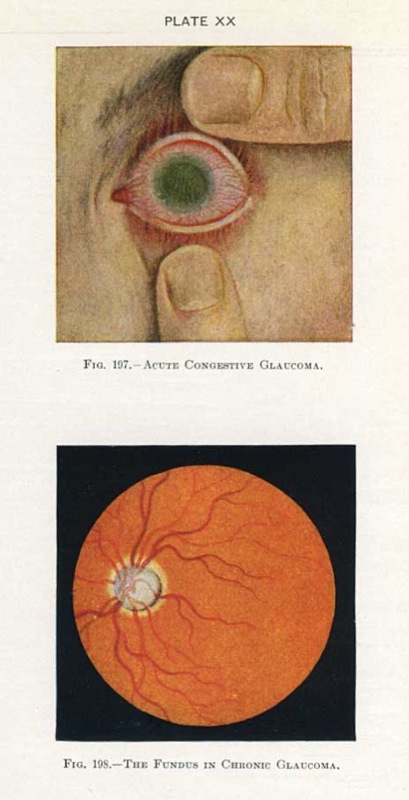
"Manual of the Diseases of the Eye," Charles H. May M.D. (First edition 1900)


I have always had a thing for medical depictions of the eye. Manual of the Diseases of the Eye for Students and General Practitioners, (a 1939 edition of which resides in the Morbid Anatomy library and from which these scans are drawn), contains 387 of them, many quite fantastic (in all senses of the word); peruse them all (in regrettably low-res form) in the Google Books 1905 edition PDF here.

Thursday, March 6, 2008

Comparative Anatomical Illustration, 1559-1626


From a nice post on the stylistic evolution of anatomical illustration found on the Medical Illustration Studio Blog.

Wednesday, March 5, 2008

"Music From the Body," Roger Waters and Ron Geesin, 1970


The album "Music from the Body" is the soundtrack to a 1970s documentary called "The Body" which is described on Internet Movie Database thusly: The body is birth and love. The body is life and sex. The body is dreams and beauty. The body is joy and fear. The body is you and everybody you know." The soundtrack is the product of a collaboration between Pink Floyd's Roger Waters and British composer and musician Ron Geesin; here are just a few of the songs you will find there: "Red Stuff Writhe," "Dance of The Red Corpuscles," "Embryonic Womb-Walk," and "March Past Of the Embryos."

Despite the general un-listenability of the record (well, there are a few decent songs, but most are a bit high-concept for my taste) I am still quite curious to see the film itself. Sadly, I have been unable to locate any rentable or purchasable copy of it. Might anyone out there know of a way to acquire or access a copy? To get a taste of it, you can check out the film's opening sequence here.

Thanks, by the way, to my good friend Amy Slonaker for sending the LP my way.

Tuesday, March 4, 2008

"Danse Macabre," Saint-Saëns, 19th Century


The Danse Macabre, also known as the Dance of Death, Danza Mababra, danza della morte, or Totentanz (depending on you nationality), originated during the years of the bubonic plague (a.k.a. the black death) in the 14th century, and was intended to remind one that death would soon be coming for us, be we king, pope or commoner. The theme was explored in forms as diverse as poetry, visual arts (see above) and music. One of my favorite examples of the genre is a musical composition by Camille Saint-Saëns, entitled Danse Macabre, first performed in 1875.

Wikipedia has a wonderful entry on the piece; following are some of the highlights:

The composition is based upon a poem by Henri Cazalis, which itself is based upon an old French superstition:

Zig, zig, zig, Death in a cadence,
Striking with his heel a tomb,
Death at midnight plays a dance-tune,
Zig, zig, zig, on his violin.
The winter wind blows and the night is dark;
Moans are heard in the linden trees.
Through the gloom, white skeletons pass,
Running and leaping in their shrouds.
Zig, zig, zig, each one is frisking,
The bones of the dancers are heard to crack—
But hist! of a sudden they quit the round,
They push forward, they fly; their cocks have crowed.

According to the ancient superstition, "Death" appears at midnight every year on Halloween. Death has the power to call forth the dead from their graves to dance for him while he plays his fiddle (represented by a solo violin with its E-string tuned to an E-flat in an example of scordatura tuning). His skeletons dance for him until the first break of dawn, when they must return to their graves until the next year.

The piece opens with a harp playing a single note,and soft chords from the string section. This then leads to the eerie E flat and A chords (also known as a tritone or the "Devil's chord") played by a solo violin, representing death on his fiddle... The final section, a pianissimo, represents the dawn breaking and the skeletons returning to their graves.


Listen to (or download) a wonderful version from 1925, conducted by Leopold Stokowski here. The lavishly illustrated and lovingly compiled website Danza Macabre might make a nice companion piece.

Saturday, March 1, 2008

"Extraordinary Bodies: Mutter Museum Photographs" Exhibition Opening


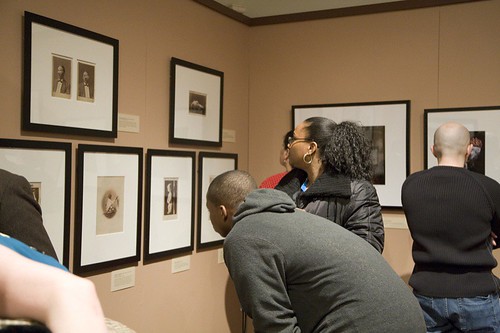
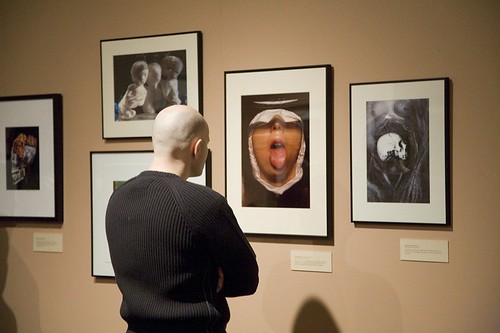
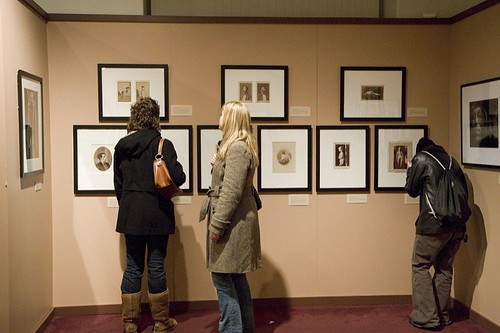
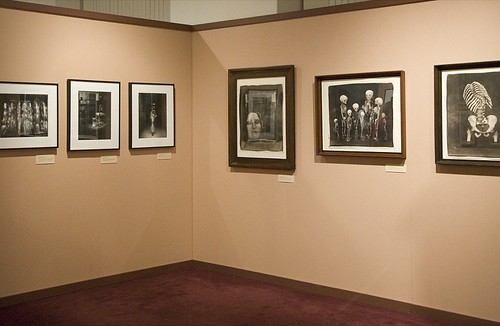
Last night was the opening for "Extraordinary Bodies: Mütter Museum Photographs" at the Mütter Museum. Above are some images of the event and exhibition; view more here. Or better yet--take a trip to the Mütter to see it with your own eyes--you have until the end of the year. Trust me--its worth it! If you need more persuasion: (from the Mütter Museum webpage:)
Curated by Laura Lindgren. The historical bond between photographers and medicine carries forward to the present day with Extraordinary Bodies: Mütter Museum Photographs, an exhibition that presents more than a decade of work by sixteen contemporary fine-art photographers. Originally curated to coincide with the publication of Mütter Museum, this exhibition has traveled nationally since 2002 and now comes home for presentation for the first time in the Mütter Museum's own gallery. The works in this exhibition find beauty not in conventional forms, but in the internal marvels revealed in the Museum's specimens and medical models. The artists have been drawn to explore the enigma of the body, whether normal or deformed, broken, or disfigured, to create visual metaphors for the human condition. The exhibition includes photographs by Shelby Lee Adams, Max Aguilera-Hellweg, Gwen Akin & Allan Ludwig, Candace diCarlo, Dale Gunnoe, Steven Katzman, Mark Kessell, Scott Lindgren, Olivia Parker, Rosamond Purcell, Richard Ross, Ariel Ruiz i Altaba, Harvey Stein, Arne Svenson, William Wegman, and Joel-Peter Witkin, and a selection of historic photographs from the Museum's collection...

Wednesday, February 27, 2008

Bassett Stereoscopic Dissection Collection (1962)


A small sampling of Stanford University School of Medicine's renowned "Bassett Collection" has been uploaded to Flickr! I really love this new direction Flickr has been taking, working with museums to showcase their collections. (For more on this, see recent posts on Library of Congress and National Museum of Health and Medicine.)

The "Bassett Collection" is more, however, than just a group of beautiful dissection photos; it is also a View-Master set! No joke. This collection premiered in 1962 as the Stereoscopic Atlas of Human Anatomy. This set consisted of 221 View-Master reels of 1,554 color, stereoscopic dissection photos, along with an informational booklet explaining the images. The collection, a collaboration between dissectionist David L. Bassett and View-Master inventor William Gruber, was popular right from the start; when Bassett first exhibited the images, there were lines around the block of people waiting to see them.

This month, they will be released in a new format altogether--online, and with highlighted labeling and audio narration, presumably for a fee. You can view a sampling of the images, fee-free, on Flickr.

Read more about the collection and its history (and future) here. View the Flickr page here. Images of Atlas above from a recent, edited re-release. Thanks to Mike Sappol for sending this along!

Monday, February 25, 2008

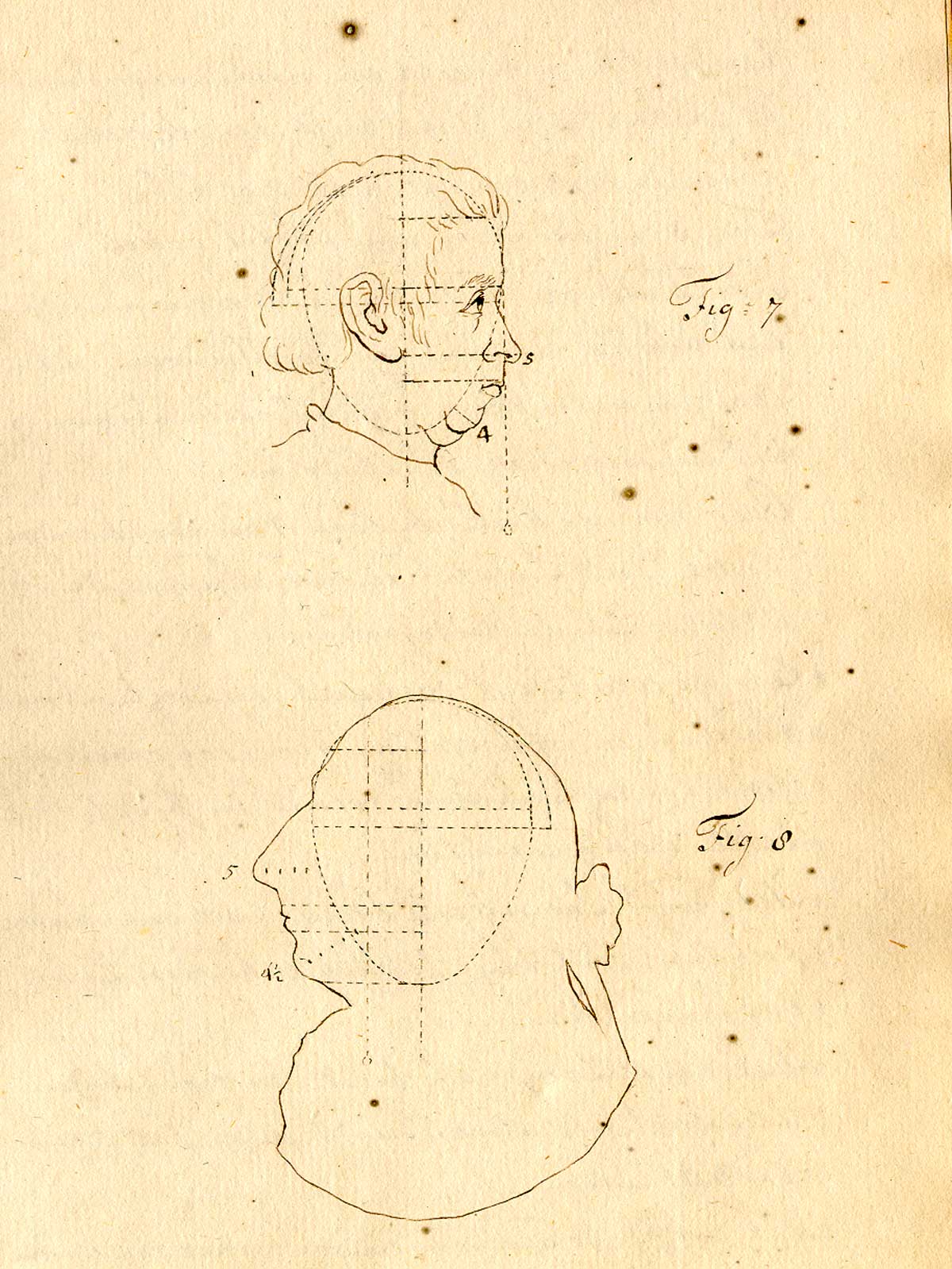
Anonymous [Treatise on physiognomy. (Netherlands?, ca. 1790)].
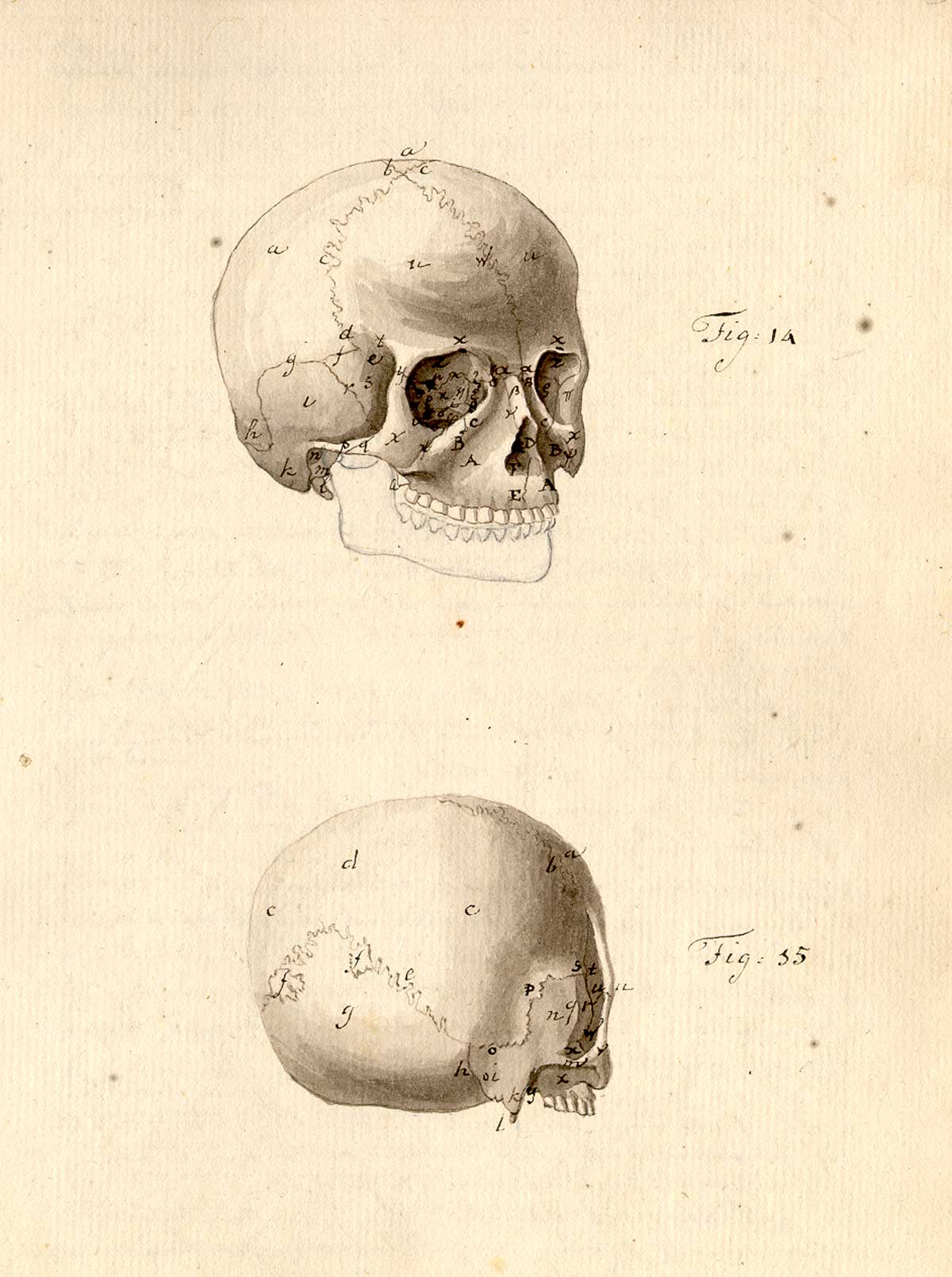


Found on the National Library of Medicine's "Historical Anatomies on the Web." Description reads:

Physiognomy is the science of relating an individual's character, personality, and temperament to the shape of his or her face, head, and/or body. The theories behind it go back to Hippocrates, who believed that physical characteristics of the human body revealed personality traits; Aristotle performed studies on how hair, limbs and facial features predicted personality and temperament. Such theories thrived throughout the Middle Ages and the Renaissance, and the noted Girolamo Cardano (1501-1576) was one of its main proponents. By the 18th century, the study of physiognomy was still taken very seriously as a medical topic, with important additions to the field made by Johann Caspar Lavater (1741-1801). Franz Josef Gall (1758-1828) attempted to make its study even more scientific by measuring human and animal craniums to find correlations between skull shape and behavior, founding the field of phrenology.

The author of this fine, manuscript treatise and sketchbook on physiognomy is unknown. The text is written in Dutch and was probably composed in the 1790s; it is possible that it was created as a dissertation by a medical student.