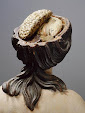
From Morbid Anatomy and our army of two-headed gingerbread men, compliments of the Mütter Museum Giftshop.


 Happy Holidays, everyone, from me, Darwin/Santa, The Frightening Clapping Monkeys, and GF Newland, the genius maker of this card.
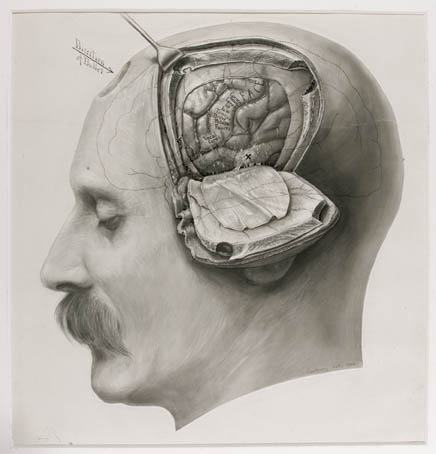
A: Head on B: Body: The Real Life Dr. FrankensteinYou can find out more about this event on the Observatory website by clicking here and can can access the event on Facebook here. You can get directions to Observatory--which is next door to the Morbid Anatomy Library (more on that here)--by clicking here. You can find out more about Observatory here, join our mailing list by clicking here, and join us on Facebook by clicking here.
A screening and lecture with film-maker Jim Fields and Mike Lewi
Date: Friday, January 7th
Time: 8:00 PM
Admission: $5
Presented by Morbid Anatomy
In an eventful and successful career spanning 40 years, Dr. Robert White–pioneering neurosurgeon and Professor at Cleveland’s Case Western Reserve University–did many things. He participated in Nobel Prize-nominated work, published more than 700 scholarly articles, examined Vladimir Lenin’s preserved brain in Cold War Russia, founded Pope John Paul II’s Committee on Bioethics, went to mass daily, and raised 10 children. He also engaged in a series of horrifying and highly controversial experiments reminiscent of a B-Movie mad scientist, experiments which pushed the limits of medical ethics, infuriated the animal rights community, and questioned notions of identity, consciousness, and corporeality as well as mankind’s biblically-condoned dominion over the animal kingdom.
Tonight, join film-maker Jim Fields–best known for his 2003 documentary “End of the Century” about the legendary punk band The Ramones–and Mike Lewi for a screening of Fields’ short documentary about the life and work of this real-life Dr. Frankenstein whose chilling “full body transplants” truly seem the stuff of a B-Movie terror. Fields will introduce the film–which features a series of interviews with Dr. White discussing his controversial experiments–with an illustrated lecture contextualizing the doctor’s work within the history of “mad scientists” past and present, fictional and actual; scientists whose hubris drove them to go rogue by tampering with things perhaps best left alone.
Jim Fields made a few documentaries, one of which, “End of the Century: the Story of the Ramones” is particularly long. He’s currently a video journalist at Time Magazine and Time.com.
Mike Lewi is a filmmaker, event producer, and disc jockey.

Cote cliché: 09-575178Click on image to see much larger, more interesting image. Via RMN found via Bits and Bites Tumblr.
Inventory Number: P4460
Fund: Photographs
Title: Anatomical wax
Description: Gallery comparative anatomy, circa 1880
Author: Petit Pierre Lanith (1831-1909)
Photo credit: Contact us in advance for monographs, exhibition panels, commercial editions, advertising and communication. An additional proof be sent to the museum. (C) National Museum of Natural History, Dist. RMN / image MNHN, Central Library
Period: 19th century
Date: 1880
Location: Paris, National Museum of Natural History, Central Library


While we may never know what the ‘must have’ Christmas gift was in 1890, we do know that it most assuredly wasn’t Thomas Edison’s talking doll.To hear this wee monstrous baby reciting, we are led to believe, "Little Jack Horner," click here. To read the entire story from which the above excerpt is drawn, click here. Sound from Archive.org.
Using miniature phonographs embedded inside, these “talking” baby dolls were toy manufacturers’ first attempt at using sound technology in toys. They marked a collaboration between Edison and William Jacques and Lowell Briggs, who worked to miniaturize the phonograph starting in 1878.
Unfortunately, production delays, poor recording technology, high production costs, and damages during distribution all combined to create toys that were a complete disaster, terrifying children and costing their parents nearly a month’s pay.
Edison would later refer to the dolls as his “little monsters.”

The Vast Santanic Conspiracy: Is St. Nick the Tool of a Plot too Monstrous to Mention?You can find out more about this event on the Observatory website by clicking here. You can get directions to Observatory--which is next door to the Morbid Anatomy Library (more on that here)--by clicking here. You can find out more about Observatory here, join our mailing list by clicking here, and join us on Facebook by clicking here.
An illustrated lecture with cult author and cultural critic Mark Dery, followed by a Krampus/Solstice-themed after party with music, specialty cocktails, and more
Date: Tuesday, December 21 (Winter Solstice)
Time: 8:00 PM
Admission: $10
Presented by Morbid Anatomy
Canceled, last year, by an act of Cthulhu–the Mother of All Blizzards, which dumped 20 inches of snow across the Northeast–Dery’s wickedly witty lecture, “The Vast Santanic Conspiracy: Is St. Nick the Tool of a Plot too Monstrous to Mention?,” is sure to inspire Christmas jeer.
Few Americans know that Santa descends from the mock king who held court at Saturnalia, the Roman festival celebrating the winter solstice. Or that he shares cultural DNA with the Lord of Misrule who presided over the yuletide Feast of Fools in the Middle Ages—lewd, blasphemous revels that gave vent to underclass hostility toward feudal lords and the all-powerful church.
In “The Vast Santanic Conspiracy: Is St. Nick the Tool of a Plot too Monstrous to Mention?,” Dery, a cultural critic and book author, takes a look at the Jolly Old Elf’s little-known role as poster boy for officially sanctioned eruptions of social chaos, as well as his current status as a flashpoint in “the Christmas Wars”—cultural battles between evangelicals, atheists, conservatives, and anti-consumerists over the “true” meaning of Christmas. Along the way, Dery considers New Age theories that Santa is a repressed memory of an ancient Celtic cult revolving around red-capped psychedelic mushrooms; Nazi attempts to re-imagine Christmas—a holiday consecrated to a Jewish baby, for Christ’s sake—as a pre-Christian invention of tree-worshipping German tribes, in some misty, Wagnerian past; and the suspicious similarities between Satan and Santa, connections that have fueled a cottage industry of conspiracy theories on the religious right.
Mark Dery (www.markdery.com) is a cultural critic. He is best known for his writings on the politics of popular culture in books such as The Pyrotechnic Insanitarium: American Culture on the Brink and Escape Velocity: Cyberculture at the End of the Century. Dery is widely associated with the concept of “culture jamming,” the guerrilla media criticism movement he popularized through his 1993 essay “Culture Jamming: Hacking, Slashing, and Sniping in the Empire of the Signs”; “Afrofuturism,” a term he coined and theorized in his 1994 essay “Black to the Future” (included in the anthology Flame Wars: The Discourse of Cyberculture, which he edited); and the Pathological Sublime, which he introduced in The Pyrotechnic Insanitarium. He has been a professor in the Department of Journalism at New York University, a Chancellor’s Distinguished Fellow at UC Irvine, a Visiting Scholar at the American Academy in Rome, a blogger for True/Slant (http://trueslant.com/markdery/) and Thought Catalog (http://thoughtcatalog.com/) and a guest blogger at Boing Boing. A Portuguese-only collection of his recent essays, Não Devo Pensar Em Coisas Ruins (I Must Not Think Bad Thoughts), has just been published in Brazil by Editora Sulina.

Baudelaire wrote a letter to a friend telling him about his dream. He dreams that he goes to a brothel, which is like a gallery, and finds that part of it is a medical museum. There are pictures on the wall of fetuses that the women in the brothel have given birth to. One fetus is alive and has lived there for years, it spends all day sitting on a plinth, as part of the medical exhibition. It has a rubbery appendage growing from the top of its head which it has wrapped around its body. Baudelaire has a conversation with it, then wakes up and finds that he was sleeping in the same position as the creature on its plinth."Baudelaires Dream" is now on view in a solo show of Rumsey's work at the Galerie Beatrice Soulie in Paris until January 15th, stumbling distance from the incredible Musée Dupuytren. You can find out more about the exhibition by clicking here. Click on the image to see much larger, finer, and more detailed image.


RETROFUTUROLOGYTo find out more, click here.
How the Past Saw the Present // How the Present Sees the Future
A group show of visual art at Observatory, Brooklyn, curated by the Hollow Earth Society, Ethan Gould & Wythe Marschall, Founding Colonels
The imagination (as a productive faculty of cognition) is a powerful agent for creating, as it were,a second nature out of the material supplied to it by actual nature. —Kant
To have an imagined future, you must simultaneously have an imagined present and an imagined past.
A DeLorean decked out in flashing lights and complicated-looking wires: It's a modest-budget promise that, yes, the technologies of our age—our new computer chips and LED lights and cars with doors that open upright like a space pod—can puncture the time barrier, with the right old-fashioned mad scientist at the steering wheel! Where to go? A rowdy 1950s, wherein a white kid can invent rock and roll? A steampunk 1800s? A future wherein the promises of kaleidoscopic, holographic advertising from the late 1980s come to fruition—a world with yet another layer of retrofuturist dreaming added onto the small-town diner...?
Our visions of the future are nested.
Our conception of time is hyperreal. In explaining the visual gimmicks of a single cultural artifact such as the Buggles's "Video Killed The Radio Star," we must refer to the heyday of radio; the future promised by television executives in synthesizer advertisements; science fiction pulp covers from the 1950s; the neon-on-black-and-white aesthetic of MTV in its early years, not to mention the gallery scene that birthed that aesthetic; 1950s diner-decor futurism; the late-1970s body-posturing and dystopic styling of Devo; Fritz Lang's Metropolis, looking forward to 2026; the garb of mad scientists in movies from the 1940s;—and the sigh that comes with opening a magazine and seeing all of this, compressed down into an ad for sunglasses for hipsters.
Or not even for hipsters: The retrocamp fashion exemplified by an irritating blend of past and future has been recompressed and sold in shopping malls internationally. This isn't marginal pulp—
This is the process on which the present runs.
You are invited to join us for a group show
The Hollow Earth Society seeks artists working in drawing, printmaking, and painting, and possibly sculpture and video/multimedia art (space is limited) for RETROFUTUROLOGY, a group show focused on past- and present-futures, to be up from January 29 to March 5, 2011, at Observatory (observatoryroom.org). Submissions are due January 8, 2011.
How to submit:
Include all information listed below. Late or incomplete submissions will not be considered unless they are mind-staggeringly fantastic and presented with great humility.
Send us up to five images. Digital submissions will be accepted via email. Files must be in JPEG or PDF format. Please number your image files to correspond to your image list.
Send an image list. Double check that the numbers on your list correspond to the numbers in the names of your actual files. In your list, include for each image: an image number, the work's title, the date of work, the medium, and its size and price.
Along with the list, please include a brief description of each image.
Send a three-line bio, your contact information and an email address. You may also submit a résumé.
If you like, send an optional artist’s statement, no longer than 300 words.
THERE IS NO FEE TO ENTER.
Deadline: All email submissions must be received no later than January 8, 2011. (All accepted work should be physically received at Observatory no later than January 24, 2011.)
Return of submitted materials: Include a SASE and make sure there is sufficient postage, or pay for shipping and we will ship your work back to you. If work is two-dimensional, the Hollow Earth Society is more than happy to have it on file for future shows and keep it exhibited for sale on our website. The same 30% commission for art sold will apply.
Drop-Off: If you have been accepted into the show and are in the NYC area, you may wish to drop off your art at the gallery. Email us (gallery@hollowearthsociety.com) to schedule a date and time.
Pick-Up: Return of mailed artwork with return postage will begin on March 12, 2011.
Email submissions to:
gallery@hollowearthsociety.com
By post:
Observatory
543 Union Street
Brooklyn, NY 11215

Proteus Gowanus, is located at 543 Union Street (between Nevins and Bond) in the Gowanus neighborhood of Brooklyn, New York. Entrance to the gallery is off Nevins Street: enter through the large black gates, walk down the alleyway to the end, second door on the left. Look for the golden arm above the gallery door.
Subway
R or M train to Union Street in Brooklyn:
Walk two long blocks on Union (towards the Gowanus Canal) to Nevins Street. 543 Union Street is the large red brick building on right. Go right on Nevins and left down alley through large black gates. Gallery is the second door on the left.
F or G train to Carroll Street:
Walk one block to Union. Turn right, walk two long blocks on Union towards the Gowanus Canal, cross the bridge, take left on Nevins, go down the alley to the second door on the left.
Driving from Manhattan.
(There is usually easy parking on weekends.)
Continue straight off Brooklyn Bridge to Atlantic Avenue, take left on Atlantic. Go four blocks to Nevins St and take a right. Follow Nevins several blocks til you come to Sackett. Park on the next block (just before Union) and go down the alley off Nevins through the large black gates, second door on the left.

Next Friday, 17 December, Elena Corradini at the Università di Modena e Reggio Emilia organises a seminar on “Visiting an Anatomical Museum: curiosity or training?”:If I was in Italy, I would SO be there.... If any Morbid Anatomy readers live near Modena Italy and would like to make attend and write a report about your experience, you can email me at morbidanatomy@gmail.com.
Anatomical University Museums are the keepers of collections which often are very old and different for their consistence and typology. These museums have a fundamental role for the preservation and valorization of cultural historical‐scientific heritage, therefore must become a place of interdisciplinary synthesis. They represent the progress of studies in the past and for the future, and play their fundamental role for the research and for the promotion of educational activities. This role will allow them to be a service for University students and professors, and to spread scientific knowledge to different audiences. Developing the capacity of museums to work in a network is necessary for them to become centres for the production of knowledge, activities and services.
Speakers include a number of directors and curators from Italian university anatomical museums together with the directors of the Josephinum of Vienna and the Museum of Medical University of Danzig:Info from Silvia Rossi or Sara Uboldi, University of Modena and Reggio Emilia (silvia.rossi@unimore.it; sarauboldi@yahoo.it), +39 059 205 5012
- Giovanni Mazzotti, University of Bologna: Visiting an Anatomical Museum: curiosity or training?
- Sonia Horn, University of Wien: The growth of collections for the permanence of an historical Anatomical Museum. The case of the Josephinum in Vienna.
- Roberto Toni, University of Parma: The Anatomical Museum as a research source in the field of
- biomedical robotics: the Tenchini project at the University of Parma
- Alessandro Ruggeri, Nicolò Nicoli Aldini, Stefano Durante, Vittorio Delfino Pesce, University of Bologna: The visit of the Anatomical Waxes Museum “Luigi Cattaneo” center of in-depth research of the Bolognese medical tradition of XIXth century and of training for modern education
- Ugo Pastorino, National Tumour Institute, Milan: The project for a virtual archive of human body images
- Carla Garbarino, University of Pavia: The anatomical collections of the Museum for the history of the University
- Marek Bukowski, University of Gdansk: An Anatomical collection and Museum of Medical University
- Berenice Cavarra, University of Modena and Reggio Emilia: Medicine and the study of the living being in XVIIth and XVIIIth centuries
- Vincenzo Esposito, Second University of Neaples: Anatomical Museums between past historical identity and present cultural crossbreeding
- Marina Cimino, University of Padua: The birth in a museum or the birth of a museum: the obstetric collection in Padua
- Elena Corradini, Elisa Orlando, Daniela Nasi, Silvia Rossi, Sara Uboldi, University of Modena and Reggio Emilia: POMUI ‐ The Portal of Italian University Museums
- Giorgio Bonsanti, University of Florence; Elena Corradini, Berenice Cavarra, University of Modena and Reggio Emilia; Paolo Nadalini, INP, Institut National du Patrimoine, Paris; Luigi Vigna, Opificio delle Pietre Dure, Florence; Isabelle Pradier, INP, Institut National du Patrimoine, Paris: A project for the restoration of anatomical waxes

"Oddities” Marathon and PartyTo find out more about the event, click here. You can see some clips and find out more about "Oddities" by clicking here. You can get directions to Observatory--which is next door to the Morbid Anatomy Library (more on that here)--by clicking here. You can find out more about Observatory here, join our mailing list by clicking here, and join us on Facebook by clicking here.
A four-episode marathon of the new television series Oddities, with give-aways, special drinks, surprise guests, and after party
Date: TONIGHT! Thursday, December 9
Time: 8:00
Admission: $5
Presented by Morbid Anatomy
On Thursday, December 9, you are cordially invited to join Morbid Anatomy and Observatory as we celebrate the new television series based on our favorite purveyor of curious and amazing artifacts, Obscura Antiques and Oddities in New York City’s East village.
The evenings festivities will include–as a special treat for those of us without cable–a screening of the first three episodes of Oddities, which will reveal, to the discerning eye, an assortment of familiar Observatory faces, including former lecturers Evan Michelson and Mike Zohn as well as a variety of members of the wider Observatory community. There will also be special drinks, a DJed after party, surprise guests, and prizes and give-ways throughout the night. Members of the cast will also be available for questions and comments.
To find out more about the show, check out http://dsc.discovery.com/tv/oddities.
Hope very much to see you there!


The Edward Gorey SaleYou can find out more, peruse the full 60 lots, and find out how to bid by clicking here.
New York, 9 December 2010, 11am
To be held on premises at 6 West 48th Street, New York, NY 10036
View sale online or download a pdf.
Live Bidding to be held on-site, absentee bids acccepted, free internet bidding via liveauctioneers.com and the-saleroom.com
Bloomsbury Auctions New York is very pleased to announce an auction devoted entirely to the author and illustrator Edward Gorey (1925-2000). Known for his whimsically macabre illustrations and intensely unique personal illustration style, this sale will feature an array of items owned by Gorey, as well as a large selection of his published books, original artwork, and personal jewelry.
The central focus of the sale will be 14 fur coats once owned, worn (and one also designed) by Edward Gorey from the 1950’s to early 1980’s. While gentlemen wearing fur coats were hallmarks of Gorey’s early pen and ink illustrations, Gorey himself had a change of heart in the 1980’s, putting the fur coats into storage – never to be worn again. Always well cared for, all coats have been in storage for well over 30 years. Mr. Gorey left the entirety of his estate to the care and welfare of animals. The proceeds from the sale of the coats will benefit the Edward Gorey Charitable Trust, whose sole mission is the care and welfare and animals, and the Edward Gorey House in Yarmouth Port, MA, which celebrates Gorey’s life and work through public exhibitions. Each coat is accompanied by a letter confirming the provenance as well as a custom label with an original Gorey design which has been sewn to the inside lining.
Other noted items include the original hand-penned and colored front cover illustration by Gorey for Edward Fenton’s book Penny Candy, a turquoise onyx skull pendant, two Gorey hand crafted bean bag -like creatures, Gorey’s illustrating fountain pen and approximately 50 signed, first, or interesting editions of Gorey’s classic books.
For all inquiries, please contact us at newyork@bloomsburyauctions.com or 212.719.1000.
For further information on the fur coats only, you may also contact the Edward Gorey House at 508.362.3909 or info@edwardgoreyhouse.org.
Exhibition Times:
Saturday, December 4, 10am-3pm
December 6, 7, 8 10am-5pm
Thursday, December 9 9am
The Vast Santanic Conspiracy: Is St. Nick the Tool of a Plot too Monstrous to Mention?You can find out more about this event on the Observatory website by clicking here. You can get directions to Observatory--which is next door to the Morbid Anatomy Library (more on that here)--by clicking here. You can find out more about Observatory here, join our mailing list by clicking here, and join us on Facebook by clicking here.
An illustrated lecture with cult author and cultural critic Mark Dery, followed by a Krampus/Solstice-themed after party with music, specialty cocktails, and more
Date: Tuesday, December 21 (Winter Solstice)
Time: 8:00 PM
Admission: $10
Presented by Morbid Anatomy
Canceled, last year, by an act of Cthulhu–the Mother of All Blizzards, which dumped 20 inches of snow across the Northeast–Dery’s wickedly witty lecture, “The Vast Santanic Conspiracy: Is St. Nick the Tool of a Plot too Monstrous to Mention?,” is sure to inspire Christmas jeer.
Few Americans know that Santa descends from the mock king who held court at Saturnalia, the Roman festival celebrating the winter solstice. Or that he shares cultural DNA with the Lord of Misrule who presided over the yuletide Feast of Fools in the Middle Ages—lewd, blasphemous revels that gave vent to underclass hostility toward feudal lords and the all-powerful church.
In “The Vast Santanic Conspiracy: Is St. Nick the Tool of a Plot too Monstrous to Mention?,” Dery, a cultural critic and book author, takes a look at the Jolly Old Elf’s little-known role as poster boy for officially sanctioned eruptions of social chaos, as well as his current status as a flashpoint in “the Christmas Wars”—cultural battles between evangelicals, atheists, conservatives, and anti-consumerists over the “true” meaning of Christmas. Along the way, Dery considers New Age theories that Santa is a repressed memory of an ancient Celtic cult revolving around red-capped psychedelic mushrooms; Nazi attempts to re-imagine Christmas—a holiday consecrated to a Jewish baby, for Christ’s sake—as a pre-Christian invention of tree-worshipping German tribes, in some misty, Wagnerian past; and the suspicious similarities between Satan and Santa, connections that have fueled a cottage industry of conspiracy theories on the religious right.
Mark Dery (www.markdery.com) is a cultural critic. He is best known for his writings on the politics of popular culture in books such as The Pyrotechnic Insanitarium: American Culture on the Brink and Escape Velocity: Cyberculture at the End of the Century. Dery is widely associated with the concept of “culture jamming,” the guerrilla media criticism movement he popularized through his 1993 essay “Culture Jamming: Hacking, Slashing, and Sniping in the Empire of the Signs”; “Afrofuturism,” a term he coined and theorized in his 1994 essay “Black to the Future” (included in the anthology Flame Wars: The Discourse of Cyberculture, which he edited); and the Pathological Sublime, which he introduced in The Pyrotechnic Insanitarium. He has been a professor in the Department of Journalism at New York University, a Chancellor’s Distinguished Fellow at UC Irvine, a Visiting Scholar at the American Academy in Rome, a blogger for True/Slant (http://trueslant.com/markdery/) and Thought Catalog (http://thoughtcatalog.com/) and a guest blogger at Boing Boing. A Portuguese-only collection of his recent essays, Não Devo Pensar Em Coisas Ruins (I Must Not Think Bad Thoughts), has just been published in Brazil by Editora Sulina.


The event of the year! The team led by conductor Vincent Dumestre and Benjamin Lazar has produced the very first French opera, composed in 1673 by Lully with a libretto by Quinault. With reconstructed sets and costumes, this entirely candle-lit production is a landmark in the rediscovery of baroque opera, providing a unique opportunity to discover a musical masterpiece that has fallen into oblivion over the last 3 centuries. Performers include Andre Morsch, Claire Lefilliatre, Arnaud Marzonati, Jean-Francois Lombard, Isabelle Druet, Arnaud Richard, and Camille Poul with the Orchestra, Choir, & Dancers of Le Poeme Harmonique.Click here to find out more, or purchase the DVD. Click here (highly recommended!) to view many more segments on the Oedipus at Versailles You Tube station. You can find out more about the history of the Cadmus et Hermoine opera here.
Vincent Dumestre directs this performance of Jean-Baptiste Lully's CADMUS ET HERMOINE. Composed in the 17th century, this libretto is a classic example of a musical tragedy and is known as the first French opera.

The Secret Science Club's 5th-Annual Carnivorous Nights Taxidermy ContestMore here. The image you see above is the Hamlet Mouse by Mouse Angel/Jeanie M. You can purchase your very own Hamlet Mouse--or Angel, or Punker Rocker, or Mousealope, or Pope--at The Morbid Anatomy Library; click here or email me here for details.
Date: Tuesday, December 7
Time: Lecture at 8 PM; Contest begins at 8:30 PM
Location: The Bell House, Brooklyn
Judges: Mike Zohn of Obscura Antiques and Oddities and star of The Discovery Channel's Oddities; Robert Marbury of the Minnesota Association of Rogue Taxidermists; Dorian Devins, co-founder and curator of the Secret Science Club; Melissa Milgrom, author of Still Life: Adventures in Taxidermy.
(149 7th St., between 2nd and 3rd avenues in Gowanus, Brooklyn)
The beasts are back!
The Secret Science Club presents the 5th-annual “Carnivorous Nights TAXIDERMY CONTEST” at the Bell House, Tuesday, December 7 @ 8 pm, $5 cover
Calling all science geeks, nature freaks, and rogue geniuses! Your stuffed squirrel got game? Got a beaver in your brownstone? Bring your beloved beast to the Bell House and enter it to win!
Eligible to enter: Taxidermy (bought, found, or homemade), biological oddities, articulated skeletons, skulls, jarred specimens—and beyond, way beyond
Show off your moose head, jarred sea cucumber, rabbit relics, snake skeleton, fish fangs, and other specimens. Compete for prizes and glory!
The contest will be judged by our panel of savage taxidermy enthusiasts, including Robert Marbury of the Minnesota Association of Rogue Taxidermists; Dorian Devins, co-founder and curator of the Secret Science Club; and beast mistress Melissa Milgrom, author of Still Life: Adventures in Taxidermy.
JUST ADDED: Purveyor of scientific wonders and star of the inimitable new show Oddities on the Discovery Channel, Mike Zohn joins the judging panel and presents an illustrated lecture on (yes!) taxidermy.
Plus!
--Groove to wildlife-inspired tunes and video
--Imbibe ferocious specialty drinks! (They’ll bring out the animal in you.)
--Special guests and surprises!
Entrants: Contact secretscienceclub@gmail.com to pre-register. Share your taxidermy (and its tale) with the world!
Spectators: Don’t miss a beastly second of this wild night!
Doors and Pre-show at 7:30 pm
Taxidermy Lecture at 8 pm
TAXIDERMY CONTEST at 8:30 pm
This specialty edition of the Secret Science Club meets Tuesday, December 7 @ the Bell House, 149 7th St. (between 2nd and 3rd avenues) in Gowanus, Brooklyn, p: 718.643.6510 Subway: F to 4th Ave; R to 9th St; F or G to Smith/9th. Please bring ID: 21+. $5 cover.
For information: contact secretscienceclub@gmail.com Or visit us on the Web at http://secretscienceclub.blogspot.com
Contest Background: The Carnivorous Nights Taxidermy Contest is hosted by the Secret Science Club, an organization dedicated to exploring scientific discoveries and potent potables. The contest was started in 2005 by two of the Secret Science Club’s co-founders to shamelessly promote their taxidermy-inspired book Carnivorous Nights: On the Trail of the Tasmanian Tiger. The event has since taken on a life of its own, with first-year winners Andrew Templar and Jim Carden—co-owners of the Bell House—now providing a permanent home for this beastly annual smack-down. Special thanks to Robert Marbury of the Minnesota Association of Rogue Taxidermists, the Rump Ape, and Poe the Crow.
Don't miss this beastly event on Tuesday, December 7, 8 pm @ the Bell House, 149 7th St. (between 2nd and 3rd avenues) in Gowanus, Brooklyn, p: 718.643.6510 Subway: F to 4th Ave; R to 9th St; F or G to Smith/9th

Zadok Ben-David, Horse Power, 1999, bronze, steel plinth, H 260 cm:Via Who Killed Bambi.
“The form of the horse is taken from an eighteenth or nineteenth-century volume of anatomical illustrations, but is shown, ironically, as a monument to power and glory. The form of the horse, being made as flat fretwork is a shadow rather that a full three-dimensional body, emphasising Ben-David’s concept of the ultimate immaterial nature of grandeur.”


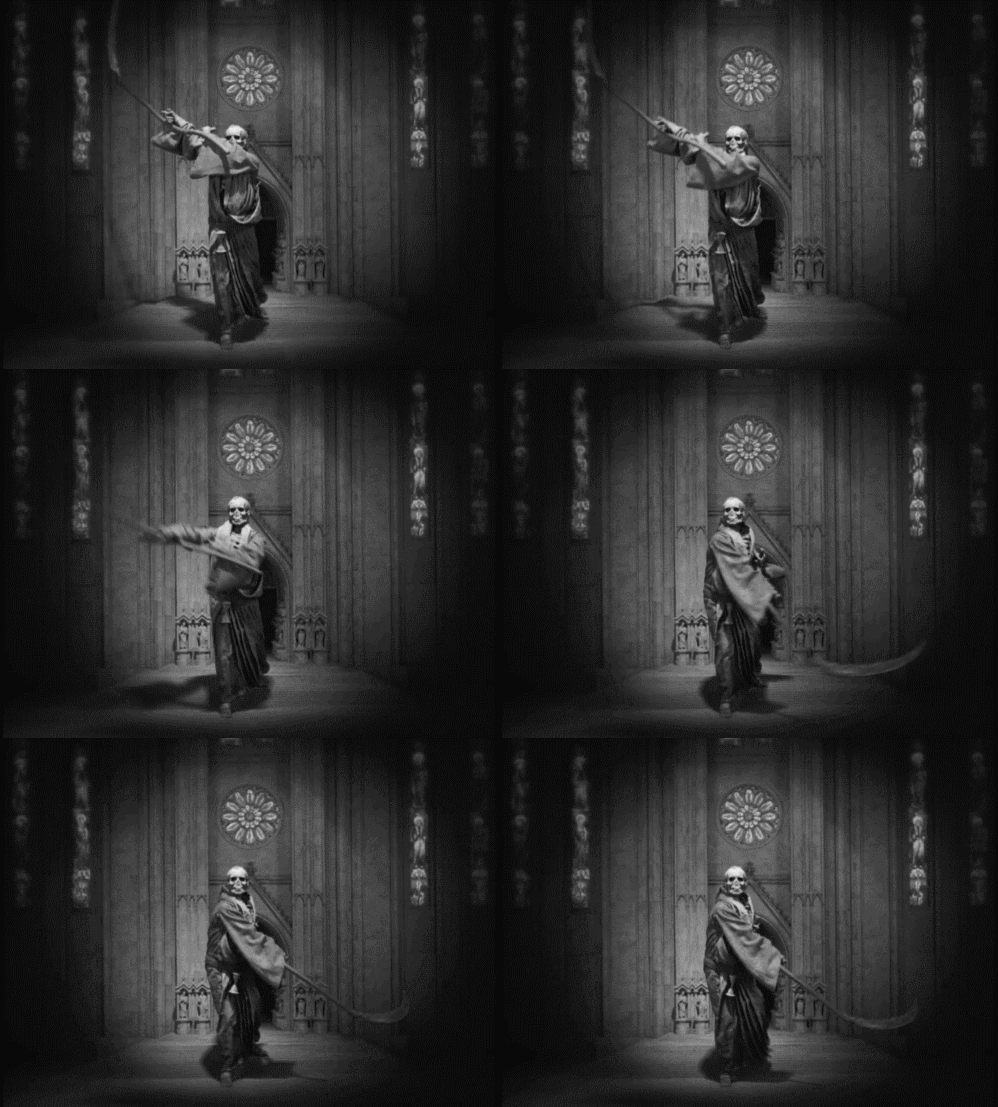
In 1906 The Journal of the English Folk Song Society published a piece on the old English ballad “Death and the Lady.” Some enterprising female entertainer encountered the article and realized the story might be used as a great vaudeville piece about the evils of card play and alcohol. Touring performers were always searching for material that would play well in the sticks. The city folks would enjoy the Grand Guignol staging, the traditional song, and the vocal technique. Here Joseph Hall, the Brooklyn born photographer who had made a career on baseball pictures and theatrical production stills, captured the sequence of the action, providing a peculiarly detailed & rare view of the progress of a single vaudeville performance.Click on images to see larger, richer versions; you can see the complete series of photos on the Historical Ziegfeld website by clicking here.