Tuesday, May 8, 2012

Anthropomorphic Insect Shadowbox Workshop with Former AMNH Senior Insect Preparator Daisy Tainton at Observatory: Open Slots for This Saturday's Class!

Anthropomorphic Insect Shadowbox by Daisy Tainton, teacher of Saturday's workshop
I am very excited to announce a few open slots in this Saturday's long sold-out Anthropomorphic Insect Shadowbox Workshop with Former AMNH Senior Insect Preparator Daisy Tainton, part of The Morbid Anatomy Art Academy at Observatory. Full details for the class follow; send an email to morbidanatomy [at] gmail.com to be added to class list. First come, first served!
Anthropomorphic Insect Shadowbox Workshop with Former AMNH Senior Insect Preparator Daisy Tainton
With Daisy Tainton, Former Senior Insect Preparator at the American Museum of Natural History
Date:
This Saturday, May 12
Time: 1 - 4 PM
Admission: $65

***Must RSVP to morbidanatomy [at] gmail.com to be added to class list
This class is part of The Morbid Anatomy Art Academy
Rhinoceros beetles: nature's tiny giants. Adorable, with their giant heads and tiny legs, and wonderful antler-like protrusions. If you think they would be even more adorable drinking tiny beers and holding tiny fishing poles, we have the perfect class for you! In today's workshop, students will learn to make--and leave with their own!--shadowbox dioramas featuring carefully positioned beetles doing nearly anything you can imagine. An assortment of miniature furniture and foods will be made available to decorate your habitat, but students are strongly encouraged to bring any dollhouse props they would like to use. 1:12 scale is generally best.
Daisy Tainton was formerly Senior Insect Preparator at the American Museum of Natural History, and has been working with insects professionally for several years. Eventually her fascination with insects and  love of Japanese miniature food items naturally came together, resulting in cute and ridiculous museum-inspired yet utterly unrealistic dioramas. Beetles at the dentist? Beetles eating pie and knitting sweaters? Even beetles on the toilet? Why not?
You can find out more about this class here, and more about The Morbid Anatomy Art Academy by clicking here.

Monday, May 7, 2012

Glass Sea Creatures! Blood Transfusions! Lord Whimsy's Mysterious River Journeys! This Week and Next at Observatory

This week and next at Observatory! Hope to see you there.
Blaschka: Glass creatures of the Ocean – An Illustrated History of The Natural History Museum (NHM), London Collection
 Illustrated lecture with Miranda Lowe, The Natural History Museum (NHM), London Curator
Date: Thursday, May 10
Time: 8:00
Admission: $8

Presented by Morbid Anatomy
Although more famously know for the making the glass flowers exhibited at the Harvard Museum of Natural History, the father and son partnership of Leopold (1822-1895) and Rudolf (1857-1939) Blaschka also made numerous marine invertebrate glass models. Some of the first models they made were sea anemones in the early 1860’s. The Natural History Museum (NHM), London purchased their first set around 1865 and holds over 185 Blaschka glass models consisting of anemones, sea slugs, jellyfish, octopus, squid, protozoans and corals representing their entire model making career. The models were made in a variety ways with many formed over wire skeletons (known as armatures) with the glass fused together or glued. Profiled in various scientific sales catalogues such as Henry A. Ward’s they were to sold museums, universities and private collectors by the Blaschkas themselves and various agents who worked on their behalf worldwide. In the past these models were of scientific importance in teaching but as trends change their significance as works of art are also being highlighted. Each glass model is a unique blend of art, science and craftsmanship looking more life-like than real specimens whose natural colours may fade when stored in jars of preservation fluid over time. This highly illustrated lecture will give a fascinating insight to this collection housed at one of the major natural history museums in the world.
Miranda Lowe is the Collections Manager of the Marine Invertebrates Division, Zoology Department, The Natural History Museum (NHM), London. Within Zoology Miranda specifically manages the Crustacea collections as well as the team of curators responsible for the Invertebrate collections. Darwin barnacles and the Blaschka marine invertebrate glass models are amongst some of the historical collections that are her interests and under her care. In 2006, she was part of the organising committee and invited speaker at the 1st international Blaschka congress held in Dublin. Miranda collaborated with the National Glass Centre, Sunderland, UK in 2008 to exhibit some of the Museum’s Blaschka collection alongside contemporary Blaschka inspired art. She also has an interest in photography, natural history - past and present serving on a number of committees including the Society for the History of Natural History (SHNH) and the Natural Sciences Association (NatSCA).
Image: © The Natural History Museum, London 2012. All Rights Reserved.
L0000096 A early blood transfusion from lamb to man
A Most Unexpected History of Blood Transfusion (1660 - 1820s)
Illustrated lecture with Paul Craddock
Date: Monday, May 14
Time: 8:00
Admission: $5

Presented by Morbid Anatomy
Those living in Britain (who owned a television set) about ten years ago might remember Sean Bean before he became a famous movie star. Apart from his appearance in Sharpe, he starred in a television advertisement for the National Blood Foundation, prompting people in his thick Yorkshire accent to 'do something amazing today'; 'save a life' by giving blood. The foundation's message is still the same, though Sean Bean has moved onto other projects such as Lord of the Rings. In any case, this illustrated lecture is about just that: the transfusion of blood and its many meanings. But it focuses on a much earlier (and stranger) period of transfusion history when saving a life was only one reason to transfuse blood - from the sixteenth century to the nineteenth.
The association between blood and life is a very easy one to make and seems to span all cultures and time periods, as does the very idea of swapping blood from one person to another. But what it means to swap one being's blood with another's - and why this might be attempted - has radically changed. It is only very recently, (around the turn of the twentieth century), that blood was transfused in order to purposefully replace lost blood. For the majority of this history, this was most certainly not the case. In the seventeenth century, transfusions of lamb's blood were made to calm mad patients and, in the nineteenth century, blood was transfused in order to restore a portion of an invisible living principle living inside of it. This lecture explores from where these ideas came and the ways in which bits of them might linger in our own ideas of transfusion.
On one last note: Paul Craddock commissioned a medical instrument maker to produce some early nineteenth century transfusion equipment. He hopes to demonstrate them at work if he can get them past customs!
Paul Craddock is currently writing on pre-20th century transplant surgery and transfusion at the London Consortium working under Prof. Steven Connor (University of London) and Prof. Holly Tucker (Vanderbilt University, Nashville). After a brief time studying music and performing arts, living in rural China, and working for the National Health Service, Paul made the switch to cultural and medical history. He has never had a transplant and never received a transfusion - his interest in these procedures come from thinking about generally how we relate to the material world by making bodily transactions. He has lectured around the UK and Europe, and last year he spoke at the Observatory Gallery on skin grafting. Currently based in London, Paul is the Director of London Consortium Television, the audio-visual arm of the London Consortium (www.londonconsortium.tv).  He is also the Guests' Secretary for the University of London's Extra Mural Literature Association.  In another professional life, he produces films for medical establishments and museum exhibitions.

Image: An early blood transfusion from lamb to man, ca 1705. From "Tryals Proposed by Mr. Boyle to Dr. Lower, to be Made by Him, for the Improvement of Transfusing Blood out of One Live Animal into Another," Mr. Boyle

6026610110_a5b7e169bf_o1 
The Hidden River Expedition: A Re-Exploration of the Post-industrial Wilderness along Philadelphia's Rivers
An Illustrated Lecture and Film Screening with Allen Crawford (aka Lord Whimsy)
Date: Friday, May 18
Time: 8:00
Admission: $5
Presented by Morbid Anatomy
In August of 2011, Allen Crawford (aka Lord Whimsy) left his house to embark on a three-day, forty-mile solo kayak trek from Mount Holly, NJ to Bartram's Garden, in West Philadelphia. This May 18th, Crawford will present a video using footage shot from his kayak during this trek. He will also give a slideshow presentation, highlighting the strange history along these rivers he traversed: fugitive slave enclaves, floating churches, Civil-War era submarines, and derelict aircraft carriers all await you. This expedition was a re-exploration of Philadelphia's landscape, and an investigation of how its built and grown environments have affected each other over time. This landscape is not pristine, but it is wild--and perhaps most important, it's new. The "local frontier" exists!
Lord Breaulove Swells Whimsy (a.k.a. Victor Allen Crawford III), After twenty long years, has at last achieved his dream: unemployability. He is an artist, designer, author, re-explorer, failed dandy, tin grandee, gentleman trespasser, bushwhacking aesthete, parenthetical naturalist, pseudo-intellectual, and a middle-aged dilettante. Having taken a solemn vow to do as little in life as possible, Whimsy was dismayed one morning to discover that he had accidentally wrote, designed, and illustrated The Affected Provincial’s Companion, Volume One (Bloomsbury 2006), which has been optioned for film by Johnny Depp’s production company, Infinitum Nihil. His face and his words have graced the hallowed pages of The New York Times, Interview, Frieze, Vice, Tin House, and Art in America. He and his wife are proprietors of the design and illustration studio Plankton Art Co. Their most notable project to date is the collection of 400 species identification illustrations that are on permanent display at the American Museum of Natural History’s Hall of Ocean Life. A devoted enthusiast, lower-case adventurer, and explorer of what he calls “the local frontier,” Whimsy spends most of his time among the nooks and margins of the forgotten, the curious, and the speculative that is found beneath, around, and between the everyday. He smells like gusto.
More on all events can be found here.

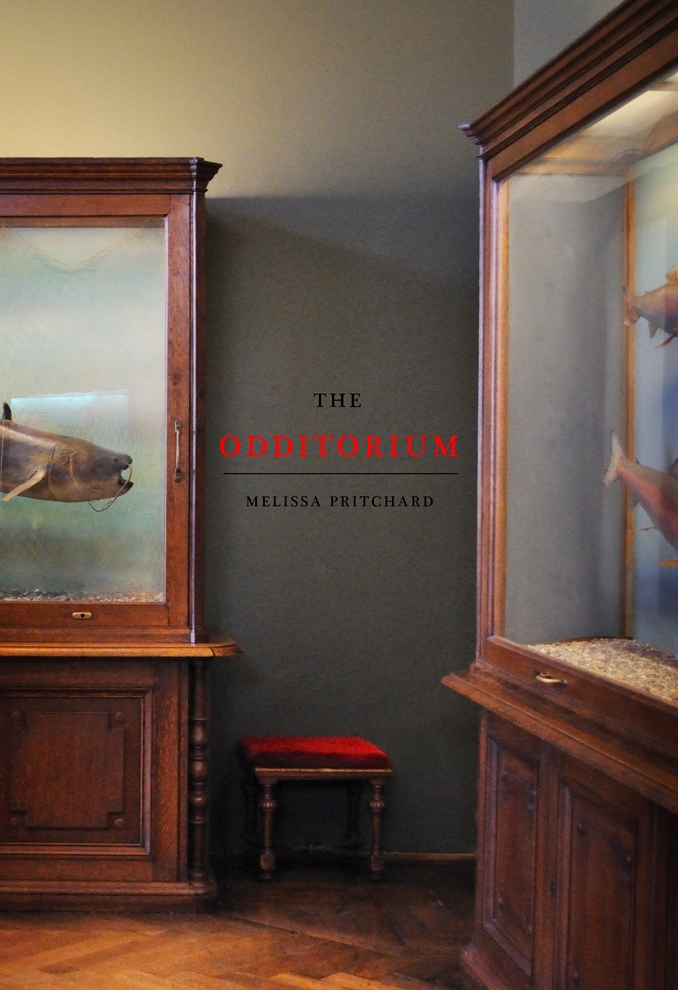
Tonight at Observatory: The Odditorium: The Architecture and Allure of Extremes, Illustrated lecture and booksigning with Melissa Pritchard, author of "The Odditorium"

Tonight at Observatory! Hope to see you there.
The Odditorium: The Architecture and Allure of Extremes
Illustrated lecture and booksigning with Melissa Pritchard, author of The Odditorium
Date: Monday, May 7
Time: 8:00
Admission: $5

Presented by Morbid Anatomy
Tonight, please join--Melissa Pritchard, award winning fiction writer, essayist and journalist--for an illustrated lecture on some of the more extreme and unusual historical personalities and architectures featured in her highly praised new collection of stories, The Odditorium. From the enigma of the German feral child, Kaspar Hauser, to St. Pelagia, Russian "holy fool," to Robert Ripley of Believe it or Not fame and the Wild West Show's sharpshooter Annie Oakley, Pritchard will discuss her own fascination with the bizarre, the haunted, the fantastic and the grotesque, including short excerpts from several stories while asking of herself and her audience the bigger question: What lies behind our cultural obsession with extremes, from the tragic to the sublime, from the monstrous to the transcendent?
Melissa Pritchard is a Flannery O’Connor, Janet Heidinger Kafka, and Carl Sandburg Award-winning author. She has also been an embedded journalist in Afghanistan, where she befriended Ashton Goodman, a young soldier she memorialized for O, The Oprah Magazine, and authored a biography of Virginia Galvin Piper that US Supreme Court Justice Sandra Day O’ Connor called “a delight to read.” Founder of the Ashton Goodman Fund and a member of the Afghan Women’s Writing Project, helping to promote literacy and education for Afghan women and girls, she teaches at Arizona State University.
More here.

Wednesday, May 2, 2012

A Few More Slots Remaining for Comparative Anatomy: Animals and the Fundamentals of Drawing Weekend Workshop with Chris Muller, NYU Tisch School of the Arts, May 5 & 6, Observatory


Hi all! we have just a few more slots for Chris Muller's upcoming comparative anatomy drawing class; full info follows. If interested in attending, shoot me an email at morbidanatomy [at] gmail.com.

Comparative Anatomy: Animals and the Fundamentals of Drawing Weekend Workshop
A weekend workshop with Chris Muller, NYU's Tisch School of the Arts
Dates: Saturday May 5 & Sunday May 6

Time: 1 - 4 PM
Fee: $75
(includes museum admission)
*** Class size limited to 15; Must RSVP to
morbidanatomy [at] gmail.com
This class is part of The Morbid Anatomy Art Academy

Using animal and human anatomy as a jumping off point, this course will look at the ground-level, first principles of drawing as representation. Focusing mainly on mammal anatomy, we’ll look at the basic shared forms between humans and other animals, how these forms dictate movement, and how to express those forms.
Saturday’s class will be held at Observatory, where with the aid of several skeletons we’ll look at basic structures, sprinkling our exploration with odd facts and observations. Messy investigatory drawings will ensue.
Sunday’s class will be a field trip to the American Museum of Natural History, where applying the principles of Saturday’s class we’ll create beautiful drawings of the animals on display. Then, mastery attained, we will stride forth into the world, better artists and better people.
Materials
Saturday
  • Sketchbook or sketchpad, 11 X 14 or larger
  • B and HB pencils
  • Colored pencils, in the reds and blues and browns
  • Hand pencil sharpener
  • Erasers
Sunday
  • All of the above, with perhaps a portable sketchbook in place of the larger sketchpad
  • Portable folding stool (optional)
Chris Muller is an artist and exhibit designer based in Brooklyn. He has designed exhibits for the Whitney Museum of American Art, the Museum for African Art, the Children's Museum of Manhattan, and many others. He has designed sets for Laurie Anderson, Alvin Ailey Dance Theater, the Atlantic Theater Company, and others. He teaches drawing and digital painting at NYU's Tisch School of the Arts.
You can find out more here; you can RSVP by emailing me at morbidanatomy [at] gmail.com. You can find out more about the Morbid Anatomy Art Academy by clicking here.

Monday, April 30, 2012

Call for Papers: The Art of Death and Dying Conference, University of Houston, October 25-27, 2012

Just received word of this promising looking upcoming conference entitled "The Art of Death and Dying;" calls for work are due May 1, and full details follow:
The Art of Death and Dying, University of Houston, October 25-27, 2012
http://artofdeathanddying.blogspot.com/

The University of Houston Libraries, in partnership with the Blaffer Art Museum, the Cynthia Woods Mitchell Center for the Arts, the Department for Hispanic Studies, the Honors College and School of Art, will host a three day symposium titled "The Art of Death and Dying" on October 25-27, 2012.

We welcome scholars in all disciplines to submit paper proposals on literary, visual, and performing arts topics related to death and dying. Topics of the symposium include, but are not limited to:
  • Depictions or interpretations of death and dying in performing and visual arts
  • Depictions of interpretations of death and dying in literature
  • Depictions of death and dying in film, radio, and television
  • Commemoration of the dead in art, architecture and performance
  • Artifacts of death and dying as represented in archival or museum collections
  • Artistic depictions of the after life
  • Cultural death rituals
  • Cultural expressions of mourning
  • Death and dying in Latin American arts and culture
  • Readings of original creative material on the subject
  • Performances of original material on the subject
  • Presentation of original visual material on the subject
  • Memorial architecture
  • Cemetery design
  • Analysis of an artist's, architect's, performer's, filmmaker's or writer's work related to the subject
Proposals related to death in Latin American arts and visual culture are encouraged. The organizers will accept presentations in both Spanish and English.

Papers will be selected based upon the quality of the proposal (including merit of the topic, clarity of expression, and relevance to the conference theme), the proposal’s ability to provoke critical exchange and debate, and opportunities for interaction between participants that will enable attendees to engage in a truly interdisciplinary exchange of ideas and viewpoints.

Presenters will be afforded the opportunity for their symposium paper/presentation to be published in the Texas Digital Library.

Papers will be twenty minutes in length and will be followed by ten minutes of discussion. Abstracts of no more than 300 words should be submitted on the symposium website.

The deadline for submissions is May 1, 2012.
You can find more here. Thanks so much to friend and former boss Barbara Mathe for sending this along.

Image: Cimitero Monumentale di Milano, © Joanna Ebenstein; click on image to see much larger, more detailed version.

Saturday, April 28, 2012

Morbid Anatomy Coming to Chicago: "A Journey into the Curious World of the Medical Museum," The Chicago Cultural Center, Thursday, May 3, 6 PM


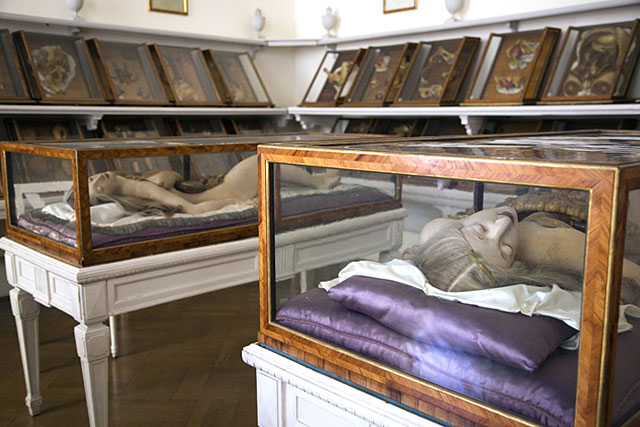
For those of you in and about Chicago, I would love to see you this Thursday, May 3, at The Chicago Cultural Center where I will be giving a lecture entitled "A Journey into the Curious World of the Medical Museum" as part of a series of events supplementing the amazing looking  Morbid Curiosity exhibition. The images above--drawn from my exhibitions The Secret Museum and Anatomical Theatre--constitute a tiny sampling of the many images I will be showing in the presentation.

Full details follow; very much hope very much to see you there.
A Journey into the Curious World of the Medical Museum
An Illustrated Lecture by Joanna Ebenstein
_______


The Chicago Cultural Center
78 E. Washington Street Chicago, IL 60602
Thursday, May 3, 2012
6 o’clock PM

Abounding with images and insight, Ms. Ebenstein’s lecture will introduce you to the Medical Museum and its curious denizens, from the Anatomical Venus to the Slashed Beauty, the allegorical fetal skeleton tableau to the taxidermied bearded lady, the flayed horseman of the apocalypse to the three fetuses dancing a jig. Ebenstein will discuss the history of medical modeling, survey the great artists of the genre, and examine the other death-related arts and amusements which made up the cultural landscape at the time that these objects were originally created, collected, and exhibited.

Joanna Ebenstein is a New York-based artist and independent researcher. She runs the popular Morbid Anatomy Blog and the related Morbid Anatomy Library, where her privately held cabinet of curiosities and research library are made available by appointment. Her work has been shown and published internationally, and she has lectured at museums and conferences around the world. For more information, visit http://morbidanatomy.blogspot.com
You can find out more by clicking here.

Images top to bottom, as drawn from my recent photo exhibitions The Secret Museum and Anatomical Theatre:
  1. "Anatomical Venus" Wax wodel with human hair and pearls in rosewood and Venetian glass case, "La Specola" (Museo di Storia Naturale), Florence, Italy, Probably modeled by Clemente Susini (around 1790)
  2. "Slashed Beauty" Wax wodel with human hair and pearls in rosewood and Venetian glass case, "La Specola" (Museo di Storia Naturale), Florence, Italy, Probably modeled by Clemente Susini (around 1790)
  3. "Anatomical Venuses," Wax Models with human hair in rosewood and Venetian glass cases,The Josephinum, Workshop of Clemente Susini of Florence circa 1780s, Vienna, Austria
  4. The Mütter Museum : Philadelphia, Pennsylvania, Pathological model; 19th Century?
  5. Wax Model of Eye Surgery, Musée Orfila, Paris. Courtesy Université Paris Descartes
  6. Wax Anatomical Models in Rosewood and Venetian Glass Boxes, The Josephinum, Workshop of Clemente Susini of Florence circa 1780s, Vienna, Austria
  7. Wax moulages; Probably by Carl Henning (1860-1917) or Theodor Henning (1897-1946); Early 20th Century; Federal Pathologic-Anatomical Museum (Pathologisch-anatomisches Bundesmuseum): Vienna, Austria, Austria
  8. Plaster Models in Pathological Cabinet, The Museum of the Faculty of Medicine at the Jagiellonian University, Krakow
  9. Skeleton and hand models for "la médecine opératoire" Musée Orfila, Paris. Courtesy Université Paris Descartes

This Monday at Observatory: Organization and Productivity for Creative Types: A Workshop with Oliver Burkeman of "The Guardian"

I am very excited about Monday's upcoming organization for creatives class with journalist Oliver Burkeman, of London's Guardian. There are a few slots still left... if you are interested, please RSVP to morbidanatomy [at] gmail.com. Hope to see you there!
Organizational workshop for creative types with Oliver Burkeman of The Guardian
Date: Monday, April 30th
Time: 7:30-9:30 PM
Admission: $20

*** Limited class size; Must RSVP to morbidanatomy [at] gmail.com to be added to class list
This class is part of The Morbid Anatomy Art Academy
Do you hunger to climb the corporate ladder with ruthless efficiency, leaving your rivals in the dust as you pursue your relentless quest for wealth and power? Hopefully not, but that doesn't mean you can't borrow some tactics from such people and apply them to your own ends; to that end, today's class--taught by Oliver Burkeman, compulsive to-do-list-maker and journalist for London's Guardian--will teach creatives, freelancers, and artists how to plan and manage multiple projects, better plan their time, and, in general, feel less overwhelmed by juggling a variety of projects at one time.
Burkeman has spent much of the last few years researching and reporting on self-help culture, including the fascinating history of the "how to succeed" publishing genre, and motivational gurus from Dale Carnegie to Stephen Covey, and sifting the wheat from the chaff. (There's a lot of chaff.) Drawing on this research, this workshop will explore some fundamental principles of getting organized, managing multiple projects, overcoming procrastination, time management, and being both more productive and less stressed in the kinds of sprawling artistic/creative/freelance lives that don't get much attention in The Seven Habits of Highly Effective People. No cringe-inducing motivational speeches will be given; no Magic Systems for Instant Success will be promoted. Instead, we'll plunder from the world of the grinning gurus the bits that actually work – so that you'll leave equipped with a toolkit of immediately useable ways to do the stuff you're already doing, and the projects you're planning, with greater efficiency and ease.
The class will begin with an illustrated lecture and conclude with a workshop segment where students will be guided in an application of the principles; participants are encouraged to come to class with a project to organize.
Oliver Burkeman in a writer based in Brooklyn with an unhealthy interest in filing systems. He writes features and a weekly column on psychology for the (London) Guardian. His book The Antidote: Happiness for People Who Can't Stand Positive Thinking will be published by Faber & Faber in the fall.
More here.

Tuesday, April 24, 2012

Illustration from "Pia Desideria," Hermann Hugo, 1659

From Hermann Hugo's Pia Desideria of 1659; you can view the entire book by clicking here.


Monday, April 23, 2012

Tonight at Observatory: Fire and Smoke: A Conversation on Death and Ritual Offering with Tibetan Buddhist Tsering Phunstok

Tonight at Observatory; hope to see you there!
A Discussion on Death & Impermanence Followed by a Ritual Offering with Venerable Tsering Phunstok from Dharamsala, India
Date: Monday, April 23rd
Time: 8:00
Admission: $8
(Please note: All admission fees from tonight's event will be donated to support Venerable Tsering Phunstock, his monastery, and health projects in India)
Presented by Morbid Anatomy

What can a monk tell you about the secret of life? And how does understanding impermanence and preparing for death expand upon the secret of life? Tonight’s conversation between Venerable Tsering Phunstok– a practicing Tibetan Buddhist monk residing in India– and artist Shannon Brunette will investigate Tibetan Buddhist perspectives on death and impermanence in modern life, as well as the life of the Tibetan monk as it relates to the most basic tenets of Buddhist practice and beliefs regarding death, karma and reincarnation through conversation. Questions will also be taken from the audience.

After the talk, Ven. Tsering Phunstok will conduct a traditional Tibetan fire and smoke offering. The Smoke Offering (Sang) is a ritual practice of making vast offerings to pacify obstacles and raise awareness. It is a practice of connecting with the forces of life and establishing an open relationship with existence. It is traditionally used to create harmony, resolve karmic debts, generate vitality, success, prosperity and health in our life, in our land and in our local community. In this purifying ritual edible food, poison-less trees, flowers, fruits, grains, clothes as well as other things are burned to create a smoke cloud offering. This is an offering for both the living and the dead – and for all spirits.

Buddhists believe that giving without seeking anything in return leads to greater spiritual wealth; Buddhists call this generosity and giving Dāna. All admission fees from tonight’s event will be donated to support Tsering, his monastery and health projects in India. We are asking that you share your generosity further at the completion of the ritual offering.

Venerable Tsering Phuntsok
has been a practicing Buddhist monk since entering the Palyulchoekhorling Nyingmapa Buddhist monastery in Bir, India, in 1987 at age 16. For the first 17 years he studied and practiced in the Nyingmapa tradition of Tibetan Buddhism, receiving training in meditation, Buddhist scripture and philosophy, tantric ritual, lama dancing and music. He has received many tantric empowerments and sutra teachings from His Holiness the Dalai Lama and many other High Lamas, including late H.H. Penor Rinpoche. In the last several years he has worked on health related projects for his monastery as well as overseeing his nephew and nieces. He currently makes his residence in Dharamsala, India in the foothills of the Himalayas; his home is less than a minute walk from the Temple and residence of the H. H. Dalai Lama. Currently, he facilitates cultural exchange programs between the Tibetan community and US university students who come to Dharamsala to volunteer with Lha Charitable Trust, a local social work agency devoted to improving the lives of Tibetan refugees and local Indians.

Shannon Brunette
has lived and worked in Brooklyn, NY since 1998 and her beloved hometown is St. Paul/Minneapolis, MN. She received her Masters of Fine Arts at the School of Visual Arts in 2006. Currently, she is exploring a new body of work relating to cultural exchange opportunities, from Alaska video artist-in-residence focusing on climate change to a 5-week international fellowship in exchange with the traditional craftspeople of Orissa, India to volunteer work in Dharamsala with Lha Charitable Trust. Utilizing film and video as a tool to investigate the past, present and future through a poetic and complex interplay between images, to offer an opportunity for reflection and meditation. Shannon captures vignettes from mundane to beautiful and editing in a collage-like style, she explores the nature of fragmented memory, triggered by temporality and impermanence.
More info here.

Friday, April 20, 2012

This Weekend at The 2012 Congress for Curious Peoples: Panoramas! Baroque Television Evangelism! Human Zoos! Frederik Ruysch! Religious Theatre!


This weekend at Coney Island! Hope very much to see you there.
SYMPOSIUM: THE 2012 CONGRESS FOR CURIOUS PEOPLE
Saturday and Sunday, April 21st and 22nd

SATURDAY APRIL 21st


11:00 – 12:00: Keynote Addresses
12:00 – 1:00: Lunch

1:00 – 3:30: Immersive Amusements: Cosmoramas, Cycloramas and Panoramic Illusions: Panel discussion moderated and introduced by Aaron Beebe, The Coney Island Museum
4:00 – 5:00: The Business of the Dead: Frederik Ruysch as an Entrepreneurial Anatomist, Lecture by Daniel Margocsy, Hunter College

5:00: Christmas in America: Miss Velma and the Evangelist Spectacle: Screening of “Christmas in America,” an early 1970s television special by Miss Velma, early TV evangelist, introduced by Daniel Paul

SUNDAY APRIL 22

11:00 – 1:00: Religion and Spectacle: A panel with discussion moderated and introduced by Joanna Ebenstein, Morbid Anatomy Library
1:00 – 2:30: Lunch and Sideshow Visit

2:30 – 3:30: Traveling Ethnographic Shows and Human Zoos, a lecture by Elizabeth Bradley

3:30 – 5:30: Theater Rethunk: An Alternative History of the Theatrical: A panel with discussion moderated and introduced by Chris Muller
Tickets for the symposium are available here; for tickets to individual events and lectures, click here; 10-day Congressional Passes--which provide access to all events!--are available here. All events take place at 1208 Surf Avenue in Coney Island in Brooklyn, New York; you can map it here. See you there!!!

Wednesday, April 18, 2012

Hidden Stories: What do Medical Objects Tell and How Can We Make them Speak? 16th Biennial EAMHMS Conference Berlin, September 13-15 2012


I am very excited to announce the final lineup for this year's EAMHMS--aka European Association of Museums of the History of Medical Sciences-- conference taking place September 13-15 in Berlin, Germany at the fantastic Museum of Medical History at the Charité, pictured above!

Full details below. Hope to see you there.
Hidden Stories: What do medical objects tell and how can we make them speak? 16th Biennial EAMHMS Conference
Berlin Museum of Medical History at the Charité, Charitéplatz 1, D-10117 Berlin,
13 – 15 September 2012
The XVI EAMHMS Conference
European Association of Museums of the History of Medical Sciences
Berlin, September 13 - 15, 2012

PROGRAMME

Thursday, 13 September 2012: Beginning in the ‘Hörsaalruine’ of the Berlin Museum of Medical History

10.00 - 13.30 Arrival of Participants, Registration and Refreshments
11.00 + 12.30 Guided tours through the museum (a look behind the scenes)
14.00 - 14.30 Opening speeches

14.30 - 15.30 Session 1: Introduction, getting started …
  • Robert Jütte, Stuttgart (Germany): Exhibiting Intentions. Some Reflections on the Visual Display of a Culturally Purposeful Object
  • Thomas Söderqvist, Copenhagen (Denmark): Is the ‘things talk’ metaphor really useful? Or does it conceal a deeper understanding of our material interaction with things?
15.30 - 16.00 Coffee and Tea

16.00 - 16.15 Walk to the Institute of Anatomy (Oskar Hertwig-Lecture Hall)

16.15 - 18.15 Session 2: Object biographies (I)
  • Sophie Seemann, Berlin (Germany) A friend’s skull – gazing in a patient’s room in 1757
  • Christa Habrich, Ingolstadt (Germany): A Mystery of a Platinum-made Cystoscope
  • Lisa Mouwitz, Gothenburg (Sweden): Looking through the nail
  • Jim Edmonson, Cleveland (USA): The art of extrapolation: following the trail from patent number to a revolution in surgical instrument design and manufacture
18.15- 19.15 Guided tours through the Anatomical Teaching Collection or the nearby
Zootomical Theatre

19.30 - 23.00 Conference Dinner in the ‘Hörsaalruine’

9.00 - 10.30 Session 3: Object biographies (II ) – waxes
  • Marion Maria Ruisinger, Ingolstadt (Germany) Christus anatomicus
  • Sara Doll, Heidelberg (Germany) Models of Human Embryogenesis. The search for the meaning of wax reconstructions
  • Michael Geiges, Zürich (Switzerland) Wax Moulage Nr. 189. From teaching aid to the patients‘ story by an unusual research document
10.30 - 11.00 Coffee and Tea

11.00 - 12.30 Session 4: Teaching
  • Shelley McKellar, London (Canada) Challenging Students with Toothkeys and Scarificators: Experiences with Object-Based Teaching in History
  • Alfons Zarzoso, Barcelona (Spain) Teaching medical history through the material culture of medicine
  • Stefan Schulz, Bochum; Karin Bastian, Leipzig (Germany) Object-based, Research-oriented Teaching in Seminars and Exhibition Projects
12.30 - 14.00 Lunch, Coffee and Tea

14.00 Walk to the nearby ‘Museum für Naturkunde’

14.30 - 15.30 Guided tours in smaller groups through the ‘Museum für Naturkunde’

15.30 - 17.40 Session 5: Research
  • Thomas Schnalke, Berlin (Germany) Divas on the Catwalk. Some thoughts on research with objects in medical history
  • Claire Jones, Worcester (Great Britain) Identifying Medical Portraiture: The case of Andrew Know Blackall
  • Julia Bellmann, Heiner Fangerau, Ulm (Germany) Evolution of Therapeutic Technology: Industrial archives and collections as sources for historians of medicine
  • Benôit Majerus, Luxembourg (Luxembourg) The Material Culture of Asylums Supported by Verein der Freunde und Förderer der Berliner Charité e.V.
  • Nurin Veis, Melbourne (Australia) Stories from Asylums – Discovering the Hidden Worlds of the Psychiatric Services Collection
17.40 - 18.30 Transfer to the boat pier ‘Märkisches Ufer’

19.00 - 22.15 Spree Cruise (Berlin from the waterside) and dinner on board

Saturday, 15 September 2012: Final meeting in the ‘Hörsaalruine’

9.00 - 11.00 Session 6: Presenting
  • Hsiang Ching Chuang, Eindhoven (Netherlands) Contextualizing Museum Experiences Through Metaphors
  • Mienekete Hennepe, Leiden (Netherlands) Scary Things: Horrifying objects between disgust and desire
  • Bart Grob, Leiden (Netherlands) Medicine at the Movies
  • Tim Huisman, Leiden (Netherlands) Anatomical Illustration and Beyond: Looking at Bidloo and De Lairesse’s Anatomia humani corporis
11.00 - 11.30 Coffee and Tea

11.30 - 12.30 Final session
You can find a registration form here; Image sourced here. Hope to see you there!

Tuesday, April 17, 2012

Cover Art for Agatha Christie's "The Body in the Library," Rein van Looy (1910-1994)


Cover art for The Body in the Library (Dutch edition) by Agatha Christie, by Rein van Looy, (1910-1994).

Found via the fantastic "The Macabre and the Beautifully Grotesque" Facebook group; this particular scan of the cover found here. Click on image to see much larger, more detailed version.

Sunday, April 15, 2012

2012 Congress of Curious Peoples This Week at Coney Island!!!


Hi All! Just a reminder that the 2012 Congress of Curious Peoples--a 10-day series of lectures and performances devoted to curiosity and curiosities broadly considered, and featuring sideshow acts, lectures, performances, and a 2-day scholarly-yet-popular symposium called The Congress for Curious Peoples--launches in earnest tomorrow night, with a lecture by the always amazing Amy Herzog.

This year's iteration of The Congress promises to be the best yet; it will include a 2-day symposium featuring panel discussions on topics such as pre-cinematic immersive amusements and religion as spectacle, with featured speakers that include Sara Velas of The Velaslavasay Panorama; Paul Koudounaris of Empire of Death; Colin Nightingale, Senior Producer of Punchdrunk, the company behind the mindbendingly amazing Sleep No More Sleep; and Colin Dickey, author of Cranioklepty. Also featured will be stand-alone lectures on the 17th century artist of fetal skeleton tableaux Frederik Ruysch and the phenomenon of ethnographic displays called "human zoos," a screening of an over-the-top early 1970s TV Evangelist Christmas spectacular, and introductory lectures by myself and Coney Island Museum director Aaron Beebe.

Full--and hopefully final!--lineup below; hope to see you at some--if not more--of the terrific events making up this year's Congress!
Monday April 16th
7:30 – (Lecture) Amy Herzog: Architectural Fictions: Economic Development, Immersive Renderings, and the Virtualization of Brooklyn (more here)
9:00 – (Performance) Shea Love and the Circus Emporium

Tuesday April 17th
7:30 – (Lecture) Philip Kadish: “Pinhead Races and the White Man’s Burden” (more here)
9:00 – (Performance) The Squidling Bros Sideshow

Wednesday April 18th
7:30 -(Lecture/Performance) ‘An Evening of Fate, Chance and Mystery’ with Lord Whimsy and Les the Mentalist (more here)
9:00 – (Performance) Jo Boobs

Thursday April 19th
7:30 – (Lecture/Demonstration) The Museum of Interesting Things, WHAT THE SAM HILL IS THAT! (more here)
9:00 – (Performance) The Curious Couple from Coney Island

Friday April 20th
7:30 – (Performance/Reading) A reading of VENUS by Suzan-Lori Parks. Directed by Donya K. Washington (more here)
9:00 – (Performance/Lecture) Sideshow Legend Jim Rose

Saturday April 21st
Super Freak Weekend at Sideshows by the Seashore (Continuous Admission, Tickets at the door); Colonnade of Curiosities in the Freak Bar
Congress For Curious People (Day 1 of a 2-day Symposium)

Sunday April 22nd
Super Freak Weekend at Sideshows by the Seashore (Continuous Admission, Tickets at the door); Colonnade of Curiosities in the Freak Bar
Congress For Curious People (Day 2 of a 2-day Symposium)

+++++++++++++++++++++++++++++++++++++++++

FULL SYMPOSIUM DETAILS:
THE 2012 CONGRESS FOR CURIOUS PEOPLE

Saturday and Sunday, April 21st and 22nd

SATURDAY APRIL 21st


11:00 – 12:00: Keynote Addresses

12:00 – 1:00: Lunch

1:00 – 3:30: Immersive Amusements: Cosmoramas, Cycloramas and Panoramic Illusions: Panel discussion moderated and introduced by Aaron Beebe, The Coney Island Museum
4:00 – 5:00: The Business of the Dead: Frederik Ruysch as an Entrepreneurial Anatomist, Lecture by Daniel Margocsy, Hunter College

5:00: Christmas in America: Miss Velma and the Evangelist Spectacle: Screening of “Christmas in America,” an early 1970s television special by Miss Velma, early TV evangelist, introduced by Daniel Paul

SUNDAY APRIL 22

11:00 – 1:00: Religion and Spectacle: A panel with discussion moderated and introduced by Joanna Ebenstein, Morbid Anatomy Library
1:00 – 2:30: Lunch and Sideshow Visit

2:30 – 3:30: Traveling Ethnographic Shows and Human Zoos, a lecture by Elizabeth Bradley

3:30 – 5:30: Theater Rethunk: An Alternative History of the Theatrical: A panel with discussion moderated and introduced by Chris Muller
Tickets for the symposium are available here; for tickets to individual events and lectures, click here; 10-day Congressional Passes--which provide access to all events!--are available here. All events take place at 1208 Surf Avenue in Coney Island in Brooklyn, New York; you can map it here. See you there!!!

Monday, April 9, 2012

The Great Morbid Anatomy Library Flood of 2012: List of Destroyed Books Now Posted


Thanks so very much to all of you for your outpouring of support, donations, and offers to help in the aftermath of The Great Morbid Anatomy Flood of 2012 (more details on that here). Many of you have asked to see a list of those books lost, in the interest of ordering or sending particular books for the library; I have created a special Amazon wish list that contains all books lost, and will ship directly to the library; you can check it out by clicking here.

For those of you who would like to mail books directly, our mailing list is:

Joanna Ebenstein
c/o The Morbid Anatomy Library
543 Union Street #1E
Brooklyn, NY 11215

Thanks so much, again, for all your support, and please save the date for an upcoming benefit party to take place Saturday May 12. Please contact me if you'd like to donate objects or artworks for a silent auction, or talent for performances, or labor!

Disaster Has Hit The Morbid Anatomy Library!


Tis' a sad day indeed.

Some of you might already have already heard, but last Friday night, the building in which The Morbid Anatomy Library is located suffered a small artwork-related fire. The fire was quickly extinguished, but not before The Library and its collection of books, artworks, and artifacts suffered severe water damage from the building's fire sprinklers. Stay tuned for news about a benefit party to raise money for rebuilding the library, but, in the meantime, here are some photos of the water-logged chaos we are digging ourselves out of. I should mention, the damage could have been much, much worse, and I am very grateful we got off as easy as we did. Still, if any of you are interested in making a monetary donation to help the collection, simply click on the "donate here" button on the right side of this blog. If you are interested in donating books or artifacts--or time and/or talent for the benefit!--please email me at morbidanatomy [at] gmail.com.

I would also like to send out a very special heartfelt thank you to G. F. Newland, Wythe Marschall, Ethan Gould, Grace Baxter, Emi Brady, Sasha Chavchavadze, PK Ramani, Tammy Pittman, Benjamin Warnke, Aaron Beebe, Lado Pochkhua, Ted Enik, the fellows from Curious Matter, and everyone else who for pitched in to make this disaster so much less of a one than it could have been, while I was far from home and unable to help at all.

Ok, off to assess the damage in greater detail. Thanks to everyone, and more to come!

Friday, April 6, 2012

Activating Stilled Lives: The Aesthetics and Politics of Specimens on Display; International Conference at the Department of History of Art, UCL


This exciting conference--free and open to all!--just announced! Looks like a good one; so wish I could go!
Cultures of Preservation
Prepared specimens appear in many guises: as monstrous or typical organs preserved in formaldehyde and kept in glass jars not unlike pickled food, as stained and fixed tissue slices, or as skilfully arranged mounted animals. They may be found in cabinets of curiosities, in the laboratories of histologists, in anatomy theatres or in natural history collections, but nowadays equally in art galleries, the shop windows of fashionable boutiques, or horror films. This research network is concerned with such kinds of preserved natural objects, in particular with anatomical wet or dry preparations and taxidermy. It explorses the hybrid status of these objects between nature and representation, art and science and studies their fabrication, history and display.

The network is a collaboration between the UCL Department of History of Art, UCL collections, in particular the Grant Museum of Zoology, the Hunterian Museum, London and the Natural History Museum, London.

Activating Stilled Lives: The Aesthetics and Politics of Specimens on Display
International conference at the Department of History of Art, UCL
Thursday 17 May - Friday 18 May 2012

The past twenty years saw an explosion of exhibitions fathoming the relations between art and science as well as numerous refurbishments of natural history or former colonial museums. Many of these displays and gallery transformations mobilised specimens, be it taxidermied animals or preserved human body parts. Objects were put into new contexts opening up their meanings, others disappeared in storage or travelled back to the countries where they were once collected. The conference will address the challenges institutions face when dealing with formerly living entities and consider the aesthetics and politics of their display. The idea is to discuss the use of specimens in temporary exhibitions, museums or university collections and the role curators, art and artists have been playing in the transformation of these spaces. We also would like to consider how preserved specimens have changed through the altering contexts in which they have been displayed. One could name the initial transformation of organisms into objects, the more recent re-definition of pathological specimens as human remains, or the dramatic rearrangements that took place when natural history, anthropology or anatomy collections (many dating from the nineteenth century) were updated – coinciding with a shift in audiences, from specialists to a broader public. Often the historical displays were significantly altered, or even destroyed and replaced by „techy“ but at times also sentimentalised, „post-modern“ installations that still await a critical assessment.

Beyond that, the question of preservation shall be considered in a more expanded sense, as this subject area offers a unique opportunity to reflect more broadly on issues of conservation and their ethics and to raise a variety of questions such as: How and why do various cultures preserve elements of what is considered as nature? How does this relate to environmental notions of conservation and extinction? Should flawed specimens be disposed of? Can museums as a whole be considered cultural preserves? Should we preserve the preserves? And last but not least: Do we really need to embalm everything?

Confirmed speakers: Claude d'Anthenaise (Director, Musée de la chasse et de la nature, Paris), Steve Baker (Artist and Art Historian, Norfolk), Christine Borland (Artist, Glasgow), Mark Carnall (Curator, Grant Museum of Zoology, London), Nélia Dias (Anthropologist, Lisbon), Anke te Heesen (Museology / European Ethnology, Berlin), Petra Lange-Berndt (Art Historian, London), John MacKenzie (Professor Emeritus of Imperial History, Lancaster), Robert Marbury (Artist / Minnesota Association of Rogue Taxidermy, Baltimore), Angela Matyssek (Art Historian, Marburg / Maastricht), Lisa O'Sullivan (Curator, Science Museum/art-history/events/culture_of_preservation London), Hans-Jörg Rheinberger (Historian of Science, Berlin), Rose Marie San Juan (Art Historian, London), Johannes Vogel (Director, Museum für Naturkunde, Berlin)

Detailed programme: For further information please contact
Mechthild Fend m.fend(@)ucl.ac.uk or Petra Lange-Berndt p.lange-berndt(@)ucl.ac.uk
More information available here.

Thursday, April 5, 2012

"O Death Where Is Thy Sting?" or Happy Easter Everyone!


Easter week celebrates the moment when, in Christian metaphysics, mortality is overcome by everlasting life. The crucifixion of Jesus Christ redeems mankind from the sinful state into which mankind fell through Adam's disobedience to the will of God in the garden of Eden. His resurrection liberates us from eternal perdition: in Saint Paul's famous words (I Corinthians, XV.54-55) "So when this corruptible shall have put on incorruption, and this mortal shall have put on immortality, then shall be brought to pass the saying that is written, 'Death is swallowed up in victory'. O death where is thy sting? O grave where is thy victory?".

These concepts were articulated with fresh force in the later sixteenth century through the Counter-Reformation, in media such as altarpieces, sermons, the educational work of the Jesuit Order, and through devotional prints which were widely disseminated. Here we present four such prints from the holdings of the Wellcome Library...
Read the entire article from which this excerpt is drawn--and see more images!--on the excellent Wellcome Library blog by clicking here; click on image to see a much larger, more detailed view.

Image: Engraving after Maerten de Vos, late 16th century. Wellcome Library no. 23283i.

As described on the blog:
Finally in this sequence, we have the powerful figure of Christ triumphing over death. The upper part combines two scenes: Christ is simultaneously resurrected from the tomb and ascends into heaven. In the lower left corner, Death itself is about to be swallowed up by a monster, while in the centre the snake that led Adam and Eve astray, and who is entwined around the secular world, is about to be trampled down by the wounded foot of Christ. On the right a tablet engraved with the Ten Commandments faces upwards, indicating that Christ is triumphing over righteousness of the law, replacing it with righteousness of faith...

Sunday, April 1, 2012

"Ouija: The Talking Board" A New Episode of The Midnight Archive, Featuring Mitch Horowitz


A new episode of The Midnight Archive--the web-based documentary series centered around Observatory--has just been uploaded and can be viewed above. Here is what the series creator--film-maker and many-time Observatory lecturer Ronni Thomas--has to say about this episode:
Episode 11 : Ouija: The Talking Board -- And we’re back - with the fascinating Mitch Horowitz (see Occult NY parts 1 and 2) and the incredible history of the Ouija Board. Learn about its early roots as a sort of ‘telegraph’ to the other side - to its evolution into the board game to outsell Monopoly. Get a haunting glimpse into some of the celebrities who used the board and learn about its ominous warning to poet Sylvia Plath. Its more than just a toy and a Morrissey song. So enjoy this latest installment and make sure to ‘like’ us on Facebook. Also for a more detailed history make sure to check out Mitch’s book Occult America (which can and should be purchased here).
For more on the series, to see former episodes, or to sign up for the mailing list and thus be alerted to future uploads, visit The Midnight Archive website by clicking here. You can also "like" it on Facebook--and be alerted in this way--by clicking here. You can find out more about the amazing work of Sigrid Sarda by clicking here.

Damien Hirst, Hymn, On View Outside The Tate Modern


Thanks to Morbid Anatomy reader Greg Freeman for sending me this photo of Damien Hirst's controversial Hymn sculpture, which is on view outside the Tate Modern as part of a soon-to-open Hirst retrospective; more on that exhibition here.

The Hand of Glory, from Sir James George Frazer's "The Golden Bough: A Study in Magic and Religion," 1922


There is a fruitful branch of homoeopathic magic which works by means of the dead; for just as the dead can neither see nor hear nor speak, so you may on homoeopathic principles render people blind, deaf and dumb by the use of dead men’s bones or anything else that is tainted by the infection of death...

In Europe [such] properties were ascribed to the Hand of Glory, which was the dried and pickled hand of a man who had been hanged. If a candle made of the fat of a malefactor who had also died on the gallows was lighted and placed in the Hand of Glory as in a candlestick, it rendered motionless all persons to whom it was presented; they could not stir a finger any more than if they were dead. Sometimes the dead man’s hand is itself the candle, or rather bunch of candles, all its withered fingers being set on fire; but should any member of the household be awake, one of the fingers will not kindle. Such nefarious lights can only be extinguished with milk. Often it is prescribed that the thief’s candle should be made of the finger of a new-born or, still better, unborn child; sometimes it is thought needful that the thief should have one such candle for every person in the house, for if he has one candle too little somebody in the house will wake and catch him. Once these tapers begin to burn, there is nothing but milk that will put them out. In the seventeenth century robbers used to murder pregnant women in order thus to extract candles from their wombs...
--The Golden Bough
, Sir James George Frazer, 1922
You can read many more such factoids in the fantastic The Golden Bough: A Study in Magic and Religion by Sir James George Frazer, published in 1922; you can read it online by clicking here, or purchase a hard copy (as I have done) by clicking here.

Image sourced here.