Monday, March 31, 2008

Update on European Association of Museums of the History of Medical Sciences Conference


I discovered via the Biomedicine on Display blog that there is additional information available about the call for papers for the upcoming European Association of Museums of the History of Medical Sciences Conference (as discussed in a recent post here on Morbid Anatomy). Check out the website here; the due date for abstracts is April 15th.

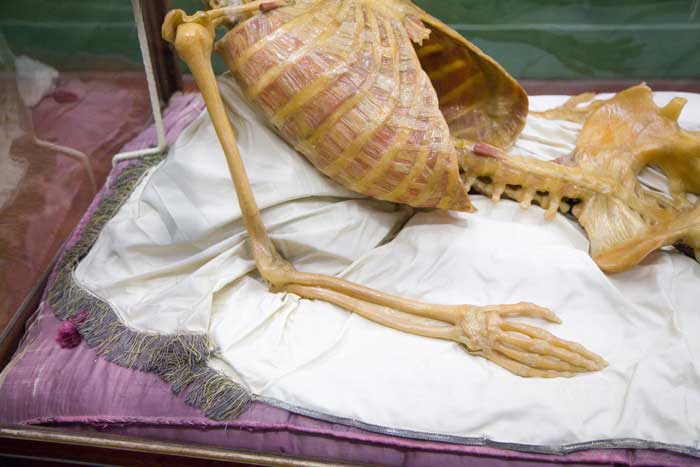
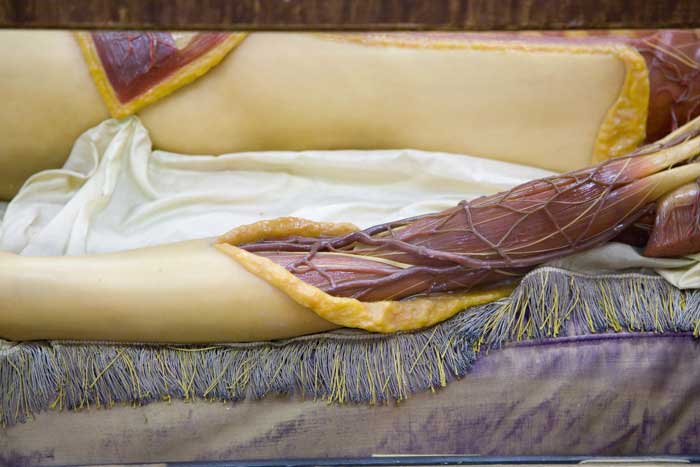
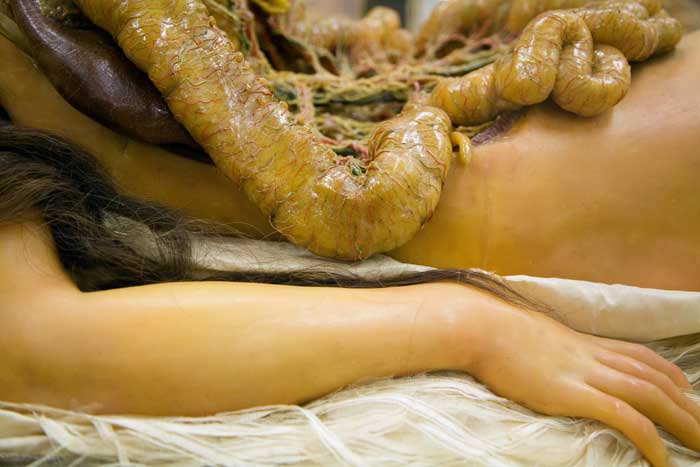
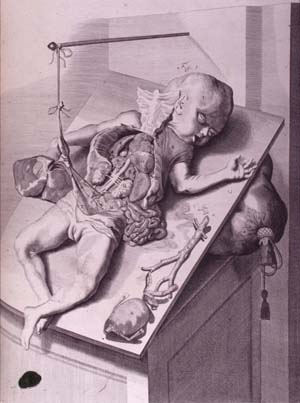
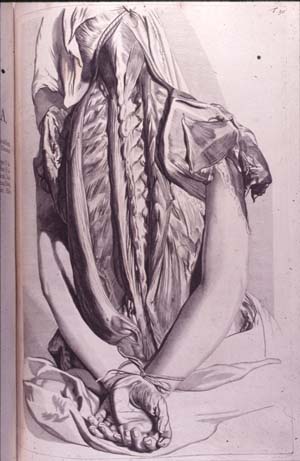
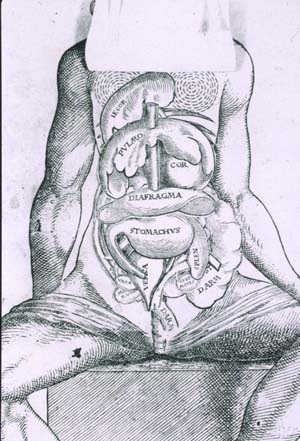
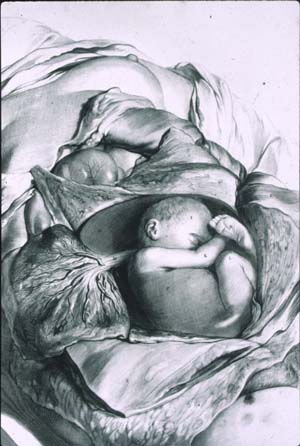
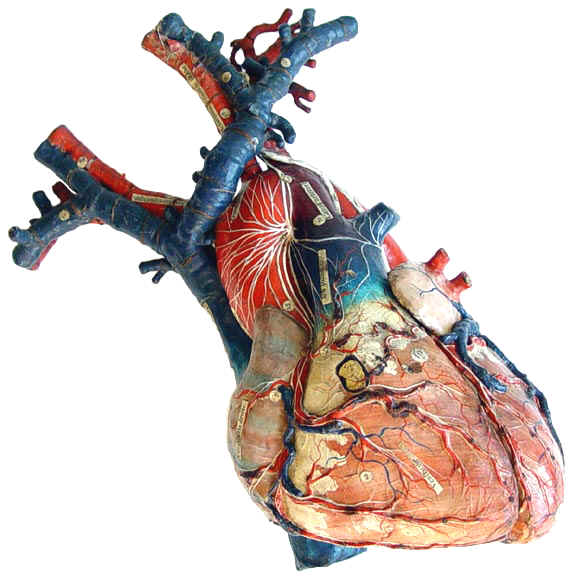
All images from the Anatomical Theatre exhibition.

Friday, March 28, 2008

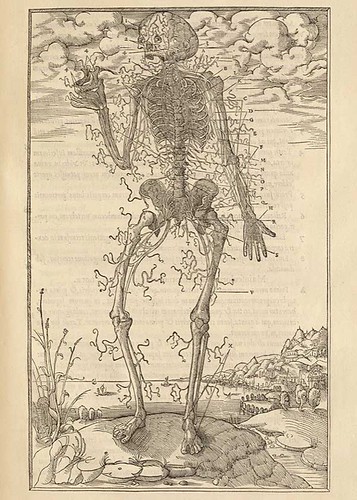
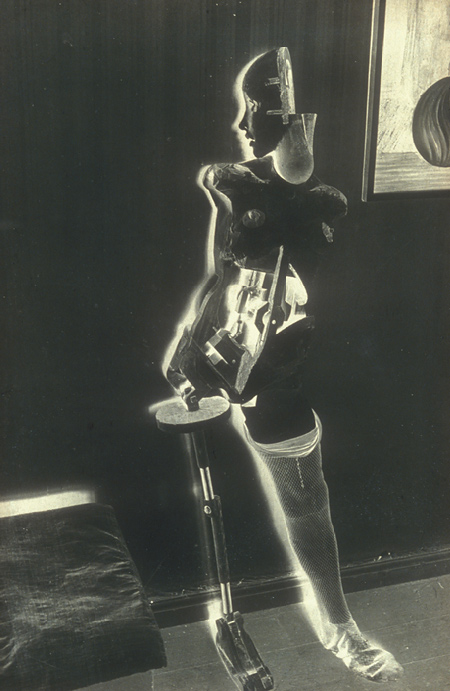
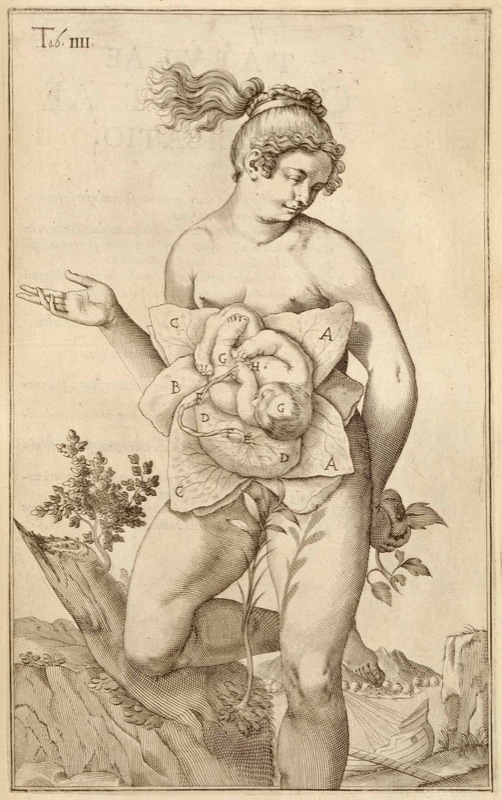
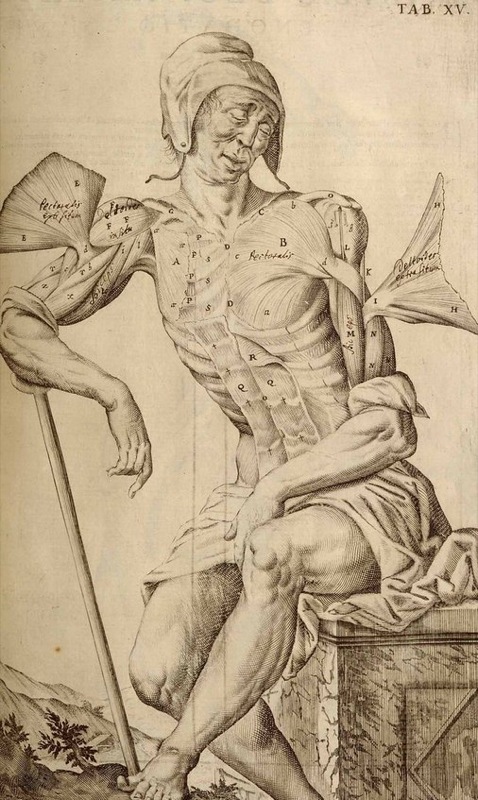
The Anatomical Self, Broadly Construed, to the Strains of Bob Dylan (Really!)

Bubble
Giulio Casserio(ca. 1552-1616)
Charles Estienne(1504-ca. 1564)
Jacques Fabien Gautier DAgoty, 1773
Fritz Kahn, 1931
La poupée (The Doll), Hans Bellmer, 1936
Giulio Casserio(ca. 1552-1616 )(anatomist) and Odoardo Fialetti (artist)
Juan Valverde de Amusco (ca. 1525-ca. 1588)
I happened upon a curious web-based project: a collection of "anatomical imagery" (broadly construed) arranged into a sort of loose narrative, interspersed with what appears to be the text from Bob Dylan's Shelter from the Storm. Its a very idiosyncratic grouping of images (the images above constitute a very small sampling) and is well worth a look, if only for the collection and variety of the images; check it out here on a blog called Dadadumdumdodo.

Thursday, March 27, 2008

"Opening Up a Few Corpses, 1795-1995," John Bender, 1997


In a search for anatomical imagery, I came across a very interesting (if somewhat academic) on-line discussion of the "virtual representation" of the human body in medical science from the Enlightenment to the present. It is the work of John Bender, professor of comparative literature and a specialist in 18th-century literature at Stanford University, and this work appears to be part of a larger lineup of the Stanford University "Writing Science" session from 1998-1999. Check out his piece, entitled "Opening up a Few Corpses, 1795-1995," here.

All images from the "Opening Corpses" website; more great images to be found on that page.

Wednesday, March 26, 2008

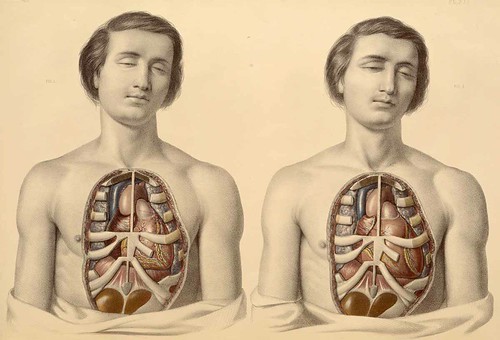
"Medical Anatomy...," Francis Sibson, anatomist, and William Fairland, artist, 1869


One of my favorite images from one of my favorite online exhibitions: the National Library of Medicine's Dream Anatomy. Called "Medical Anatomy...," this chromolithograph is the product of a collaboration between anatomist Francis Sibson and artist William Fairland.

From the website:
Sibson argued that anatomical illustrations are misleading because preservative injections and the dissection itself change the relative position of parts. This double illustration is intended to show a true picture of the dead body alongside an imaginative reconstruction of the same interior in a living body.

Tuesday, March 25, 2008

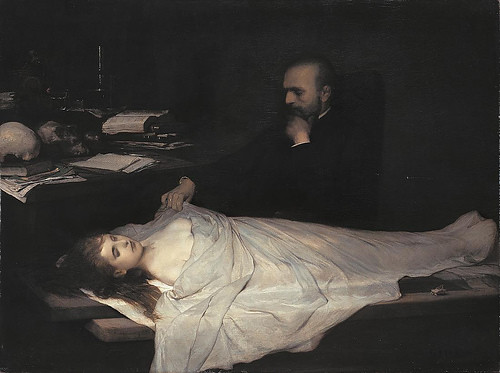
"The Anatomist (Der Anatom)," Gabriel von Max, 1869


This painting brings to mind Edgar Allen Poe's memorable quote: "the death of a beautiful woman is unquestionably the most poetical topic in the world..." It seems this maxim could also--at least circa 1869-- be applied to a beautiful dead woman about to be dissected by a pensive anatomist.

Learn more about the painter, Gabriel von Max, (who studied, among other things, parapsychology, somnambulism, hypnotism, spiritism, Darwinism, asiatic philosophy, and the ideas of Schopenhauer) here. See more images of his work here and here.

Thanks to Ludmilla Jordanova, author of one of my new favorite (and recently cited) books Sexual Visions: Images of Gender in Science and Medicine Between the Eighteenth and Twentieth Centuries,for bringing this painting to my attention. Check out the book for her compelling reading of this and other dissection paintings of the 19th Century featuring beautiful cadavers.

If this topic is of interest to you, you might want to check out a recent Morbid Anatomy post about a dissection print entitled Une Fin A l’Ecole Pratique.

Sunday, March 23, 2008

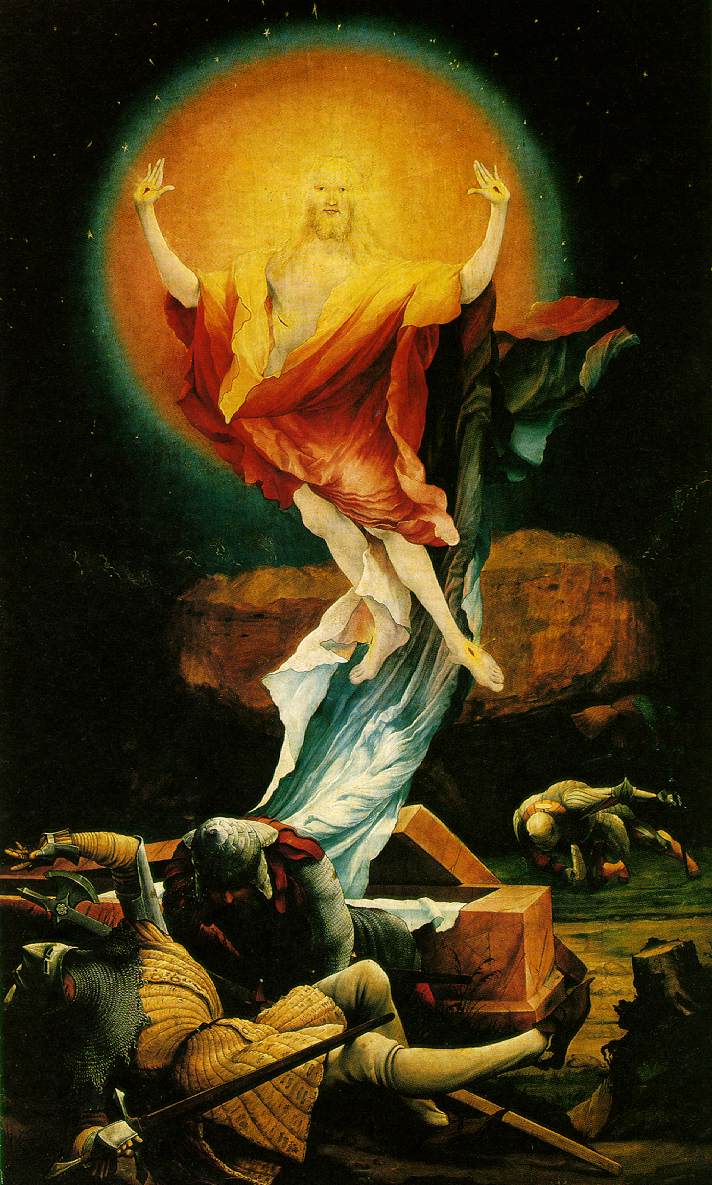
Happy Easter!


This one also compliments of the wonderful Matthias Grünewald. Resurrection,1510-1515.

Friday, March 21, 2008

Happy Good Friday!


Crucifixion by Matthias Grünewald, Isenheim Altarpiece, 1515.

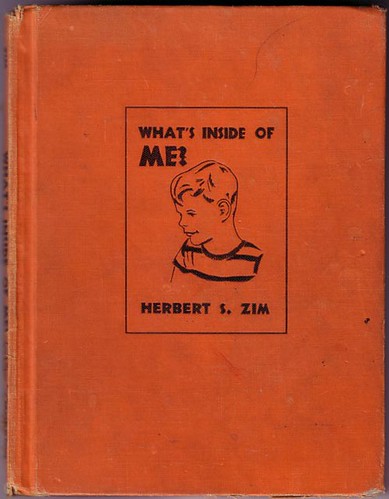
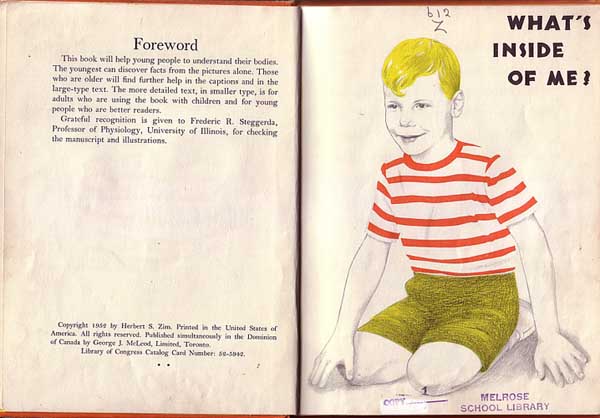
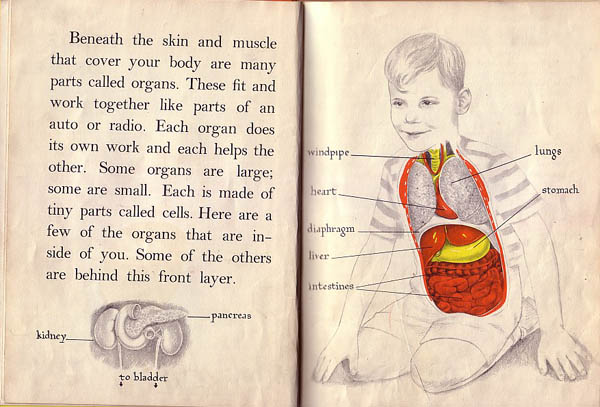
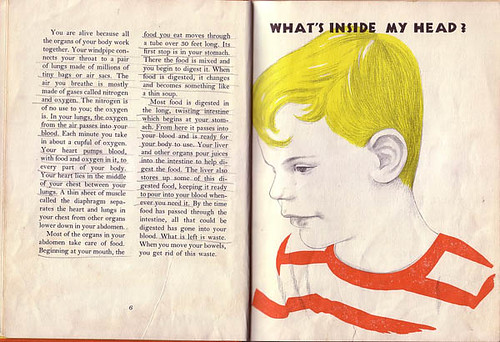
Anatomical Curiosity for the Younger Set Circa 1952


While doing a Google image search for images of girls on ponies (don't ask...), I stumbled across these images from Herbert S. Zim's anatomical children's book What's Inside of Me? on a blog called Look, See. More spreads from the book (and others) reside in the Morbid Anatomy Library.

Thursday, March 20, 2008

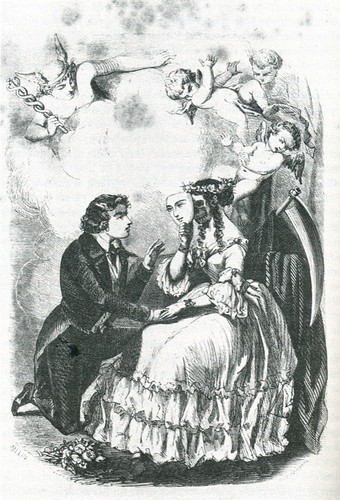
Frontspiece, "Syphilis: Poeme en Quatre Chants," A. M. Barthélémy, 1851


A wonderfully evocative image illustrating--quite graphically--the dangers of syphilis in the form of seductive women, circa 1851. I came across this image, which serves as the frontspiece of A. M. Barthélémy's Syphilis: Poeme en Quatre Chants, in Ludmilla Jordanova's fascinating Sexual Visions: Images of Gender in Science and Medicine Between the Eighteenth and Twentieth Centuries.

Wednesday, March 19, 2008

"The Papier-Mache Anatomist" Louis Auzoux, Curious Expeditions


Two of my favorite things in one blog post! First, anatomical models, in this case those of Louis Thomas Jérôme Auzoux. Second, New York City-Based purveyor of hair-art, anatomical prints, and yes, even a life-sized Auzoux anatomical model: Obscura Antiques and Oddities. Check out yesterdays Curious Expiditions post "The Papier-Mache Anatomist" for a great introduction into Auzoux's work and career, as well as a inventory of some of Obscura Antique's many charms.

Above images: Assorted models of Louis Thomas Jérôme Auzoux, most from the wonderful Phisick Antique Medical Collection website.

Monday, March 17, 2008

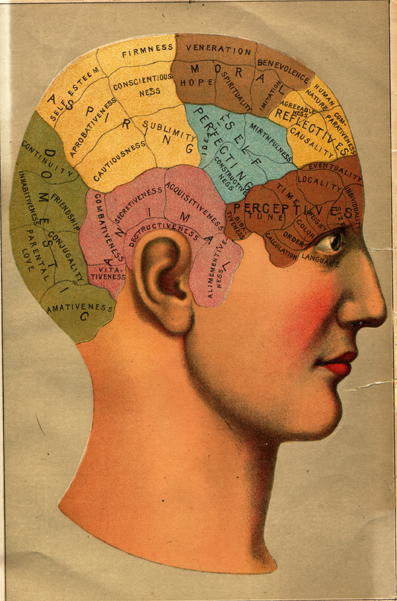
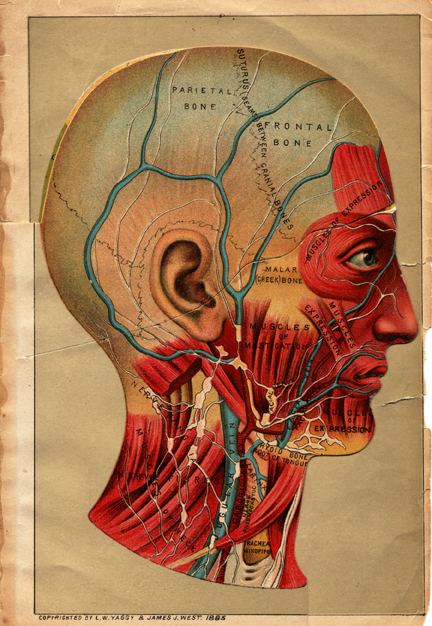
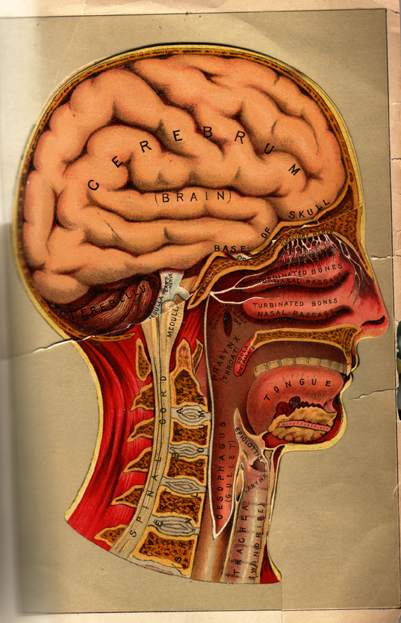
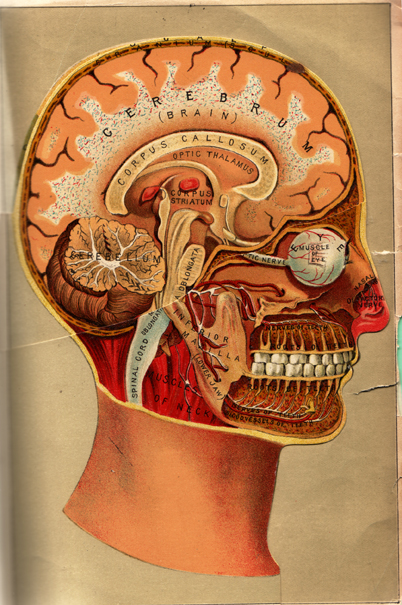
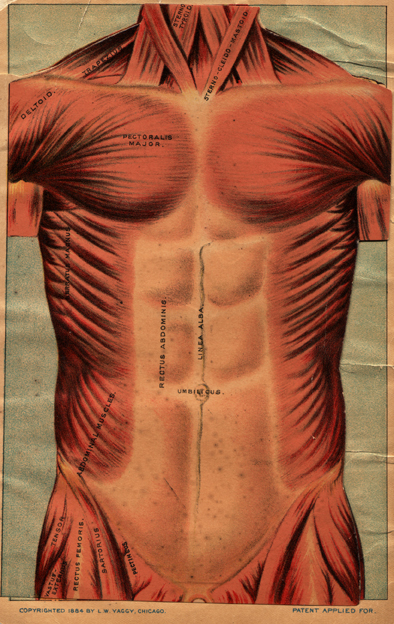
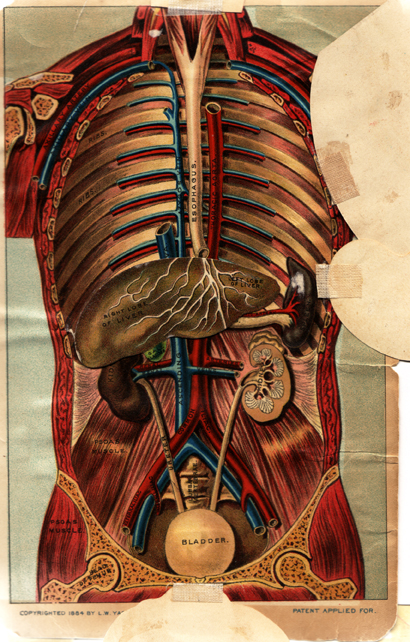
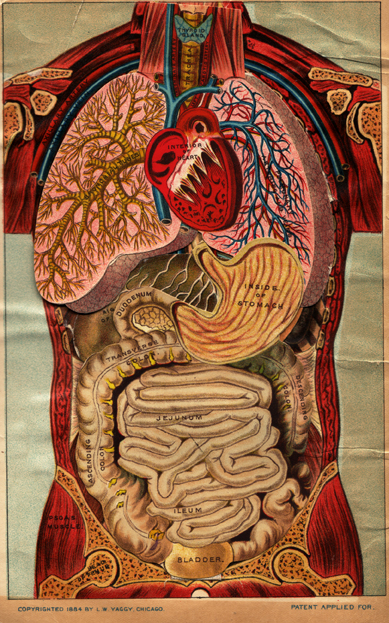
Anatomical Flipbook, L.W. Yaggy & James J. West, 1885


Thanks to Morbid Anatomy reader Ophelia Chong for alerting me to this wonderful anatomical flipbook residing in her Flickr ephemera collection. It was published by L.W. Yaggy & James J. West and dates from 1885.

View her complete Flickr collection here. And check out her online portfoio for a nice use of anatomical imagery as navigation tools. Thanks, Ophelia!

Sunday, March 16, 2008

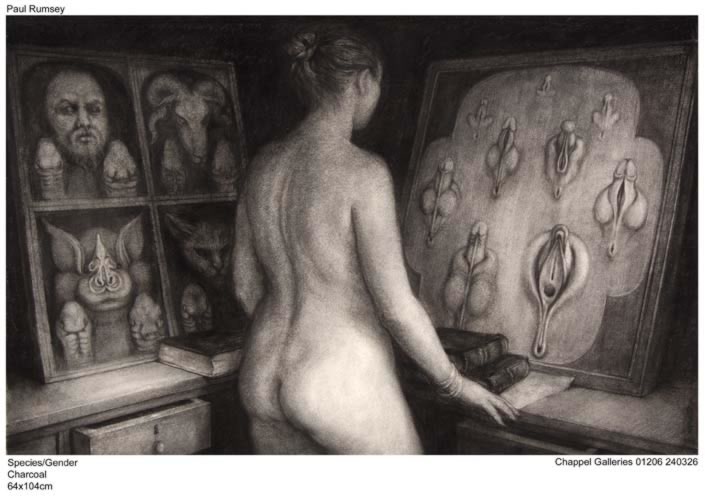
Paul Rumsey, 21st Century


I made the acquaintance of  British visual artist Paul Rumsey through the administration of this blog. I have been quite taken with his work as well as his list of influences, which include some of my own favorites: Ernst Haeckel, Alfred Kubin, Francisco Goya, medical museums, Charles Baudelaire, "Belle Rosina," waxworks, Jorge Luis Borges, and many, many more. His work looks more 15th century fantasy or 19th century graphic print than anything from our own century; I mean that in the best of ways. 

Paul sent me Drawing from the Imagination, a catalogue of his work. The introductory essay he authored details how he realized his own idiosyncratic artistic voice, a voice in dramatic opposition to that of his modernist-inspired teachers and colleagues. In the process, he traces the evolution of the grotesque and the fantastic in art from its birth to contemporary popular culture:
I came to see the history of art, not as separate layers of sediment or strata but as a living thing like a tree, growing with intertwining stems, alive from root to twig. My work belongs to the tradition of the grotesque and fantastic. It is possible to classify the various ways that reality is distorted in this kind of work: the mixing of forms, changes of scale, elongations, compressions and reversals, a distorted reflection which shows the world in a different light, a different perspective, the world re-imagined in a dream, subjectively influenced by the dreamer... 

The tradition of the grotesque is particularly alive in prints. The fantastic is especially suited to the graphic medium, and it is possible to track almost its entire history in etchings, engravings and woodcuts. A fine book The Waking dream: Fantasy and the Surreal in Graphic Art, 1450-1900 charts this progress through Holbein’s Dance of Death, the macabre prints of Urs Graf, the engravings of Callot, seventeenth-century alchemical prints, scientific, medical and anatomical illustration (I adapted the embryonic development diagrams of Ernst Haeckel for my drawing Species/Gender), emblems, the topsy-turvy world popular prints, Piranesi’s Prisons (which influence my architectural fantasies), Rowlandson, Gillray (whom I studied for guidance on how to draw caricature for drawings like my Seven Sins) , Goya, Fuseli and Blake, and into the nineteenth century with Grandville, Daumier, Meryon, Dore, Victor Hugo’s drawings and Redon. The tradition continues with the Symbolists and Richard Dadd, Ensor and Kubin, through to Surrealism, which recognised many of the artists of the grotesque and fantastic tradition as precursors. It is via Surrealism that much of this work has come to be appreciated. In the twentieth century this type of imagery has permeated culture, and is found everywhere, in diverse art forms including: the satiric installations of Keinholz, the drawings of A. Paul Weber, the cartoons of Robert Crumb, the animated films of Jan Svankmajer, photographs by Witkin, plays by Beckett, science fiction by Ballard, fantastic literature like Meyrink’s The Golem, Jean Ray’s Malpertuis, the art and writings of Bruno Schulz and Leonora Carrington, films by Lynch, Cronenberg and Gilliam; all are part of a spreading network of connections, the branching tentacles of the grotesque.

This is the tradition to which my work belongs, and when I am drawing I am aware of making connections with every strand of this tradition. For example, when I was working on my skeleton drawings I thought back, via zombie movies, to the thousands of animated skeletons in art, from Posada and Kubin back to Bruegel’s Triumph of Death, and back further to the scene of necromancy in Lucan’s Pharsalia from the first century CE, a scene that influenced Shelley’s Frankenstein, which in turn influenced Romero’s Day of the Dead zombie movie. 
Check out more of Paul's work here, here, and here. Read the entire introductory essay from which the above quote is pulled here.

Saturday, March 15, 2008

University of Michigan Dental Library's "Flickr Dentistry Collection"


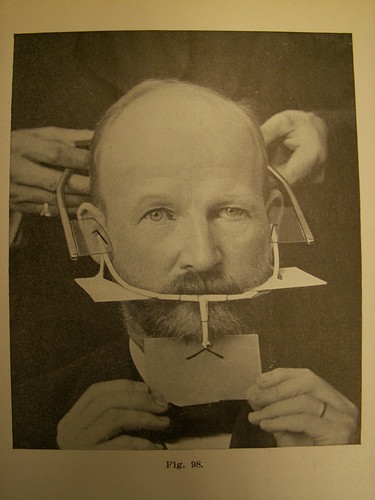
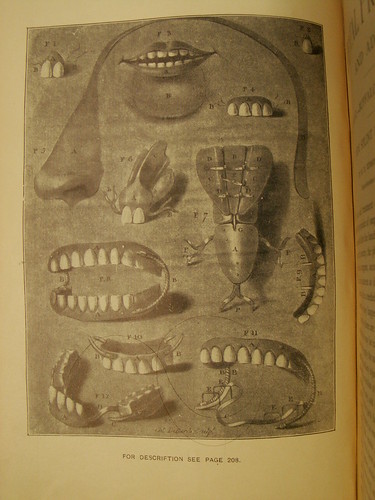
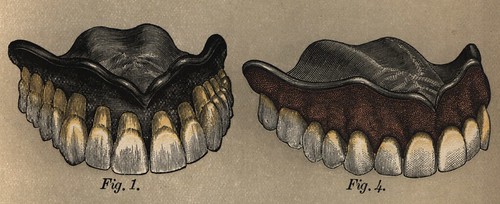
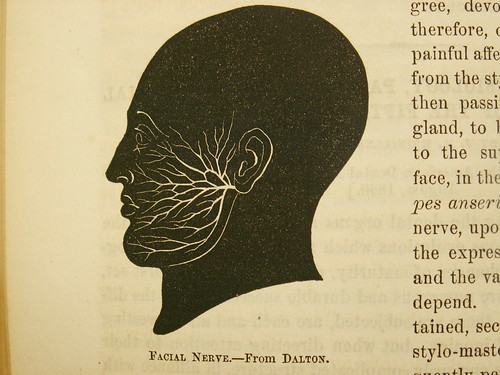
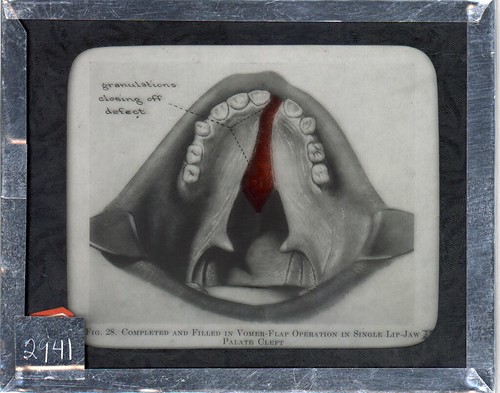
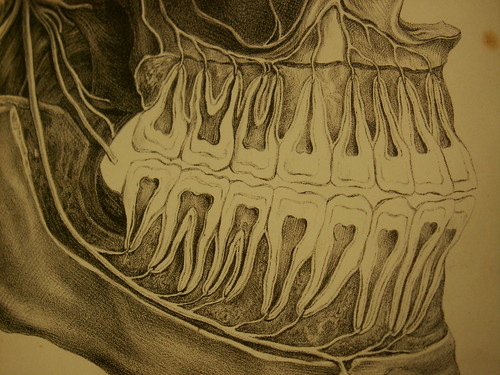
Wow... Another museum/library collection on Flickr! This one is called the "Flickr Dentistry Collection," and has been posted by Rosefirerising of the University of Michigan Dentistry Library.  A very impressive collection, containing ephemera, magic lantern slides, books, trade literature, illustrations, images of museum displays, and more. Also some nice, fetishistic macro photos of text, graphic elements, marbelized paper, lovely end paper, bookplates, and all the details of old books that make libraries so wonderful.

Thanks to a blog called Bookn3rd: Book History and Diversions Therefrom for calling my attention to this collection. Click here to peruse the entire collection, comprising 19 sets and over 1000 images. Well, well worth a visit. All images above from the collection.

Friday, March 14, 2008

"The Octagon Room," Mark Dion, 2008


I know this is late notice, but if you get a chance, go check out Mark Dion's "Octagon Room" (pictured above) installation at Tanya Bonakdar Gallery. Tomorrow is your last chance (it closes on March 16th), but it is well worth a visit if you can fit it in. Dion deals with taxonomies, "natural history", and humankind's relationship with nature in visually intriguing ways, often through the evocative clutter of historical and accumulated objects; he is one of my favorite contemporary artists. You might want to check out his Flickr presence as well.

"Amazing Rare Things: The Art of Natural History in the Age of Discovery," David Attenborough, 2008


"There is a common denominator that links all these artists. It is the profound joy that all feel who observe the natural world with a sustained and devoted intensity" --Sir David Attenborough

An amazing looking exhibition called "Amazing Rare Things: The Art of Natural History in the Age of Discovery" and curated by the venerable David Attenborough is showing though September 28th at The Queen's Gallery in Buckingham Palace.

The exhibition features the work artists Leonardo da Vinci, Wenceslaus Hollar, Alexander Marshal, Maria Sibylla Merian and Mark Catesby, as well as many works from the "paper museum of collector Cassiano dal Pozzo." What a wonderful concept, a "paper museum"... Not surprisingly, this "paper museum" is the source of some of the strongest images in the show.

To see the full gallery of images, click here. To read a nice (and more thorough) discussion of the show, check out a recent post by Bioephemera. Read a review of the show at the London Independent here. Check out the book which preceded the show, Amazing Rare Things: The Art of Natural History in the Age of Discovery,here.

Thursday, March 13, 2008

Kikkerland Design Anatomical 3D Puzzles


The enigmatic Kikkerland Design has produced a slew of 3D puzzles of anatomical models (is that the way to word it?), among other odd and intriguing things. I think I want the horse...

Check out the complete Kikkerland collection here. Visit their website here.

Oh! Just heard from the Kikkerland folks themselves, who have informed me about places in NYC where you can purchase these puzzles: MXYPLYZYK, EXIT 9 and what is possibly my favorite place in the world (and where I spend much of my time as a volunteer)--the American Museum of Natural History.

Tuesday, March 11, 2008

"A Repository for Bottled Monsters" Weblog, 2008


If you have not already found your way over, I highly recommend you visit The National Museum of Health and Medicine's new (and picturesquely titled) blog "A Repository for Bottled Monsters." However did they come up with that name, you may ask? From the website:

It's historical. I found it in a quote from one of the former curators... He closed with the complaint, "We still suffer under the connotation museum, an institution still thought of by many as a repository for bottled monsters and medical curiosities. To be sure, we have such specimens. As is required by law, we maintain an exhibit open to the public, but in war time, at least, the museum per se is the least of our functions, and we like to be thought of as the Army Institute of Pathology, a designation recently authorized by the Surgeon General."

Visit the blog to read the complete quote, as well as postings on WWII Venereal Diseases, book and museum reviews, news on upcoming exhibitions, and much more. Also, don't forget to visit (and revisit!) their Flickr pages, which are updated daily and contain an amazing number of wonder-inducing images, complete with informative captions. You can find them here, here, and here.

All above images from "Bottled Monsters" and NMHM's Flickr pages.

International Anatomical Graffiti


Vanessa Ruiz of Street Anatomy has compiled a nice collection of anatomical graffiti. Above are some of my favorites; check out the entire gallery here.

Monday, March 10, 2008

Helmie van de Riet (Born 1961)


Find out more about anatomical-inspired artist Helmie van de Riet's work (if you speak Dutch, that is) here. (And hey--if you are able to figure anything out, please let Morbid Anatomy know. We are dying to know more!)

Sunday, March 9, 2008

"Manual of the Diseases of the Eye," Charles H. May M.D. (First edition 1900)


I have always had a thing for medical depictions of the eye. Manual of the Diseases of the Eye for Students and General Practitioners, (a 1939 edition of which resides in the Morbid Anatomy library and from which these scans are drawn), contains 387 of them, many quite fantastic (in all senses of the word); peruse them all (in regrettably low-res form) in the Google Books 1905 edition PDF here.

Thursday, March 6, 2008

Comparative Anatomical Illustration, 1559-1626


From a nice post on the stylistic evolution of anatomical illustration found on the Medical Illustration Studio Blog.

Wednesday, March 5, 2008

"Music From the Body," Roger Waters and Ron Geesin, 1970


The album "Music from the Body" is the soundtrack to a 1970s documentary called "The Body" which is described on Internet Movie Database thusly: The body is birth and love. The body is life and sex. The body is dreams and beauty. The body is joy and fear. The body is you and everybody you know." The soundtrack is the product of a collaboration between Pink Floyd's Roger Waters and British composer and musician Ron Geesin; here are just a few of the songs you will find there: "Red Stuff Writhe," "Dance of The Red Corpuscles," "Embryonic Womb-Walk," and "March Past Of the Embryos."

Despite the general un-listenability of the record (well, there are a few decent songs, but most are a bit high-concept for my taste) I am still quite curious to see the film itself. Sadly, I have been unable to locate any rentable or purchasable copy of it. Might anyone out there know of a way to acquire or access a copy? To get a taste of it, you can check out the film's opening sequence here.

Thanks, by the way, to my good friend Amy Slonaker for sending the LP my way.

Tuesday, March 4, 2008

"Danse Macabre," Saint-Saëns, 19th Century


The Danse Macabre, also known as the Dance of Death, Danza Mababra, danza della morte, or Totentanz (depending on you nationality), originated during the years of the bubonic plague (a.k.a. the black death) in the 14th century, and was intended to remind one that death would soon be coming for us, be we king, pope or commoner. The theme was explored in forms as diverse as poetry, visual arts (see above) and music. One of my favorite examples of the genre is a musical composition by Camille Saint-Saëns, entitled Danse Macabre, first performed in 1875.

Wikipedia has a wonderful entry on the piece; following are some of the highlights:

The composition is based upon a poem by Henri Cazalis, which itself is based upon an old French superstition:

Zig, zig, zig, Death in a cadence,
Striking with his heel a tomb,
Death at midnight plays a dance-tune,
Zig, zig, zig, on his violin.
The winter wind blows and the night is dark;
Moans are heard in the linden trees.
Through the gloom, white skeletons pass,
Running and leaping in their shrouds.
Zig, zig, zig, each one is frisking,
The bones of the dancers are heard to crack—
But hist! of a sudden they quit the round,
They push forward, they fly; their cocks have crowed.

According to the ancient superstition, "Death" appears at midnight every year on Halloween. Death has the power to call forth the dead from their graves to dance for him while he plays his fiddle (represented by a solo violin with its E-string tuned to an E-flat in an example of scordatura tuning). His skeletons dance for him until the first break of dawn, when they must return to their graves until the next year.

The piece opens with a harp playing a single note,and soft chords from the string section. This then leads to the eerie E flat and A chords (also known as a tritone or the "Devil's chord") played by a solo violin, representing death on his fiddle... The final section, a pianissimo, represents the dawn breaking and the skeletons returning to their graves.


Listen to (or download) a wonderful version from 1925, conducted by Leopold Stokowski here. The lavishly illustrated and lovingly compiled website Danza Macabre might make a nice companion piece.

Saturday, March 1, 2008

"Extraordinary Bodies: Mutter Museum Photographs" Exhibition Opening


Last night was the opening for "Extraordinary Bodies: Mütter Museum Photographs" at the Mütter Museum. Above are some images of the event and exhibition; view more here. Or better yet--take a trip to the Mütter to see it with your own eyes--you have until the end of the year. Trust me--its worth it! If you need more persuasion: (from the Mütter Museum webpage:)
Curated by Laura Lindgren. The historical bond between photographers and medicine carries forward to the present day with Extraordinary Bodies: Mütter Museum Photographs, an exhibition that presents more than a decade of work by sixteen contemporary fine-art photographers. Originally curated to coincide with the publication of Mütter Museum, this exhibition has traveled nationally since 2002 and now comes home for presentation for the first time in the Mütter Museum's own gallery. The works in this exhibition find beauty not in conventional forms, but in the internal marvels revealed in the Museum's specimens and medical models. The artists have been drawn to explore the enigma of the body, whether normal or deformed, broken, or disfigured, to create visual metaphors for the human condition. The exhibition includes photographs by Shelby Lee Adams, Max Aguilera-Hellweg, Gwen Akin & Allan Ludwig, Candace diCarlo, Dale Gunnoe, Steven Katzman, Mark Kessell, Scott Lindgren, Olivia Parker, Rosamond Purcell, Richard Ross, Ariel Ruiz i Altaba, Harvey Stein, Arne Svenson, William Wegman, and Joel-Peter Witkin, and a selection of historic photographs from the Museum's collection...