Showing posts with label online. Show all posts

Wednesday, November 26, 2014

The Imaginary 20th Century: An "Interactive Wunder-Roman" : Guest Post by Norman M. Klein

  
Our good friend Norman Klein--author of the amazing The Vatican to Vegas: A History of Special Effects--has partnered with Cal Arts' Margo Bistis to create what he calls an "interactive wunder-roman" entitled The Imaginary 20th Century. Following is a guest post by Norman detailing this impressive and characteristically eccentric project; You can also find out more by clicking here.
In 1816, a letter by the philosopher Friedrich Schelling describes a novel that runs on wooden and iron gears, propelled by a river, like an early industrial loom. He called it a wunder-roman. This year, an interactive wunder-roman has been published online, and may be the largest archival novel to date-- of rare print curiosities-- certainly the largest in story form that can be navigated as if one were operating a giant machine. Here is an introduction:

According to legend, in 1902, a woman named Carrie, while traveling through Europe, selects four men to seduce her, each with a version of the coming century. Inevitably, the future always spills off course. We navigate through the suitors’ worlds; follow Carrie on her travels; discover what she and her lovers forgot to notice. In 1917, Carrie’s uncle sets up a massive archive of her life. For decades, Uncle Harry had worked for the oligarchs of Los Angeles erasing crimes that might prove embarrassing. Thus, as he often explains, seduction is a form of espionage. In 2004, this archive was unearthed in Los Angeles. 

The Imaginary 20th Century is a tale of seduction as well as espionage; of archiving and the transitive poetics of excavation. Featuring a narrated media archive of 2,200 rare images with a companion ebook, The Imaginary 20th Century is a collaborative work by Norman M. Klein and Margo Bistis, and published by the media museum ZKM.  With their team of artists and designers, the authors have reinvented Schelling’s wunder-roman as online narrative engine, where fact and fiction split off and return to each other to the story in a unique form.

You can visit at http://imaginary20thcentury.com,
Images
  1. The Imaginary 20th Century, ebook cover.
  2. The Imaginary 20th Century, media archive, image cluster in chapter 3.2
  3. The Imaginary 20th Century, media archive, 1.2 chapter map

Saturday, May 14, 2011

Annals of Eugenics Journal, 1925-1954, Now Available Online


The Annals of Eugenics--now The Annals of Human Genetics--has just made its 1925-1954 journal content available online for researchers in the history of science and medicine. Their current issue also features four specially commissioned articles that contextualizing the content, and highlighting the ways in which Eugenics "embodies the history of human genetics as a scientific enterprise and exemplifies the complex relationship of this discipline with wider society [as well as] the somber role that human genetics played in providing what was taken to be a scientific framework to social prejudice during the period."

This is sure to be some fascinating stuff.

Full details, as told by Advances in the History of Psychology:
The Annals of Human Genetics (AHG), formerly named Annals of Eugenics, has recently made its 1925-1954 journal content available online for researchers. Among the now controversial eugenics research appearing throughout these issues, researchers can also expect to find statistical publications by mathematician Karl Pearson, whose work at University College London concerned the widely used Pearson Product-Moment Correlation Coefficient, the Pearson Chi-Square test, and P-value.

The AHG editorial cites “ongoing use and reference to materials”… “and the somewhat limited availability of the original printed copy” as justification for making the content available online. Furthermore,

"Online access to the Annals of Eugenics archive will also be of interest to historians of science. In many ways, the history of the Annals embodies the history of human genetics as a scientific enterprise and exemplifies the complex relationship of this discipline with wider society. The somber role that human genetics played in providing what was taken to be a scientific framework to social prejudice during the period of “Eugenics” is a well-known case of the complex interaction between science and society. The present issue of the journal includes four specially commissioned articles that attempt to contextualize the online publication of the Annals of Eugenics archive. To exemplify some of the major scientific contributions made during that period, the article by J. Ott highlights key papers on linkage analysis published by the journal. The contributions by K. Weiss, G. Allen, and D. Kevles deal with aspects of the history of eugenics and of human genetics, and explore their relevance to ongoing debates regarding the social implications of human genetics research."
You can read the full article by clicking here.

Tuesday, May 25, 2010

The Secret Museum Website and Exhibition Closing Party


The Secret Museum is now a website!

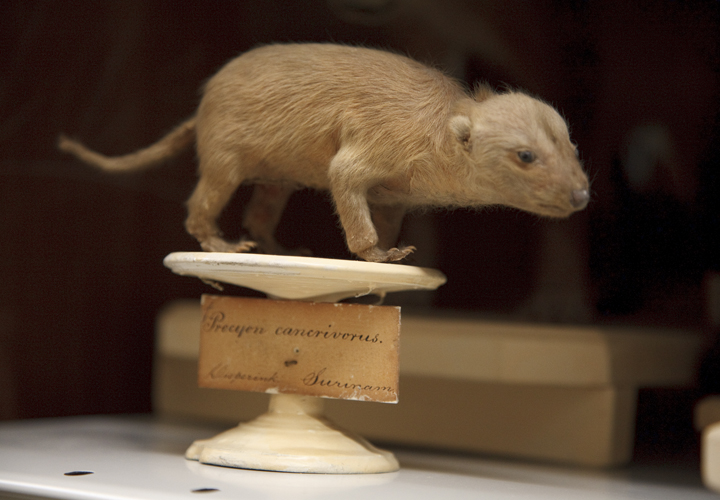
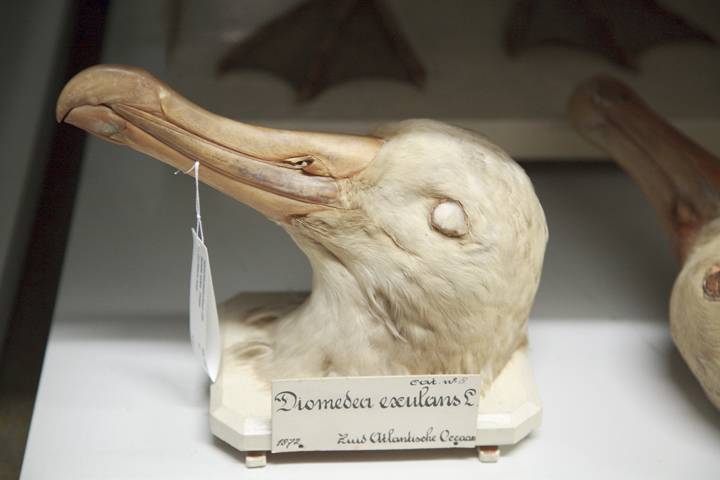
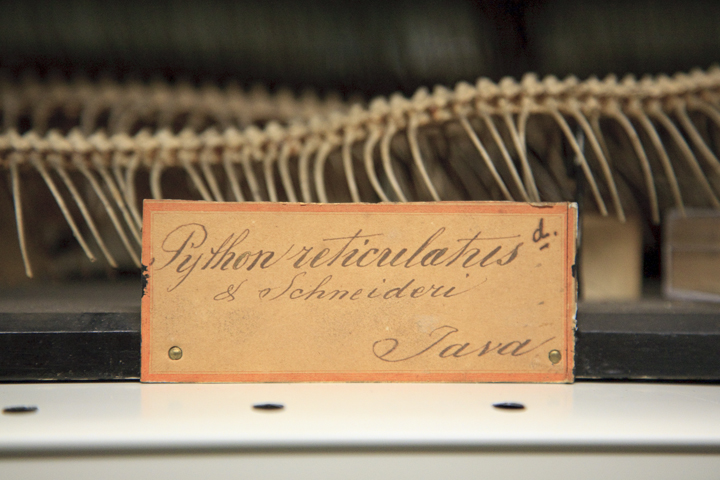
I have just launched a full website for The Secret Museum, my exhibition of photographs (as seen above) exploring the poetics of hidden, untouched and curious collections from around the world. The website includes information, links, and, of course, a full gallery of photos, installation and otherwise; You can check it out by clicking here.

The Secret Museum exhibition proper will be on view until Sunday, June 6th at Observatory; please consider yourself cordially invited to a closing party that evening, featuring a last perusal of the museum, a bit of wine, a dimly-lit chandelier, and some esoteric music complements of Mister Friese Undine. The party--which will run from 6-10 at Observatory--is, of course, free of charge, and should be good fun. Address and travel details can be found here.

Hope very much to see you there!

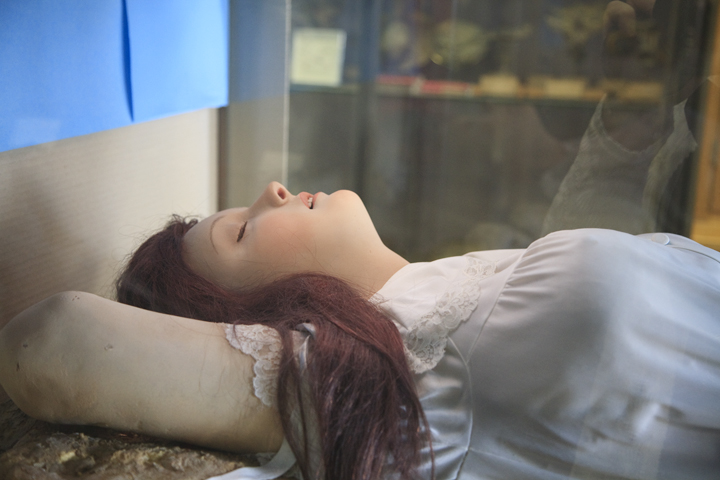
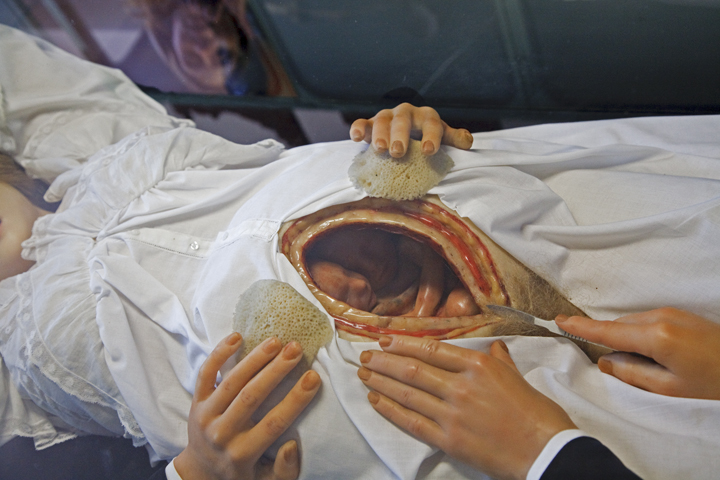
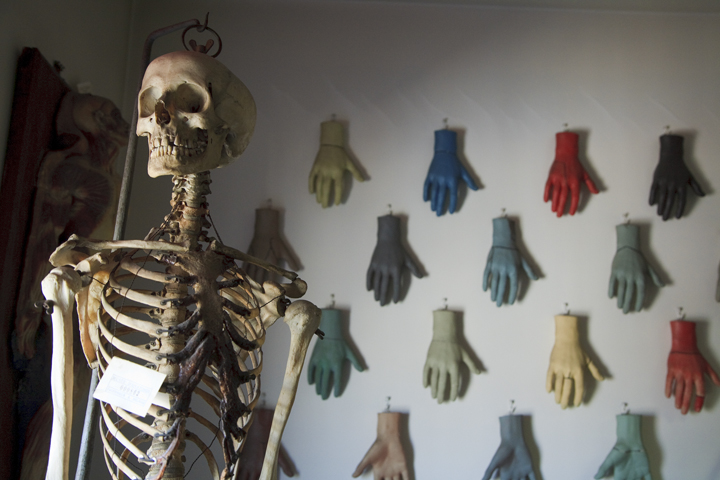
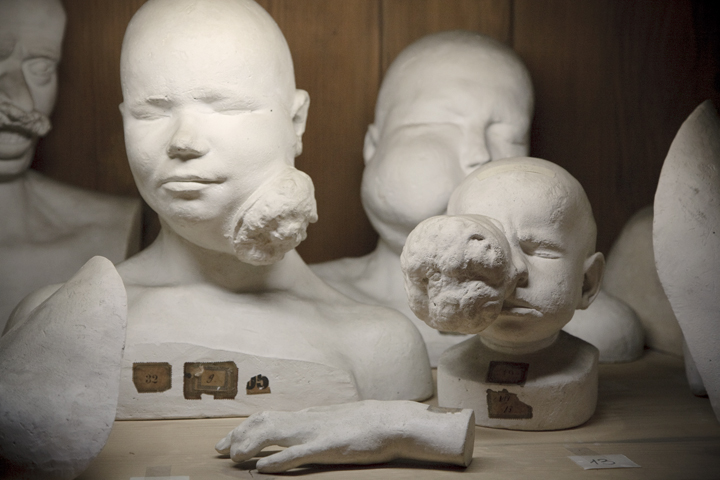
All above images from The Secret Museum; captions from top to bottom:
  1. "Femme à barbe," Musée Orfila. Courtesy of Paris Descartes University
  2. Venus Endormie (breathing wax model), Spitzner collection Collection Spitzner, Musée Orfila, Paris Courtesy Université Paris Descartes
  3. Opération de la Cesarienne, (wax model of Caesarean section) Collection Spitzner, Musée Orfila, Paris. Courtesy Université Paris Descartes
  4. Skeleton and hand models for "la médecine opératoire" Musée Orfila, Paris. Courtesy Université Paris Descartes
  5. Plaster Models in Pathological Cabinet, The Museum of the Faculty of Medicine at the Jagiellonian University, Krakow
  6. Natural History Museum Backroom, Netherlands
  7. Natural History Museum Backroom, Netherlands
  8. Natural History Museum Backroom, Netherlands

Sunday, March 7, 2010

"An Iconography of Contagion," Web Exhibition, National Library of Medicine


About a hundred years ago, public health took a visual turn. In an era of devastating epidemic and endemic infectious disease, health professionals began to organize coordinated campaigns that sought to mobilize public action through eye-catching wall posters, illustrated pamphlets, motion pictures, and glass slide projections...
Check out the National Library of Medicine's wonderful new web exhibition "An Iconography of Contagion"--which explores the relationship between posters and public health, and from which all of the above text and images were drawn--by clicking here. Curated by Friend-of-Morbid-Anatomy Michael Sappol, this is a characteristically smart, thoughtful, and visually rich exhibition.

You can see the entire exhibition, and read the full text and full image captions, by clicking here. You can see many more wonderful images in the gallery section by clicking here. Click on images above to see much larger, richer versions.

Image Credits:
  1. She may be…a bag of TROUBLE. Syphilis – Gonorrhea., U.S. Public Health Service, United States, 1940s. Photomechanical print: color; 41 x 51 cm. Artist: “Christian.”
  2. Ali si zdrav? (Are you healthy?), Golnik, Slovenia, Yugoslavia, 1950s. Photomechanical print: color; 42 x 60 cm.
  3. Tuberkulose undersøgelse – en borgerpligt (Tuberculosis examination – a citizen’s duty.), Copenhagen, Denmark, 1947. Color lithograph; 62 x 85 cm. Designer/artist: : Henry Thelander (fl. 1902-1986). Lithographers: Andreasen & Lachmann.
  4. Tuberculosis bacilli. Chinese Anti-Tuberculosis Association, Shanghai, 1953.
  5. La course a la mort. (The race with death.) Ligue Nationale Française contre le Peril Vénérién, France, ca. 1926. Color lithograph; reproduction of a pastel drawing; 69 x 88 cm. Artist: Charles Emmanuel Jodelet (1883-1969).

Friday, December 5, 2008

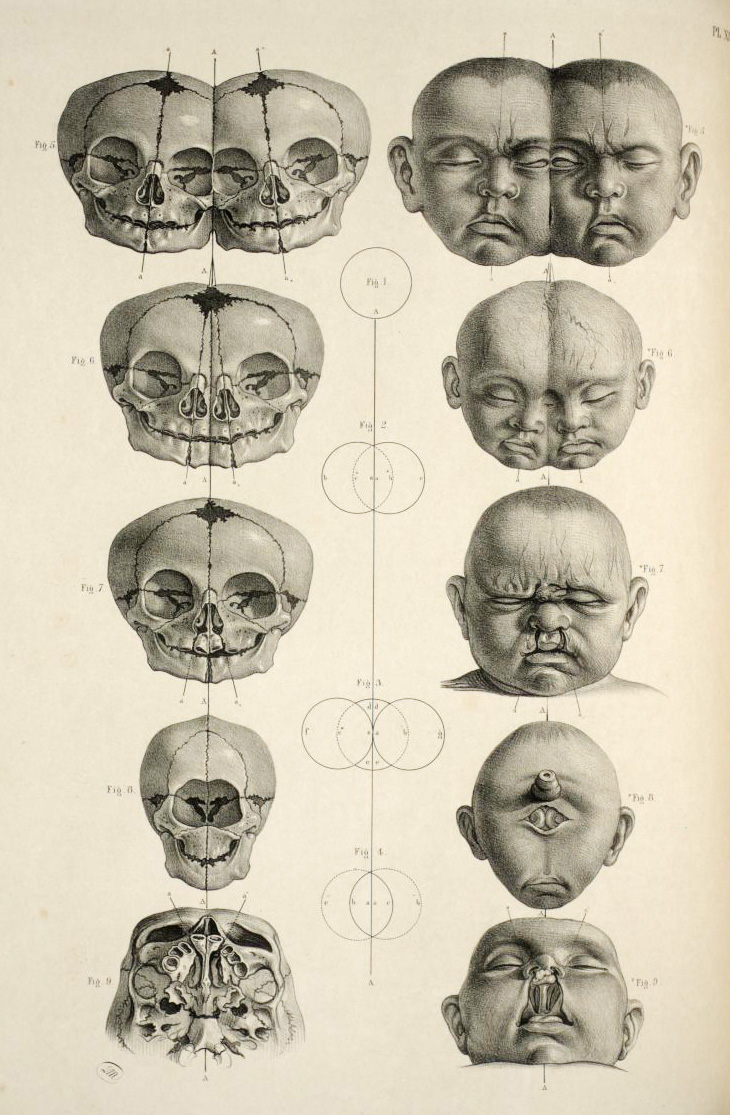
"Head and skull of malformed infants...," from Joseph Maclise's "Surgical Anatomy," 1856


"Head and skull of malformed infants; conjoined twins, bilateral cleft lip and holoprosencephaly," from Joseph Maclise's book Surgical Anatomy, published in London in 1856.

Just one of the many, many treasures to be found at the University of Toronto's wonderful online exhibit "Anatomia: Anatomical Plates from the Thomas Fisher Rare Book Library."

Friday, November 21, 2008

"Making Visible Embryos," University of Cambridge Online Exhibition


Nick Hopwood of the University of Cambridge just sent me a link to a wonderful new online exhibit about the history of visualizing the human embryo, produced by Tatjana Buklijas and himself with support from the Wellcome Trust. The web exhibition is both broad and specific in its approach. As the website explains:

Images of human embryos are everywhere. We see them in newspapers, clinics, classrooms, laboratories, family albums and on the internet. Debates about abortion, assisted conception, cloning and Darwinism have sometimes made these images hugely controversial, but they are also routine. We tend to take them for granted today. Yet 250 years ago human development was still nowhere to be seen.

Developing embryos were first drawn in the eighteenth-century Enlightenment. Modern medicine and biology exploited technical innovations as pictures and models communicated new attitudes to childbirth, evolution and reproduction. In the twentieth century they became the dominant representations of pregnancy and prominent symbols of hope and fear. Wherever we stand in today’s debates, it should enrich and may challenge our understandings to explore how these icons have been made.

The "Making Visible Embryos" web exhibit approaches a complex, wide-spanning subject engagingly and clearly without ever oversimplifying the subject matter. It is well-designed with heavily (and beautifully) illustrated pages (see above; visit the website to find out more about each image.)

The exhibit deftly explores the changes in metaphor, imagery, and understanding of the mysterious and centuries-hidden embryo, from speculative, religiously influenced illustrations of the 1300s to the modern day ultrasound. It also touches on popular debates about embryology, uses of the embryo in the fine arts, the history of (and uses of) illustration and modeling of the embryo, and contemporary controversies surrounding the embryo in the 21st century.

All in all, a fascinating treatment of a complex subject, beautifully designed, thought-provoking, and chock-full of resources and source information; this web exploration takes a subject we take for granted and examines the specific thinkers, physicians, artists, and medical and artistic advances that have quietly influenced our contemporary understanding and visualization. A real pleasure! I highly recommend you visit the website to see for yourself; you can do so by clicking here.

Wednesday, October 22, 2008

British Columbia Medical Association Medical Museum Collection Online!


The British Columbia Medical Association Medical Museum has just launched a lovely online gallery showcasing its collection of the objects, artifacts, instruments and ephemera. The photography is excellent, details--visual and textual--are available for each item, and the page is beautifully designed. You can check it out the website for yourself here.


All images drawn from the gallery.

Saturday, October 11, 2008

Anatomical Maps, A Visual History


A website called Design Boom has done a nice, miniature visual history of anatomical maps, from medival times to the present. Most notable is its inclusion of eastern examples, an under-discussed branch of anatomical illustration in general.

Check out the whole article, and read about the above images, here.