Showing posts with label quay brothers. Show all posts

Friday, August 10, 2012

Quay Brothers Retrospective in New York City! "On Deciphering the Pharmacist's Prescription for Lip-Reading Puppets," Museum of Modern Art, NYC

I just had the honor to view the beautifully installed and revelatory Quay Brothers retrospective "On Deciphering the Pharmacist's Prescription for Lip-Reading Puppets" at the Museum of Modern Art in New York. I have long been a fan of the Quay's work, and still, this exhibition had much to astonish, delight and surprise, situating the Quay's work within the larger context of an avant-garde tradition, and revealing the Quay's oeuvre to be much broader and richer than expected. Surprises and highlights included pen and ink drawings evoking a slightly less whimsical Edward Gorey, a mini-exhibition of the of the kind of Polish theater posters from the 1960s which inspired much of their work, and paintings by a scientific illustrator who mentored them in high school. Also of special interest, at least to me, was a collection of 8 mm Eastern European travel films which The Quay's collected as inspiration for their work; these grainy and blurred snatches of dark and forgotten streets, shop windows with wax mannequin heads, and church interior possess much of the atmosphere, mystery, and powerful detail evident the Quay's best works; they serve as both an excellent introduction to the exhibition and an illuminating key to their film work.

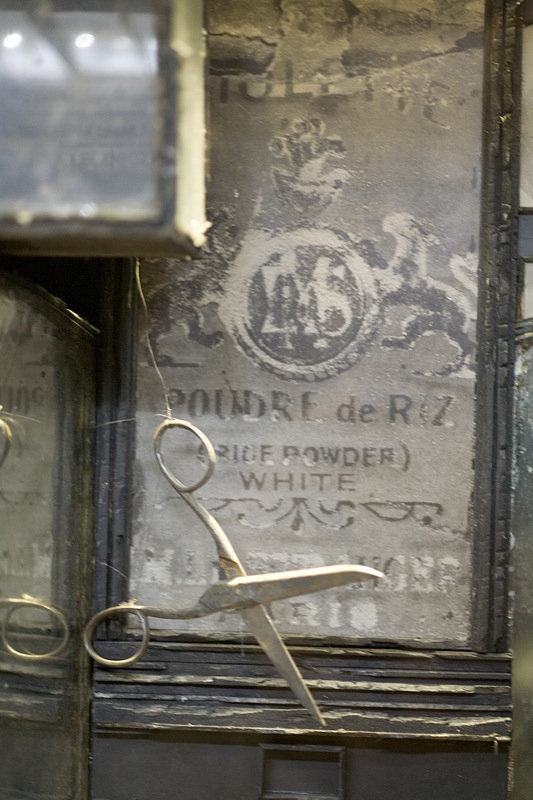
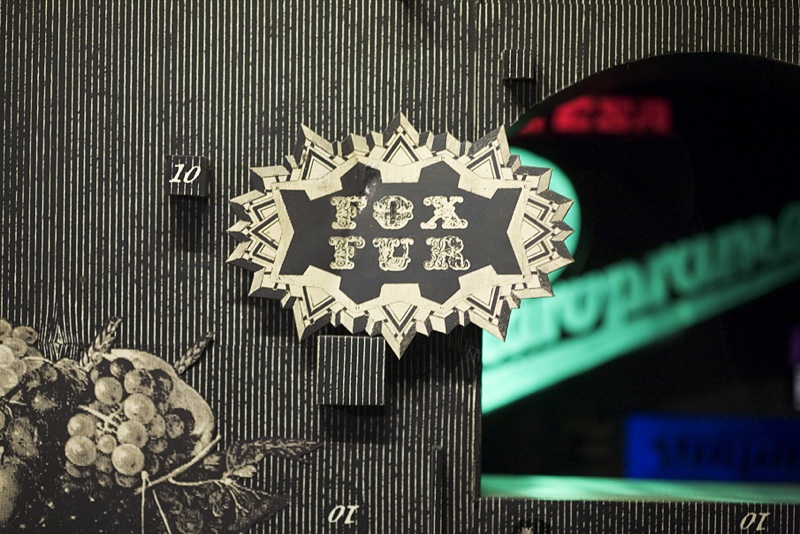
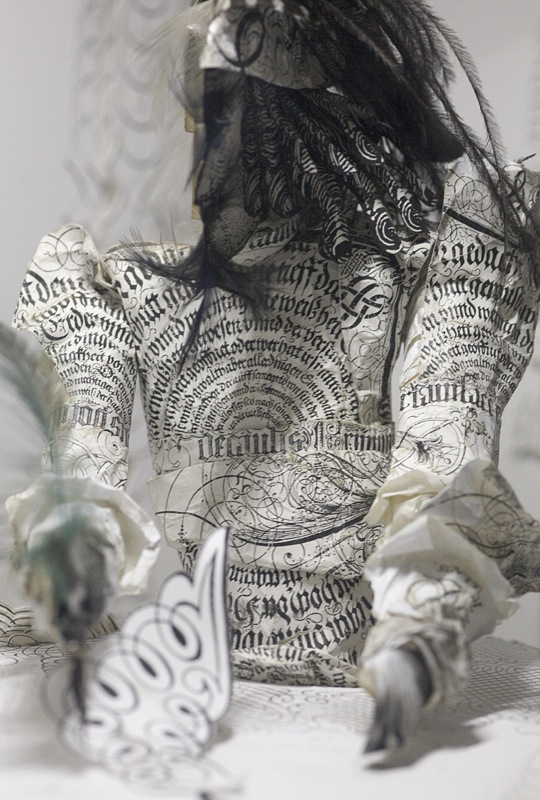
If you are able to visit the exhibition--which I very highly recommend!--make very sure not to miss the bottom floor portion of the exhibit, where you will find a collection of The Quay Brother's dioramic film decors installed in what feels like a furtive peepshow, a sort of perverse and surrealistic Musée Mécanique. Here you can immerse yourself in the tiny and exquisite sets from such films as Street of Crocodiles; Le Bourgeois Gentilhomme; The Piano Tuner of Earthquakes; and The Cabinet of Jan Svankmajer; their wealth of detail rewards a careful and slow eye. Also, make sure to set some time aside to watch the films, many of which play in mini-theatres set up within the exhibition; the ballet piece The Sandman was an especial revelation to this viewer; dance and the Quays go surprisingly well together.

As we see in this exhibition, the through line of The Quay's long and storied careers--which has spanned drawing, painting, film, animation, theater and graphic design, and dioramic "film decors"-- is a sense of mysterious and compelling atmosphere created by an exacting and exquisite attention to detail: the craquelure of antique objects, a perfectly fractured piece of glass, the patina of caked on dirt, the hand-rendered imperfection of calligraphic script, the artful use of shadow, and, above all, a wonderful wit and humor that counterbalances the unapologetic inscrutability of the work. Do not miss this exhibition! You will never look at the work of the Quay Brothers the same way again. In a good way!

The exhibition will be on view at New York Museum of Modern Art from August 12–January 7.You can find out about the exhibition here. Also, the museum will be hosting a series of screenings of Quay Brothers films running the duration of the exhibition; you can find out more about that here.

All above images were taken in the exhibition.

Sunday, August 21, 2011

Quay Brothers Mütter Museum Film Premiere in Philadelphia, New York and Los Angeles This September!


I have some exciting news! The details for the premiere of Through the Weeping Glass--the Quay Brothers' new documentary based on the collections of books, instruments, and medical anomalies at The College of Physicians of Philadelphia and the Mütter Museum--have just been announced!

The film will launch with three epic premieres--one in Philadelphia at the Mütter Museum, one in New York at MoMA, and one in Los Angeles hosted by The Museum of Jurassic Technology. Each city's event will feature a moderated talk with the Quays, while the Mütter Philadelphia opening will also--excitingly!--be accompanied by an exhibition at the museum on the making of the film guest curated by MoMA's Barbara London.

Full details from the press release follow; tickets are, I am warned, selling fast, so act quickly if you want to attend! Hope to see you there.
Through the Weeping Glass: On the Consolations of Life Everlasting (Limbos & Afterbreezes in the Mütter Museum)
New Quay Brothers short film to premiere September 2011 in Philadelphia, New York, and Los Angeles

“To call the Quays’ work the most original and rapturously vivid image-making on the planet might sound like hyperbole until you see the films. . . .” —Michael Atkinson, Village Voice

Through the Weeping Glass: On the Consolations of Life Everlasting (Limbos & Afterbreezes in the Mütter Museum) is a documentary on the collections of books, instruments, and medical anomalies at The College of Physicians of Philadelphia and the Mütter Museum. This short film (running time: 31 minutes) is the first made by the internationally recognized Quay Brothers in the United States.

As Malcolm Jones (Newsweek) has commented, “the Mütter Museum teaches you indelibly how strange life can be, how unpredictable and various [and] will revise and enlarge your idea of what it is to be human.” The coupling of the Quay Brothers’ vision with the collections of the College’s Historical Medical Library and Museum has produced a riveting experience of contemplative set pieces exploring the College and Mütter Museum. Adding to the film’s visual strength is a powerful musical score by composer Timothy Nelson and a resonant voice-over by Derek Jacobi.

The film premieres in three locations in September 2011, with a moderated conversation with the artists:
  • September 22, The College of Physicians of Philadelphia, 6:30 PM (more here)
  • September 24, The Museum of Modern Art, New York. 8:00 PM (more here)
  • September 27, Cary Grant Theater, SONY Pictures Studios, hosted by The Museum of Jurassic Technology, Los Angeles, 8:00 PM (more here)
An exhibition guest curated by Barbara London, Associate Curator, Department of Media and Performance Art, The Museum of Modern Art, on the making of the film opens in September 2011 in the Mütter Museum of The College of Physicians of Philadelphia.

Subsequent to the premiere screenings, the film will be available for purchase on DVD with an accompanying booklet.

ABOUT THE QUAY BROTHERS
Two of the world’s most original filmmakers, the Quay Brothers are identical twins who were born outside Philadelphia in 1947. The Quays studied illustration in Philadelphia before going on to the Royal College of Art in London, where they began making animated shorts in the 1970s. They have lived in London ever since.

They are best known for their classic 1986 film Street of Crocodiles, which filmmaker Terry Gilliam selected as one of the ten best animated films of all time. In 1994 they made their first foray into live-action feature-length filmmaking with Institute Benjamenta. The Quays’ work also includes set design for theatre and opera, including their 1998 Tony-nominated set designs for Ionesco’s The Chairs on Broadway. The Quays have also directed pop promos for His Name Is Alive, Michael Penn, Sparklehorse, 16 Horsepower, and Peter Gabriel (contributing to his celebrated “Sledgehammer” video), and have also directed ground-breaking commercials for, Honeywell Computers, ICI Wood, K. P. Skips, Nikon, BBC, Coca-Cola, Northern Rock, Dorritos, Roundup, Kellogs, Badoit water, Galaxy, MTV, Nikon, Murphy’s beer and Slurpee, amongst others.

In 2000 they made In Absentia, an award-winning collaboration with Karlheinz Stockhausen, as well as two dance films, Duet and The Sandman. In 2002 they contributed an animated dream sequence to Julie Taymor’s film Frida. The following year the Quays made four short films in collaboration with composer Steve Martland for a live event at the Tate Modern in London and in 2005 premiered their second feature film, The Piano Tuner of Earthquakes, at the Locarno Film Festival.

In addition to Through the Weeping Glass, the Quay Brothers’ other commissioned films over the past twenty years include Anamorphosis (1991), The Phantom Museum (2003), and Inventorium of Traces (2009).

ABOUT THE COLLEGE OF PHYSICIANS OF PHILADELPHIA AND THE MÜTTER MUSEUM
The College of Physicians of Philadelphia, the oldest professional medical organization in the country, was founded in 1787 when twenty-four physicians gathered “to advance the science of medicine and to thereby lessen human misery.” Today more than 1,400 Fellows (elected members) continue to convene at the College and work towards better serving the public.

Throughout its two-hundred-year history, the College has provided a place for both medical professionals and the general public to learn about medicine as both a science and as an art. The College is home to the Historical Medical Library and the Mütter Museum, America’s finest museum of medical history, which displays its beautifully preserved collections of anatomical specimens, models, and medical instruments in a nineteenth-century setting. The museum helps the public understand the mysteries and beauty of the human body and to appreciate the history of diagnosis and treatment of disease.

With an attendance exceeding 105,000 today, the Museum has become internationally well known, has been featured in a documentary on the Discovery Channel, and is the subject of two best-selling books.

This project has been supported by The Pew Center for Arts & Heritage through the Philadelphia Exhibitions Initiative.
You can find out more about the opening in Philadelphia by clicking here, New York by clicking here, and Los Angeles by clicking here. You can find out more about the film itself and the accompanying exhibition guest curated by MOMA's Barbara London by by clicking here.

All images above are frame grabs from the film.

Friday, September 4, 2009

"Dormitorium: Film Decors by the Quay Brothers," Exhibition," Parsons, NYC


Last night I went to check out the wonderful "Dormitorium: Film Decors by the Quay Brothers" exhibition at Parsons, which features miniature sets, props, and characters constructed by the Quay Brothers' and used as source material for their unforgettable and highly influential stop-motion animated films. These "décors" (in the exhibition's parlance) are presented as static silent narrative worlds; it is as if you had peeked into each tiny space mid-shoot, characters and props all in their place, just waiting to be brought to life by the film-maker's art.

"Dormitorium" is much more than just a collection of props and artifacts; instead, the "décors" you see on view here are something of a revelation, leading one to a greater understanding and appreciation of the Quay Brother's artistry. Having the luxury of time to study these décors in their static state allows the viewer to see things impossible to grasp amidst the thrust and drive of the films; namely, the obsessive and beautiful detail in the source materials. The more one looks, the more one comes to realize that this attention to detail and minutia is what gives the Quay's work so much of its character and mise en scène--at least as much as their lurchy, atmospheric, uncanny stop-motion animation technique. Details such as exquisite and varied typography and calligraphy, a judicious application of dust and grime, the seductively hand-made feel of the materials, and wall hangings, hidden figures, archaic signage and other easy-to-miss details adorning the spaces; of these elements is the Quay's compelling and absorbing universe composed.

In a nice installation decision, also on view in the exhibition are the films themselves, allowing the viewer to go from the décors to the films and back again, encouraging insights into the ways in which the Brothers expertly use cinematic techniques, selective and shifting focus, and obscured views to bring their static miniature worlds to vivid and uncanny life, imbuing them with a sense of depth and abundance of space so at odds with scale and scope of the sets.

More about the exhibition, from Parson's website:
"Dormitorium" explores the macabre fantasy world of twin brothers Stephen and Timothy Quay through the highly detailed miniature sets of their influential stop-motion animations. "Dormitorium", which originated at the University of the Arts in Philadelphia, represents the first time the décors of the London-based Quays have been exhibited in N. America. The Brothers have built a cult following with their dark, moody films, which are heavily influenced by Eastern European film, literature, and music and often feature disassembled dolls and no spoken dialogue. The exhibition combines rarely seen, collaboratively designed miniature décors from some of their most prominent works, as well as continuous screenings of excerpts from several of the films.
The exhibition will be on view until Sunday, October 4th, 2009 at Parson School of Design's Anna-Maria and Stephen Kellen Gallery; you can find out more by clicking here. I highly highly recommend you pay it a visit, whether you are already a Quay Brothers fan or not!

All photos* are mine, taken at the exhibition; you can see more by clicking here. You can view some of the Quay Brothers' films on You Tube by clicking here; better yet, buy yourself the film collection "Phantom Museums: The Short Films of the Quay Brothers" and watch the entire 2-DVD collection in fine quality at home; click here to purchase from the Morbid Anatomy Bookstore (all proceeds benefit the Morbid Anatomy Library).

*Images: Top 2 images from set for Bruno Schulz's Street of Crocodiles; Next 2 images from set for The Cabinet of Jan Švankmajer, bottom image from set for The Calligrapher.