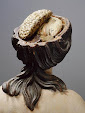
Memorial portrait of Prince Maurice of Saxe-Zeitz (1652-1653) The portrait shows the seven moths old second-born Prince Maurice after his death. Oil on canvas, circa 1653.
Via Museum Schloss Moritzburg Zeitz; you can find out more here.


This highly unusual narrative portrait of Unton's life was commissioned as a posthumous commemoration by his widow Dorothy Wroughton, and is recorded in her will (1634). At the heart of the composition is the portrait of Unton, flanked by figures of Fame (top left) and Death (top right), and surrounded by scenes from his life and death. These are (anti-clockwise, starting in the bottom right hand corner): 1. As an infant in the arms of his mother, Anne Seymour, formerly Countess of Warwick, at the Unton house of Ascott-under-Wychwood. 2. Studying at Oriel College, Oxford, where he took his degree in 1573. 3. Travelling beyond the Alps to Venice and Padua (1570s). 4. Serving with Leicester in the Netherlands (1585-6), with Nijmegen in the distance. 5. On his embassy to Henry IV at Coucy La Fère in northwest France, in an unsuccessful attempt to avert a peace treaty between France and Spain (1595-6). 6 On his deathbed, with a physician sent by Henry IV. 7. His body brought back to England across the Channel in a black ship. 8. His hearse on its way back to his home at Wadley House, Faringdon, near Oxford. 9. (centre right) Unton's life at Wadley House, with scenes showing him sitting in his study (top), talking with learned divines (bottom left), making music (above left), and presiding over a banquet, while a masque of Mercury and Diana is performed, accompanied by musicians. From the house his funeral procession leads, past a group of the poor and lame lamenting his death, to : 10. (left) Faringdon Church with this funeral (8 July 1596) in progress, and, in the foreground, his monument with Unton's recumbent effigy and the kneeling figure of his widow. More detailed information about this portrait to be found at www.npg.org.uk/research/programmes/making-art-in-tudor-britain/case-studies/the-portrait-of-sir-henry-unton-c.-1558-1596.php.
Coming up shortly - after a brief hiatus the Midnight Archive web series is on its way back complete with all new things to make your eyes bulge. This season shifts focus to some prolific collections and their owners including our gal Joanna Ebenstein (Morbid Anatomy/Brooklyn Observatory) and the elegant and charming Evan Michelson (owner of Obscura Antiques in NYC) - but we also sprinkle in a decent dose of the old who/what/where/why's of the obscure. We're excited to get it underway and always excited to hear your feedback - prepare for a great stretch!For more on the series, to see any of the episodes, or to sign up for the mailing list and thus be alerted to future uploads, visit The Midnight Archive website by clicking here. You can also "like" it on Facebook--and be alerted in this way--by clicking here.


More on Observatory can be found here. To sign up for events on Facebook, join our group by clicking here. To sign up for our weekly mailer, click here. Directions to Observatory can be found here.Photographing the Dead: The History of Postmortem Photography from The Burns Collection and Archive
Illustrated Lecture and book signing with Stanley B. Burns, MD, FACS of the Burns Collection and Archive
Date: Monday, December 5th
Time: 8:00
Admission: $5
Presented by Morbid Anatomy
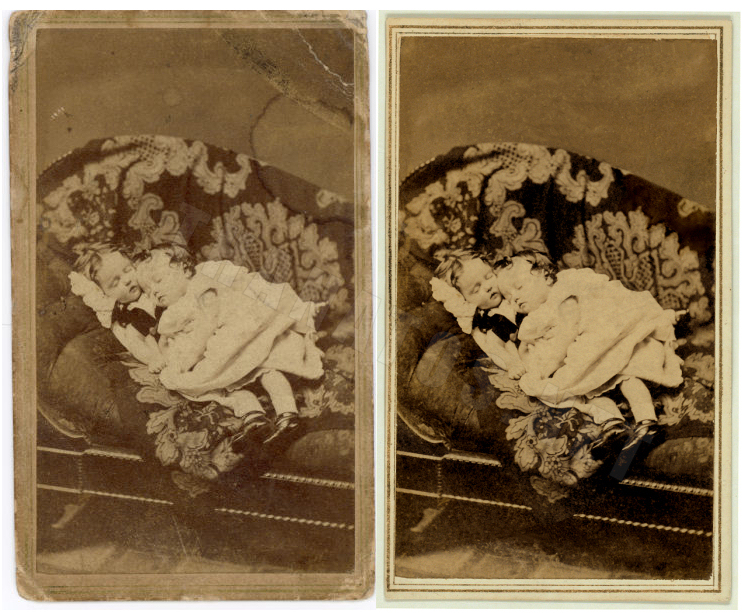
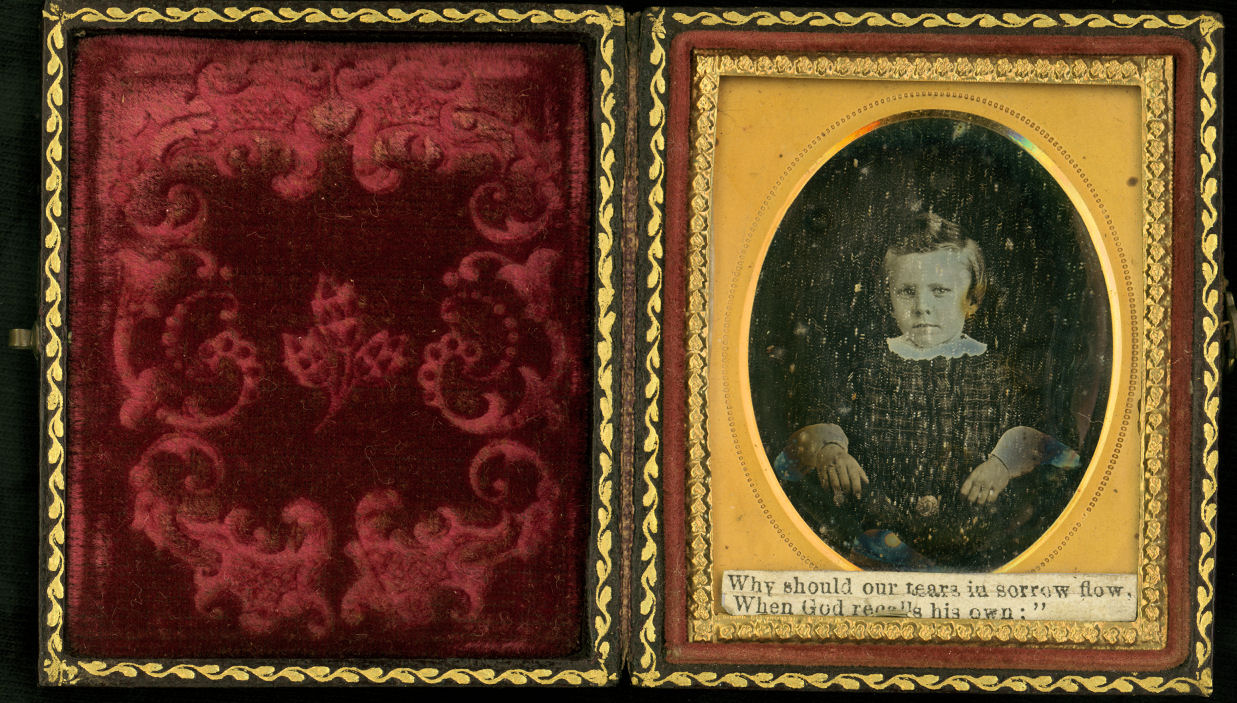
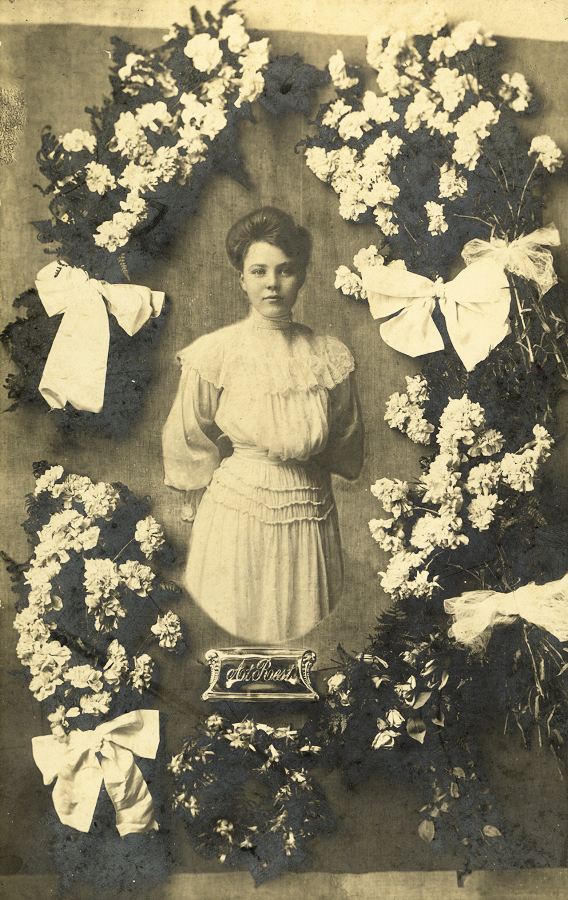
*** Books will be available for sale and signing; see bottom of this page for complete list of books availablePostmortem photography, photographing a deceased person, was a common practice in the 19th and early 20th centuries. These photographs, from the beginning of the practice until now, are special mementos that hold deep meaning for mourners through visually "embalming" the dead. Although postmortem photographs make up the largest group of nineteenth-century American genre photographs, until recent years they were largely unseen and unknown. Dr. Burns recognized the importance of this phenomenon in his early collecting when he bought his first postmortem photographs in 1976. Since that time he has amassed the most comprehensive collection of postmortem photography in the world and has curated several exhibits and published three books on the subject: the Sleeping Beauty series. Tonight, Dr. Burns will speak about the practice of postmortem photography from the 19th century until today and share hundreds of images from his collection.
About Sleeping Beauty: Dr. Burns’ first book on postmortem photography, Sleeping Beauty: Memorial Photography in America (1990) has been widely recognized as one of the most important photography books of all time. Sleeping Beauty has influenced an eclectic array of fields, from bereavement counseling and education to cultural anthropology, history, medicine, philosophy, religion and spirituality (not to mention pop music) and has been cited in debates on the death penalty, euthanasia and abortion. It has been the subject of numerous scholarly papers as well as seminars and exhibitions at notable institutions such as the Metropolitan Museum of Art and The New Museum of Contemporary Art. A decade later the Archive published Sleeping Beauty II: Grief, Bereavement & The Family in Memorial Photography American & European Traditions in conjunction with an exhibit at the Musée d’Orsay. Sleeping Beauty III Memorial Photography: The Children, the third installment in this series was released this year to accompany a traveling exhibition.
About the Burns Collection and Archive: The Burns Collection, founded in 1975 hosts the nation's largest collection of early medical photography and has been generally recognized as one the most important private comprehensive collections of early photography (over one million photographs). The Collection is best known for images of the dark side of life: death, disease, disaster, mayhem, crime, racism, revolution, riots and war. Dr. Burns has authored forty-three photo-historical texts and curated more than fifty photographic exhibitions. He is a founding donor of several museum photography collections, including the J. Paul Getty Museum and The Bronx Museum of the Arts. In addition to being an internationally distinguished author, curator, historian, collector, publisher, and archivist, Dr. Burns is a New York City ophthalmologist and Clinical Professor of Medicine and Psychiatry at NYU Langone Medical Center. The Burns Archive produces publications, exhibitions, and manages image licensing for the Burns Collection. To find out more, you can visit the Burns Archive Blog, website, or press website.
These Burns Archive titles will be available for sale and signing:
Sleeping Beauty III Memorial Photography: The Children $36
Sleeping Beauty II: Grief, Bereavement & The Family in Memorial Photography... $85
Shooting Soldiers: Civil War Medical Photography by R.B. Bontecou $50
News Art: Manipulated Photographs from the Burns Archive $50
Deadly Intent, Crime & Punishment: Photographs from the Burns Archive $75
Seeing Insanity: Photography & The Depiction of Mental Illness $40


“People dealt with death differently in the 19th century,” says Eva Ulz, the curator of “Memento Mori: The Birth and Resurrection of Postmortem Photography” at the Merchant’s House Museum. “People looked forward to a reunion in heaven. Creating portraits was considered a precursor to that heavenly reunion. They shouldn’t be thought of as creepy.”The show--which celebrates the publication of the Burns Archives’ latest book Sleeping Beauty III Memorial Photography: The Children--is on view at the Merchant's House Museum until November 29; you can find out more about the exhibition by clicking here. You can find out more about the new book Sleeping Beauty III Memorial Photography: The Children--which joins its predecessors Sleeping Beauty I and II--by clicking here. To find out more about The Burns Archive, click here; to check out its new and wonderful blog, click here. You can read this NY Times Blog post in its entirety by clicking here.
As much as it is about religious belief, the show — which was organized in conjunction with the Burns Archive and includes some 145 postmortem images and ephemera taken between the 1840s and the early 1900s — takes as its main subject the role of photography in everyday life, then and now. As the 20th century began to unfold and photography became much more common, Ulz says, postmortem images were sapped of their ritualistic importance.
To help put that shift in context, Ulz asked five contemporary shooters, including Sally Mann, Joel-Peter Witkin, Hal Shirshorn and Sarah Lohman, to contribute their own take on the postmortem photograph. The photographer Marian St. Laurent, who created an actual coffin called “Our Darling: A Memorial of Photography,” sees the exhibit as “a remembrance of photo negatives in the digital age. As we push the limits of advanced seeing in technology, we’ve never been more blind to the power of images.”
Ulz hopes “Momento Mori” will create in viewers a deeper understanding of their relationship with photography today. “I hope they get an idea of where they and their images fit in the cycle of life,” she says. “If you had to choose, which one picture would you want to represent you for all eternity?”

Death and the way society comes to terms with it have become a major area of scholarly and popular interest, as evidenced in the work of such well-known figures as Philippe Ariès and Elisabeth Kübler Ross. Photographs and other forms of pictorial imagery play an important role in these investigations. Secure the Shadow is an original contribution that lies at the intersection of cultural anthropology and visual analysis, a field that Jay Ruby's previous writings have helped to define. It explores the photographic representation of death in the United States from 1840 to the present, focusing on the ways in which people have taken and used photographs of deceased loved ones and their funerals to mitigate the finality of death.A selection of Jay Ruby's photographs from Secure the Shadow are available at the Fixing Shadows website; you can see them by clicking here. You can find out more about The Thanatos Archive by clicking here. More about Secure the Shadow here. Feel free to come by and visit this fine book, and others like it, at The Morbid Anatomy Library in Brooklyn, open most days from 10-6 PM.
Sometimes thought to be a bizarre Victorian custom, photographing corpses has been and continues to be an important, if not recognized, occurrence in American life. It is a photographic activity, like the erotica produced in middle-class homes by married couples, that many privately practice but seldom circulate outside the trusted circle of close friends and relatives. Along with tombstones, funeral cards, and other images of death, these photographs represent one way in which Americans have attempted to secure their shadows.
Ruby employs newspaper accounts, advertisements, letters, photographers' account books, interviews, and other material to determine why and how photography and death became intertwined in the nineteenth century. He traces this century's struggle between America's public denial of death and a deeply felt private need to use pictures of those we love to mourn their loss. Americans take and use photographs of dead relatives and friends in spite of and not because of society's expectation about the propriety of these means. Ruby compares photographs and other pictorial media of death, founding his interpretations on the discovery of patterns in the appearance of the images and a reconstruction of the conditions of their production and utilization.


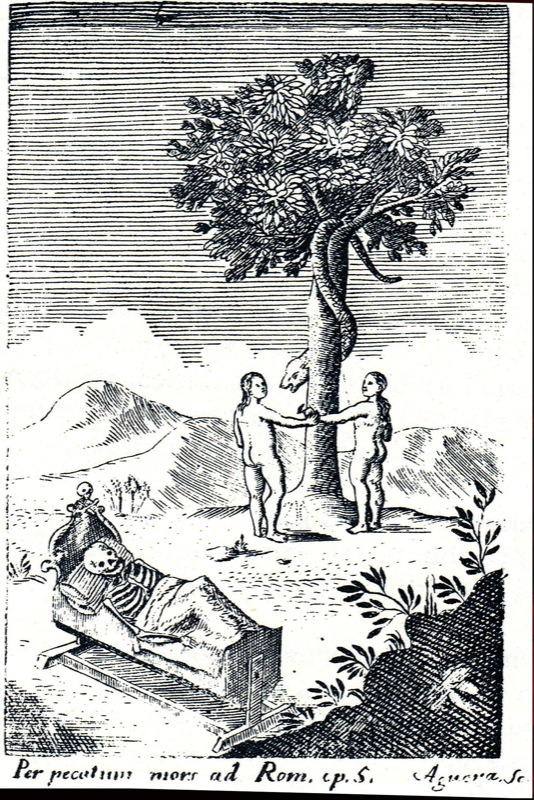
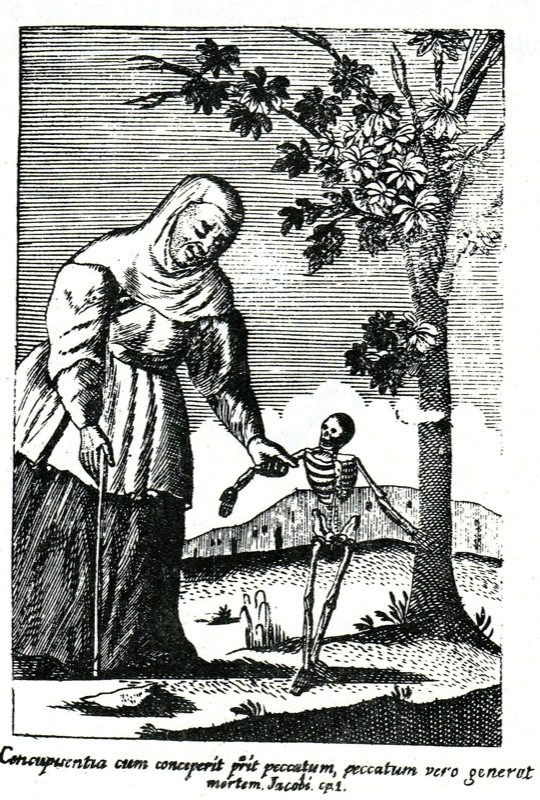

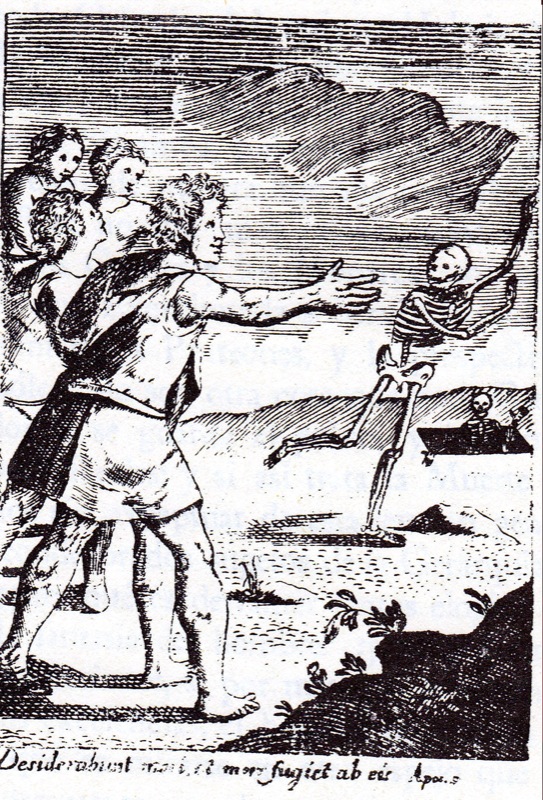
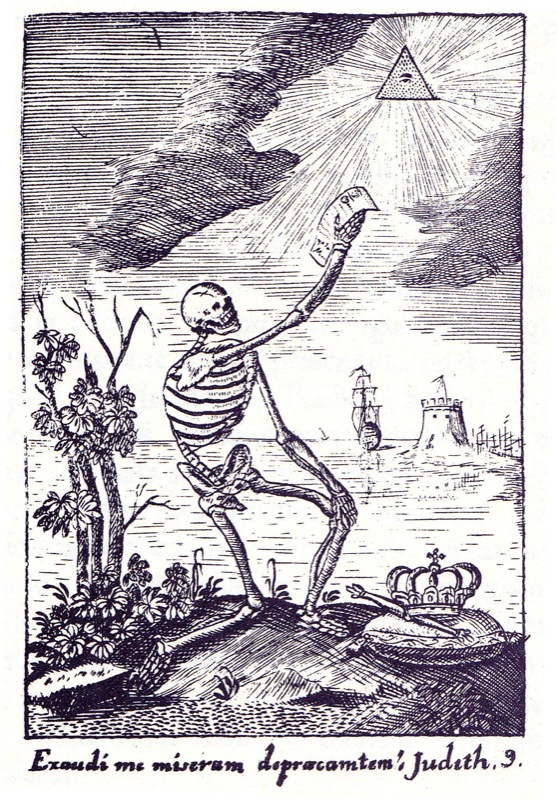
The Astounding Life of DeathThanks so much to Salvador for his wonderful lecture, this excellent post, and for introducing us to such a fascinating moment in Mexican cultural history. If you would like to find out more about Salvador's lecture, you can click here; you can also visit Salvador's blog--"Una Liebre"--by clicking here, and can email him with directly with any questions at salvador.olguin@gmail.com. To find out more about Observatory, click here; if you'd like to get on the Observatory mailing list, please click here.
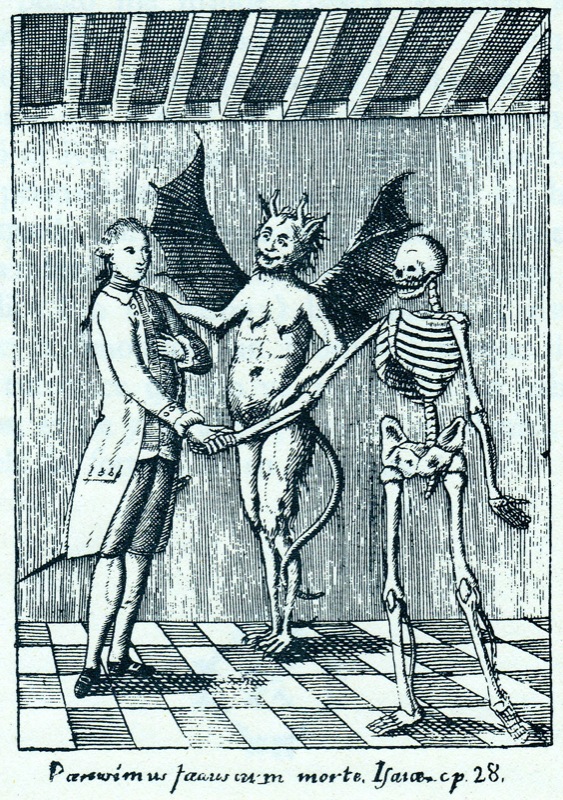
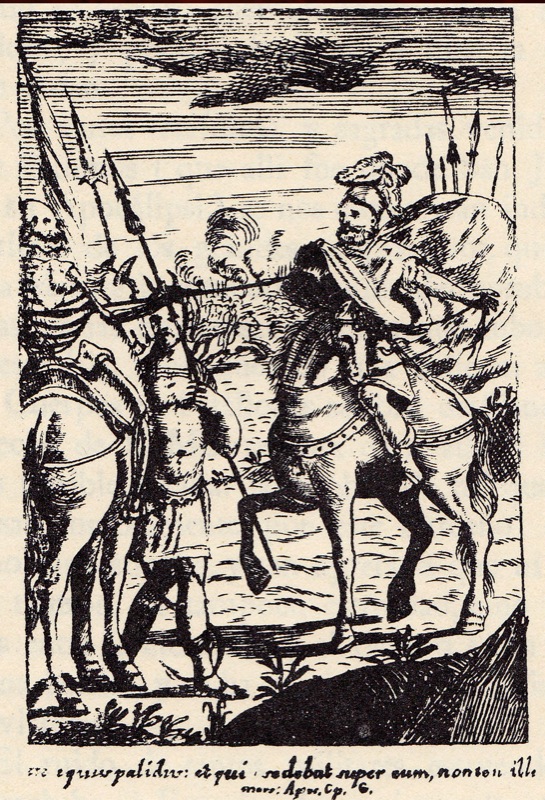
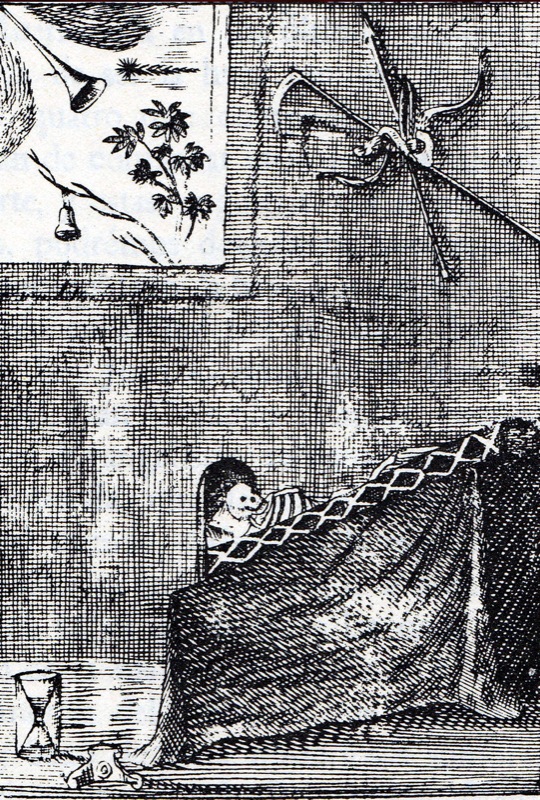
La Portentosa Vida de la Muerte (The Astounding Life of Death) is an 18th Century Mexican book written by Joaquin Bolaños. In it, Bolaños recounts the many adventures of Death, from her beginnings in the Garden of Eden, where she is said to have been born from Adam’s Sin (Death’s father) and Eve’s Guilt (her mother; see image 1 above), to her dramatic destruction in Judgment Day (image 8), with copious quotations from the Bible and the Church Fathers to back up his facts. The protagonist of the story is referred to as “The Empress of the Sepulchers, The Avenger, and The Very Lady of All Humanity”. Muerte (death) is a female noun in Spanish; this fact allows Bolaños to create a female heroine, a very peculiar one.
Bolaños develops his central character thoroughly, in a lively and humoristic way, reflecting–and contributing to shape–the ambiguous relationship that Mexican culture has with death, marked by eroticism, morbid attraction, sadness and joy. Bolaños’s Death is irreverent, passionate and adventurous, and the book is a very early example of an American character-based novel, with a tongue-in-cheek tone and not lacking social criticism. It was criticized by Mexico’s Colonial literary critics as a piece of bad taste; nevertheless, it has been reevaluated by later scholars as a remarkable testimony of its time.
In the book –which is considered by many scholars to be one of the first Mexican novels–Death suffers, she falls in love, gets married several times (though her marriages were never consummated, as her husbands--all doctors--died upon entering the nuptial bed), and becomes angry when men forget about her continuous presence. The 1792 edition was accompanied by a series of illustrations (shown above) that depict Death in her early days, walking beside her grandmother (image 2)–whose name, according to Bolaños’s quotes from the Bible, is Concupiscence–, getting married (image 6)–while the Devil serves as the minister.
I gladly share some of these illustrations with the readers of this blog.

Tomorrow Night, Friday June 26th
Morbid Anatomy Presents at Observatory:
'Cuerpo Presente': Mourning and Cultural Representations of Death in Mexico, Featuring a Collection of Postmortem Photographs from Rural Mexico
Presented by Salvador Olguin
7:30 PM
Free
This illustrated lecture will present a series of postmortem photographs taken between the 1930’s and the 1950’s, when the tradition of celebrating a person’s departure with a last picture was very much alive in small towns and villages in Mexico. A brief journey through some of Mexico’s cultural and artistic ways of celebrating death will provide the frame and background for a better understanding of these images.
Presenter Salvador Olguin holds a MA in Humanistic Studies, and is currently performing research on the subject of the body and its representations at New York University. He is primarily interested in studying cultural artifacts that depict the body in non-normative, unusual ways. He was born in Monterrey, Mexico and currently resides in Brooklyn.
For more information, to see recent and upcoming Observatory events, to get on our mailing list, or to email us questions or suggestions, visit observatoryroom.org.
Click on invitation to view larger image.
+++++++++++++++++++++++++++++++++++++++++++++++++++++++++++++++++++++++++++++++++++++++++++++++++++++
Directions:
Observatory is located at 543 Union Street at Nevins.
Enter Observatory via Proteus Gowanus Gallery
R or M train to Union Street in Brooklyn: Walk two long blocks on Union (towards the Gowanus Canal) to Nevins Street. 543 Union Street is the large red brick building on right. Go right on Nevins and left down alley through large black gates. Gallery is the second door on the left.
F or G train to Carroll Street: Walk one block to Union. Turn right, walk two long blocks on Union towards the Gowanus Canal, cross the bridge, take left on Nevins, go down the alley to the second door on the left.


A Colorado nonprofit organization has revived a grieving custom widely practiced in the nineteenth century, particularly in Britain and the United States: the making of photographic portraits of the dead, or "memento mori."