Showing posts with label reliquary. Show all posts

Tuesday, March 5, 2013

Galileo's Fingers (and a Tooth): Italy Trip Guest Post by Evan Michelson, TV's "Oddities" and Morbid Anatomy Library

Below, the third guest post by Evan Michelson of TV's "Oddities" and the Morbid Anatomy Library documenting our trip through Italy supporting our book-in-progress on the history of the preservation and display of the human body.

In this post, she responds to some very unique science age relics (see above) housed at the amazing Florence Science Museum (now the Museo Galileo):
These two reliquaries contain a total of three fingers and one tooth from the revered mathematician, astronomer and physicist Galileo Galilei - the father of modern science and one of the greatest theoretical minds that mankind has ever known. He is a secular saint and a "martyr to science," a man convicted and imprisoned by the Inquisition for the crime of Copernicanism; he advocated for a heliocentric model of the solar system - the idea that the Earth revolves around the Sun. This was heresy according to the Roman Catholic Church, and it took 300 or so years for the Vatican to finally relent (somewhat) and issue a half-hearted apology. It is an egregious chapter in Western cultural history, and it highlights one of the central schisms between faith and science.

I have wanted to visit these particular digits for many years, and I fully expected my knees to go weak. Strangely enough, nothing of the sort happened. The power of Christian relics are both devotional and emotional - they conjure up the presence and the physical reality of the Saint; they allow the faithful to understand and commune with the very human aspect of a person who has been elevated to a more abstract state of high holiness. A secular figure such as Galileo generally needs no such reminder: we know that he lived, and we know what he accomplished. His fingers and that one tooth seemed improbable and curious - less like objects of reverence than slightly whimsical (and grisly) souvenirs.

A case on the other side of the room, however, contained Galileo's personal scientific instruments, including two telescopes of his own design. Galileo was (in addition to everything else) an inventor, and he was the first to improve on an original Dutch design by boosting the magnifying power of a spyglass considerably while creating a non-inverted image. He then trained these simple tubes at the Heavens. It was at that moment that modern astronomy was born; our solar system and our galaxy became comprehensible. We understood for the first time that the Milky Way that spills across the night sky is made of stars. I looked upon those unassuming tubes of wood, glass and leather, and finally I felt an overwhelming awe.
You can find out more about the Museo Galileo by clicking here. You can read future posts by Evan both on this blog and on her Facebook page, which you will find by clicking here. The images are mine.

Monday, February 18, 2013

Macabre Saints and "Holy Bones," From the Book "Several Ways to Die in Mexico City," Kurt Hollander

 
Just before I left New York, Kurt Hollander--Mexico City-based writer, photographer, filmmaker, editor and translator--sent me a copy of his new book Several Ways to Die in Mexico City: An Autobiography of Death in Mexico City. I was so taken with it that I asked if I could publish an excerpt, along with a series of his photographs of unusually macabre saints and martyrs featured in the book. Thankfully for us, Mr. Hollander kindly obliged; text (slightly abridged) follows and images--all by Kurt Hollander--above:
Holy Bones
After the conquest of Mexico, the Catholic Church, which viewed all indigenous beliefs of life after death as superstition and blasphemy, prohibited Aztec burial ceremonies and quickly monopolized the afterlife, establishing itself as the indispensable intermediary between life and eternity. Just as it altered the way natives were to live, the Spanish Conquest radically transformed the way human beings in Mexico City died and the way in which their bodies were disposed.

A Catholic death in Colonial Mexico consisted of a funeral service presided over by a priest and with the corpse being buried in a grave. Before they were laid into the ground, however, the eyes and mouth of the deceased were shut, the body covered in a white sheet or cloth, placed in a wooden coffin and stretched out in the same way as Christ when taken down from the cross (on one’s back, arms crossed over the chest, one foot on top of the other). The coffin was then carried from the deceased’s home and mourners carrying torches (symbolizing the soul) accompanied the coffin into the church. The corpse and tomb were sprinkled with holy water to keep the deceased’s soul safe from the devil and the priest prayed for their safe passage into heaven.

In Mexico, funerals were often national events of the highest order. Between 1559 and 1819, dozens of major funeral services were held in Mexico City for local archbishops and royalty (as well as funerals in abstensia for the kings, queens and popes in Spain). The funeral pyres that housed the noble corpses, usually erected inside the Metropolitan Cathedral, provided the centerpiece of the elaborate ceremonies. These funeral pyres, also called catafalques and commonly referred to as death machines, were multi-floor temples covered in black cloth and gold leaf and often constructed in the shape of a pyramid. Prominent architects, sculptors, painters, poets and artisans adorned these death machines with images, figures and texts depicting the life and death of the dearly departed (accompanied by skeletons and skulls). More than just mourning a public figure, these funerals served to illustrate the divine status of certain human beings. According to the Catholic Church, death is punishment for one’s sins. Sins, however, affect more than just a person’s death and the final destination of their soul, they also affect their physical remains.

As the state of a corpse revealed the spiritual purity and divinity of the departed, the preservation of the bodily remains of the ruling elite was an important affair. Perfume and anointing processes (a nice word for embalming) ensured that the mortal remains of these personages did not give rise to gossip or speculation. Either as the result of natural gases or from post-mortem procedures, the corpses of religious figures that eventually mummified instead of becoming worm meat stood a much better chance of attaining sainthood, and they also provided living proof that Catholics, if they live a righteous life, can attain immortality in their death.

When these grand funeral processions ended, certain of the personage’s body parts (eyes, heart, liver, intestines, bones) would be donated to different churches or convents where each body part would receive its own elaborate funeral ceremony. Post-mortem organ and skeletal donations were warmly welcomed, although churches and royalty often bought body parts on the black market, as well.

The physical remains of saints have always been considered holy relics, believed to possess curative, even magical powers. No matter how small the fragment, each relic contains all of a saint’s miraculous power. As the existence of holy relics within a church meant an increased influx of worshippers and alms, there was a great demand for such objects. The wealthy in Mexico would often pay large sums of money to obtain body parts or relics of saints, which conferred not only social distinction but also provided their owners with extra spiritual blessings. To meet the demand, priests began to hack up the corpses of Christian saints into increasingly smaller bits.

Relics are given Latin names depending upon their origin: corpois (from the body), ex capillus (hair), ex carne (muscle), ex ossibus (bones), ex praercordis (stomach or intestines), ex pelle (skin) and ex cineribus (ashes). Body parts of saints, including their bones, blood or cremated ashes, are considered first-class relics. Second-class relics are a saint’s clothes or religious accessories, while items that have come in contact with the body or grave of a saint are referred to as representative relics. Many exotic body parts or paraphernalia from saints and religious figures have been collected and are prominently displayed in the Vatican and other reputable houses of worship, including: mother’s milk from the Virgin Mary; Christ’s circumcision knife and foreskin (14 churches claim that theirs is the one, true foreskin); the tail of the donkey that Christ rode into Jerusalem; a sneeze from the Holy Spirit and a sigh from Saint Joseph. The holiest of all relics in Mexico, safeguarded within the Metropolitan Cathedral, is a splinter from the cross Christ was crucified upon.

After the Conquest, a large number of saints’ body parts were sent by boat to Mexico to help convert souls in the New World. The arrival of these relics would often be accompanied by a large procession from the port town of Veracruz all the way to Mexico City. Relics are still very popular, and major collections travel from church to church around the world, bringing in the crowds of faithful who believe that proximity to the bones and other sacred scraps will provide them with miracle cures. (In order to receive blessings or pardon from the saints, the Church insists that worshippers must approach these relics without any morbid curiosity.) Pope John Paul II, who passed away in 2005, had somewhat of a revival in 2011 when a vial of his blood was flown to Mexico City and displayed in churches around the country.

The Chapel of Relics, located within the Metropolitan Cathedral, contains the skeletons, craniums, molars, hands, fingers, feet, intestines, hair and bones of 150 saints, including Maria Magdalena, Saint Gonzaga, Saint Francis, Saint Augustine, as well as a few of the legendary 10,000 Virgins. Within the exquisitely carved wooden floor-to-ceiling altar inside this chapel lie two wax figures of women encased in elaborate glass cubicles. These life-size figures are themselves merely display cases for the bits of bone that are set within their wax bodies, a window having been sewn into their clothes to permit them to be seen. Several bone fragments are also displayed within gold and silver hands and trophies and inside framed tapestries.

Like Catholic saints, Mexican political leaders also have a history of being brutally murdered. Depending on which history you believe, Moctezuma was killed either by an angry mob throwing rocks while he was paraded around on a roof by Cortés, or he was stabbed in the groin by Cuauhtémoc as punishment for allowing himself to become Cortés’ chicken boy. The great warrior Cuauhtémoc became emperor of Mexico-Tenochtitlan after Moctezuma’s successor Cuitlahuac died from small pox, but he was soon captured by the Conquistadores trying to escape the siege of the city in a canoe dressed as a woman, and was tortured and eventually murdered.

Miguel Hidalgo was shot by a firing squad in 1811, as was José Maria Morelos in 1815, both leaders of the Mexican Independence movement. Mexico’s Emperor Agustin de Iturbide and President Vicente Guerrero were both shot and killed by a firing squad in 1831, and Emperor Maximilian and President Miguel Miramón were also both shot and killed by firing squad in 1867. President Manuel Robles Pezuela was assassinated in 1873, President Francisco I. Madero in 1913, Emiliano Zapata in 1919, President Venustiano Carranza in 1920, Pancho Villa in 1923, and President Álvaro Obregón in 1928. Colossio, the man who would have been president in 1994, was shot and killed (the mystery of his murder has never been cleared up although his predecessor, ex-President Carlos Salinas, is generally believed to have been behind the assassination).

Death is not always a leader’s last act. Emperor Maximilian’s corpse was embalmed in order to keep it from rotting on its way back to Mexico City, but during the trip the coffin fell out of the cart and his corpse was thrown into the mud. In Mexico City, his body was embalmed once more and black glass balls were placed in his eye sockets. His corpse was by then so degraded that even his own mother couldn’t recognize him. The doctor who performed the second embalming and others who passed through the room he was kept in stole several items of his blood-stained clothes, the bullets extracted from his body, and even some hair off his head and chin. The bronze cast of Emperor Maximilian’s face, the table upon which the second embalming was performed, and the coffin he had been transported in are currently displayed in three different museums, while the face cast and the deathbed of Benito Juarez, the man who killed Maximilian, are exhibited in the National Palace. The bones of Emperor Iturbide are currently on display in the Metropolitan Cathedral, while Anastasio Bustamante, the man responsible for bringing Iturbide’s bones back to Mexico City, requested his own heart be plucked from his body and placed in an urn to be buried alongside Iturbide...
You can find out more about this fantastic book--and order a copy of your own!--by clicking here. All photos are © Kurt Hollander and are drawn from the book. You can find out more about Kurt by clicking here.

Monday, June 25, 2012

Saint Victoria and Saint Wittoria in Rome, or The Difficulties of Researching Catholic Artifacts


A few of the most wonderful things I saw on my recent trip to Italy with Evan Michelson were the two saints seen above, both to be found in Rome, the last stop on our tour. The first is Saint Vittoria, or Victoria, on view in the church of Santa Maria della Vittoria, directly across from that Bernini's masterwork The Ecstasy of Saint Theresa (top 3); The second is a wonderful reliquary preparation of "S. Wittoria, Martire" fantastically posed and costumed, and showcased in a gold and glass coffin in the Basilica of Saint Mary Sopra Minerva (bottom 2 images).

I am not sure if these two representations might possibly depict the same saint (Wittoria being an alternate/old fashioned spelling for Vittoria?), or two separate ones. I have been able to find nothing official on the Internet about a Saint Wittoria, though Vittoria seems to be a depiction of the Roman Saint Victoria, "virgin and martyr of the catacombs." I also am not sure if there are human bones embedded in the wax of St. Victoria, though Marina Warner asserts this is the case in her wonderful book Phantasmagoria, and the close-up photo above of her hand seems to support this assertion.

Regardless of the problems with research, I hope you agree with me that these are astoundingly amazing and fascinating artifacts. These Saints--and many more, both sacred and profane--will be featured in my upcoming exhibition at Viktor Wynde's Fine Arts in London this September. They will also feature in a book I am working on with friend, Morbid Anatomy Library Scholar in Residence and co-star of The Science Channel's "Oddities" Evan Michelson. Stay tuned for more on that!

Monday, March 19, 2012

The Body of San Giovanni Leonardi, Patron Saint of Pharmacists, Rome, Italy


Incorruptible? Effigy? There is definitely some wax involved. The caption next to this figure in his space age crystal coffin read:
Corpo di San Giovanni Leonardi (Diecimo-Lucca 1591-Roma 1609) Fondatore dell'Ordine della Madre di Dio Cofondatore del Collegio di Propaganda Fide, Patrono dei Framacisti." (Or, as translated by Google, "Body of St. John Leonardi (Diecimo Lucca-1591-Rome 1609) Founder of the Order of the Mother of God, co-founder of the College of Propaganda Fide, Patron of Pharmacists.)
As seen at--if I remember correctly--his shrine at Santa Maria of Campitelli church in Rome. More on this saint can be found here. More from Italy to come very soon.

Monday, March 12, 2012

Apologies from Italy


My sincere apologies for the lack of postings and emails, and a special thanks to all of those who have so generously sent in recommendations for places to visit. I am still on the road in Italy with only intermittent internet access and days filled to the brim with museums, churches, anatomical theatres, ossuaries and reliquaries. As a teaser, here are a few of the things Evan Michelson and I have been encountering on our trip thus far. Evan has been posting more details than I; you can find them here. I will post more--with details, I promise!-- very soon upon my return!

Click on images to see larger versions.

Wednesday, June 22, 2011

Bones with Bling: The Amazing Jewelled Skeletons of Europe, The Fortean Times


The trend for jewelled skeletons began in the late 16th century. The Roman catacombs, which had been abandoned as burial sites and largely forgotten about, were rediscovered in 1578 by vineyard workers. This coincided with the initial phase of the Counter-Reform­ation; the Council of Trent, called to formulate the Catholic response to the Protestant Reformation, had just concluded, and one of the areas of concern was affirming the efficacy and belief in relics against attacks by their detract ors. Since the remains in the catacombs dated from the second to fifth centuries AD, it was possible, with a bit of wishful thinking, for Church leaders to romant icise the bones as belonging to almost any famed early Christian saint or martyr. In the newfound cache they saw a potential tool to bolster their supply of relics and promote their power.
--From "Bones with Bling: The amazing jewelled skeletons of Europe," by Paul Koudounari for The Fortean Times, June 2011
Click here to read this entire article--a nice walk through the art and history of extraordinary European jewel and bone relics--on The Fortean Times website. All images sourced from the article and taken by author Paul Koudounari.

Thanks so much to Suzanne Gerber over at Wurzeltod for alerting me to this wonderful piece!

Images top to bottom:
  • Relics of St Pancratius, Church of St Nicholas, Wil
  • St Clemens, Church of Sts Peter and Paul, Rott-am-Inn, Germany
  • Holy Martyr Theodosius, Waldsassen
  • The remains of St Maximus, Basilica of Waldsassen

Sunday, April 10, 2011

Tomorrow Night: "A Gathering of Bones" Lecture with Evan Michelson, Morbid Anatomy Scholar in Residence and star of TV's Oddities, Coney Island Museum


Tomorrow night, why not consider joining me and Morbid Anatomy scholar in residence (and star of TV's "Oddities") Evan Michelson at Coney Island for her new lecture "A Gathering of Bones?" If her former lectures are any indication, this is sure to be a great one!

The event--which will take place within the newly opened Great Coney Island Spectacularium!--begins at 7:30. Drinks are half price at the bar until 8:00. Hope very very much to see you there!
"A Gathering of Bones," an Illustrated lecture by Evan Michelson
Date: Monday, April 11
Time: 7:30 PM
Admission: $5 (or free with Congressional Pass)

Location: The Coney Island Museum (1208 Surf Avenue)

Human bone: one of the most common materials on the planet. And yet, at one time the remains of certain individuals were prized more highly than the rarest, most precious metals and gems. The cult of the saints, the backbone of the early Christian Church, gave rise to an institutional fetishization of human remains that produced objects still unsurpassed in craftsmanship and opulence.

The aesthetic of the most humble and commo...n organic remains coupled with gold, silver, gems and textiles has for centuries proved irresistible to secular collectors and religious institutions alike. The ultimate collectible, the constituent parts of each and every human on the planet were once the object of obsession, veneration and murderous desire. As a collector myself, Christian relics provided my earliest exposure to the realm of transcendently beautiful, perverse and venerated objects.

The collection and categorization of human remains underwent a drastic change with the enlightenment, but the unquenchable human thirst for knowledge and comfort in the face of our own mortality has ensured that the corpus remains at the center of an unending human fascination with and confrontation of the greatest mystery of all. The gathering of bones continues to this day, still controversial, decadent and utterly essential to the human narrative.

This event is part of The Morbid Anatomy Library Collector Series.

Click here to purchase tickets ($5 each)

This event is made possible, in part, by a grant from the Andy Warhol Foundation.
Image: Galileo's finger mounted on a marble base and encased in a crystal jar, as on view at the Museum of History and Science in Florence, Italy. More on that--and image source--here. Click on image to see much larger, more detailed version.

Wednesday, March 16, 2011

"Treasures of Heaven: Saints, Relics and Devotion in Medieval Europe" Exhibition, Walters Art Museum, Baltimore, Through May 15th


Wow. WOW.

This just in: On view until May 15th of this year at the Walters Art Museum in Baltimore, a new exhibition of relics and reliquaries entitled "Treasures of Heaven: Saints, Relics and Devotion in Medieval Europe."

To get a sense of the kinds of treasures that await, check out the Treasures of Heaven "Digital Monograph" (from which these images were drawn) by clicking here.

Press release for the exhibition follows:
Treasures of Heaven: Saints, Relics and Devotion in Medieval Europe
Feb. 13, 2011 - May 15th, 2011
Walters Art Museum, Baltimore, Maryland

First major U.S. exhibition of Christian relics and reliquaries co-organized by the Walters, the Cleveland Museum of Art and the British Museum

Baltimore—The Walters Art Museum will host an exhibition offering visitors a glimpse into the Middle Ages, a time when art mediated between heaven and earth and wondrous objects of gold, silver and precious gems filled churches and monastic treasuries. Relics, the physical remains of holy people and objects associated with these individuals, play a central role in a number of religions and cultures and were especially important to the development of Christianity as it emerged in the Late Roman world as a powerful new religion. On view at the Walters Feb. 13–May 15, 2011, Treasures of Heaven: Saints, Relics and Devotion in Medieval Europe is the first exhibition in the United States to focus on the history of relics and reliquaries—the special containers to display the holy remains of Christian saints and martyrs. The exhibition is organized by the Walters Art Museum in partnership with the Cleveland Museum of Art and the British Museum.

Reliquaries proclaimed the special status of their sacred contents to worshipers and pilgrims, and for this reason, were often objects of artistic innovation, expressions of civic and religious identity, and focal points of ritual action. This exhibition will feature 133 metalworks, sculptures, paintings and illuminated manuscripts from Late Antiquity through the Reformation and beyond. It will explore the emergence and transformation of several key types of reliquary, moving from an age in which saintly remains were enshrined within closed containers to an era in which relics were increasingly presented directly to worshipers.

Many of the reliquaries in the exhibition have never before been seen outside of their home countries. Objects are drawn from celebrated public and private collections in the U.S. and Europe, and also from important church treasuries. In addition to the three organizing museums, world-renowned institutions, including the Louvre, the Metropolitan Museum of Art, the Art Institute of Chicago and the National Gallery of Art, are lending works to the exhibition. Nine works are traveling from the Vatican collections, including three reliquaries that were once housed in the Sancta Sanctorum, or Holy of Holies, the private relic chapel of the Pope.

Visitors will witness the transformation of reliquaries from simple containers for the earthly remains of Christian holy men and women to lavishly decorated objects of personal and communal devotion.

"As early as the second century AD, the relics of Christian saints—including their bones, ashes and other bodily remains—were thought to be more valuable than the most precious gemstones. They were believed to be a conduit for the power of the saints and to provide a direct link between the living faithful and God," said Martina Bagnoli, Robert and Nancy Hall associate curator of medieval art and exhibition co-curator. "These remains were treated with reverence and often enshrined in containers that used luxurious and precious materials to proclaim the relics' importance."

The medieval devotion to relics gave birth to new forms of architecture and prompted significant developments in the visual arts. The reliquaries showcased in Treasures of Heaven provide evidence of religious objects traveling across tremendous distances and of people making pilgrimages across the Mediterranean to walk in the footsteps of important figures from sacred history. Powerful in inspiring religious devotion among believers, reliquaries became cutting-edge works of art that combined innovative techniques with beautiful design.

"Those who come to the exhibition thinking that the Middle Ages are only a period of darkness will be surprised," said Martina Bagnoli.

Highlights of Treasures of Heaven include:
  • Reliquary Bust of St. Baudime, c. 1180-1200,Parish Church of Saint-Nectaire, Puy-le-Dôme
  • This nearly life-sized bust is one of the earliest surviving objects of its kind and travels outside of France for the first time.
  • Portable Altar of Countess Gertrude, c. 1045, Cleveland Museum of Art
  • This work is from the Guelph Treasure, one of the most important church treasuries to have survived from medieval Germany.
  • Head Reliquary of St. Eustace, c. 1200, British Museum
  • This head-shaped reliquary contained fragments of the skull of the Roman military leader Saint Eustace...
You can find out more about the exhibition here, and more about the topic of relics and reliquaries on the Treasures of Heaven "Digital Monograph" by clicking here. You can purchase the exhibition catalog by clicking here.

All images from the Treasures of Heaven "Digital Monograph;" you can find out more about them the images, and peruse the website, by clicking here. It was unclear how many of these are in the physical exhibition.

Thursday, July 22, 2010

Galileo's Finger, Science Museums, and the New York Times


Now a particularly enduring Catholic practice is on prominent display in, of all places, Florence’s history of science museum, recently renovated and renamed to honor Galileo: Modern-day supporters of the famous heretic are exhibiting newly recovered bits of his body — three fingers and a gnarly molar sliced from his corpse nearly a century after he died — as if they were the relics of an actual saint.

“He’s a secular saint, and relics are an important symbol of his fight for freedom of thought,” said Paolo Galluzzi, the director of the Galileo Museum, which put the tooth, thumb and index finger on view last month, uniting them with another of the scientist’s digits already in its collection.

“He’s a hero and martyr to science,” he added.
The above image--of Galileo Galileo's preserved finger in its reliquary as now on display in Florence’s history of science museum--and text are drawn from an article that ran in today New York Times. You can read the article--which traces the history of Galileo as well as his preserved fingers and other assorted remains--in its entirety by clicking here.

Image Caption: "Visitors looked at one of Galileo’s fingers, on display at the Galileo Museum in Florence." Photo by Kathryn Cook for The New York Times                            

Sunday, July 18, 2010

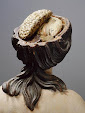
Reliquary Bust, Belgium, 17th Century


Reliquary Bust, Belgium, 17th Century, Stedelijk Museum, Vander Kelen-Mertens, Leuven.

Please click on image to see much larger, finer version. From Theory of Disease blog, via Hypnerotomachi(n)a.