Showing posts sorted by relevance for query Quay Brothers. Sort by date Show all posts

Friday, September 4, 2009

"Dormitorium: Film Decors by the Quay Brothers," Exhibition," Parsons, NYC


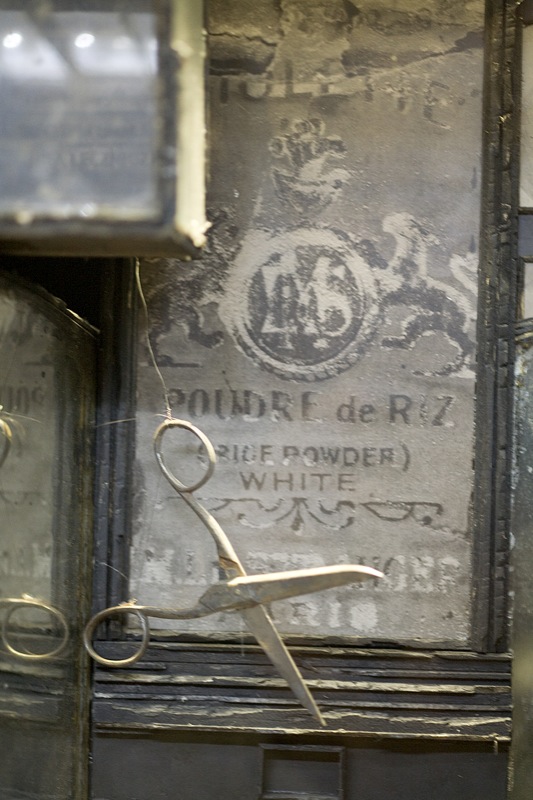
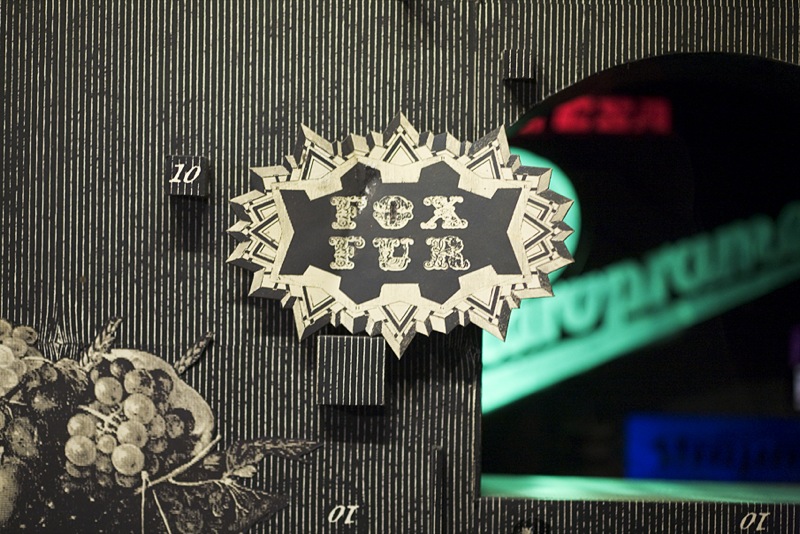
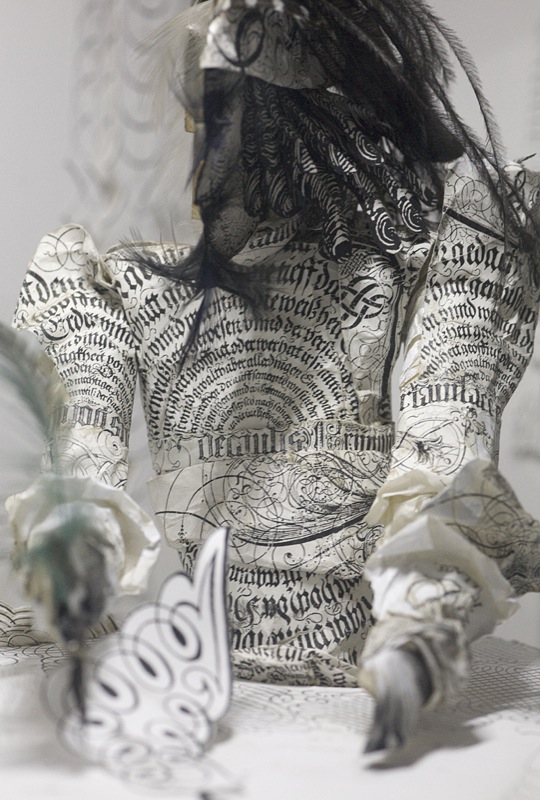
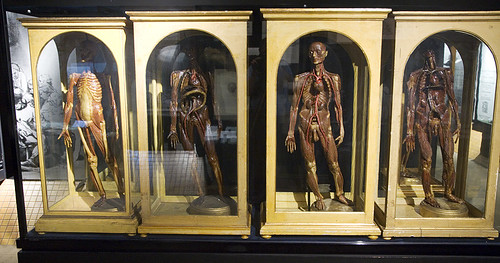
Last night I went to check out the wonderful "Dormitorium: Film Decors by the Quay Brothers" exhibition at Parsons, which features miniature sets, props, and characters constructed by the Quay Brothers' and used as source material for their unforgettable and highly influential stop-motion animated films. These "décors" (in the exhibition's parlance) are presented as static silent narrative worlds; it is as if you had peeked into each tiny space mid-shoot, characters and props all in their place, just waiting to be brought to life by the film-maker's art.

"Dormitorium" is much more than just a collection of props and artifacts; instead, the "décors" you see on view here are something of a revelation, leading one to a greater understanding and appreciation of the Quay Brother's artistry. Having the luxury of time to study these décors in their static state allows the viewer to see things impossible to grasp amidst the thrust and drive of the films; namely, the obsessive and beautiful detail in the source materials. The more one looks, the more one comes to realize that this attention to detail and minutia is what gives the Quay's work so much of its character and mise en scène--at least as much as their lurchy, atmospheric, uncanny stop-motion animation technique. Details such as exquisite and varied typography and calligraphy, a judicious application of dust and grime, the seductively hand-made feel of the materials, and wall hangings, hidden figures, archaic signage and other easy-to-miss details adorning the spaces; of these elements is the Quay's compelling and absorbing universe composed.

In a nice installation decision, also on view in the exhibition are the films themselves, allowing the viewer to go from the décors to the films and back again, encouraging insights into the ways in which the Brothers expertly use cinematic techniques, selective and shifting focus, and obscured views to bring their static miniature worlds to vivid and uncanny life, imbuing them with a sense of depth and abundance of space so at odds with scale and scope of the sets.

More about the exhibition, from Parson's website:
"Dormitorium" explores the macabre fantasy world of twin brothers Stephen and Timothy Quay through the highly detailed miniature sets of their influential stop-motion animations. "Dormitorium", which originated at the University of the Arts in Philadelphia, represents the first time the décors of the London-based Quays have been exhibited in N. America. The Brothers have built a cult following with their dark, moody films, which are heavily influenced by Eastern European film, literature, and music and often feature disassembled dolls and no spoken dialogue. The exhibition combines rarely seen, collaboratively designed miniature décors from some of their most prominent works, as well as continuous screenings of excerpts from several of the films.
The exhibition will be on view until Sunday, October 4th, 2009 at Parson School of Design's Anna-Maria and Stephen Kellen Gallery; you can find out more by clicking here. I highly highly recommend you pay it a visit, whether you are already a Quay Brothers fan or not!

All photos* are mine, taken at the exhibition; you can see more by clicking here. You can view some of the Quay Brothers' films on You Tube by clicking here; better yet, buy yourself the film collection "Phantom Museums: The Short Films of the Quay Brothers" and watch the entire 2-DVD collection in fine quality at home; click here to purchase from the Morbid Anatomy Bookstore (all proceeds benefit the Morbid Anatomy Library).

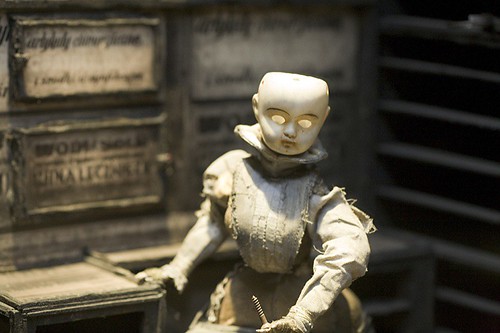
*Images: Top 2 images from set for Bruno Schulz's Street of Crocodiles; Next 2 images from set for The Cabinet of Jan Švankmajer, bottom image from set for The Calligrapher.

Sunday, August 21, 2011

Quay Brothers Mütter Museum Film Premiere in Philadelphia, New York and Los Angeles This September!


I have some exciting news! The details for the premiere of Through the Weeping Glass--the Quay Brothers' new documentary based on the collections of books, instruments, and medical anomalies at The College of Physicians of Philadelphia and the Mütter Museum--have just been announced!

The film will launch with three epic premieres--one in Philadelphia at the Mütter Museum, one in New York at MoMA, and one in Los Angeles hosted by The Museum of Jurassic Technology. Each city's event will feature a moderated talk with the Quays, while the Mütter Philadelphia opening will also--excitingly!--be accompanied by an exhibition at the museum on the making of the film guest curated by MoMA's Barbara London.

Full details from the press release follow; tickets are, I am warned, selling fast, so act quickly if you want to attend! Hope to see you there.
Through the Weeping Glass: On the Consolations of Life Everlasting (Limbos & Afterbreezes in the Mütter Museum)
New Quay Brothers short film to premiere September 2011 in Philadelphia, New York, and Los Angeles

“To call the Quays’ work the most original and rapturously vivid image-making on the planet might sound like hyperbole until you see the films. . . .” —Michael Atkinson, Village Voice

Through the Weeping Glass: On the Consolations of Life Everlasting (Limbos & Afterbreezes in the Mütter Museum) is a documentary on the collections of books, instruments, and medical anomalies at The College of Physicians of Philadelphia and the Mütter Museum. This short film (running time: 31 minutes) is the first made by the internationally recognized Quay Brothers in the United States.

As Malcolm Jones (Newsweek) has commented, “the Mütter Museum teaches you indelibly how strange life can be, how unpredictable and various [and] will revise and enlarge your idea of what it is to be human.” The coupling of the Quay Brothers’ vision with the collections of the College’s Historical Medical Library and Museum has produced a riveting experience of contemplative set pieces exploring the College and Mütter Museum. Adding to the film’s visual strength is a powerful musical score by composer Timothy Nelson and a resonant voice-over by Derek Jacobi.

The film premieres in three locations in September 2011, with a moderated conversation with the artists:
  • September 22, The College of Physicians of Philadelphia, 6:30 PM (more here)
  • September 24, The Museum of Modern Art, New York. 8:00 PM (more here)
  • September 27, Cary Grant Theater, SONY Pictures Studios, hosted by The Museum of Jurassic Technology, Los Angeles, 8:00 PM (more here)
An exhibition guest curated by Barbara London, Associate Curator, Department of Media and Performance Art, The Museum of Modern Art, on the making of the film opens in September 2011 in the Mütter Museum of The College of Physicians of Philadelphia.

Subsequent to the premiere screenings, the film will be available for purchase on DVD with an accompanying booklet.

ABOUT THE QUAY BROTHERS
Two of the world’s most original filmmakers, the Quay Brothers are identical twins who were born outside Philadelphia in 1947. The Quays studied illustration in Philadelphia before going on to the Royal College of Art in London, where they began making animated shorts in the 1970s. They have lived in London ever since.

They are best known for their classic 1986 film Street of Crocodiles, which filmmaker Terry Gilliam selected as one of the ten best animated films of all time. In 1994 they made their first foray into live-action feature-length filmmaking with Institute Benjamenta. The Quays’ work also includes set design for theatre and opera, including their 1998 Tony-nominated set designs for Ionesco’s The Chairs on Broadway. The Quays have also directed pop promos for His Name Is Alive, Michael Penn, Sparklehorse, 16 Horsepower, and Peter Gabriel (contributing to his celebrated “Sledgehammer” video), and have also directed ground-breaking commercials for, Honeywell Computers, ICI Wood, K. P. Skips, Nikon, BBC, Coca-Cola, Northern Rock, Dorritos, Roundup, Kellogs, Badoit water, Galaxy, MTV, Nikon, Murphy’s beer and Slurpee, amongst others.

In 2000 they made In Absentia, an award-winning collaboration with Karlheinz Stockhausen, as well as two dance films, Duet and The Sandman. In 2002 they contributed an animated dream sequence to Julie Taymor’s film Frida. The following year the Quays made four short films in collaboration with composer Steve Martland for a live event at the Tate Modern in London and in 2005 premiered their second feature film, The Piano Tuner of Earthquakes, at the Locarno Film Festival.

In addition to Through the Weeping Glass, the Quay Brothers’ other commissioned films over the past twenty years include Anamorphosis (1991), The Phantom Museum (2003), and Inventorium of Traces (2009).

ABOUT THE COLLEGE OF PHYSICIANS OF PHILADELPHIA AND THE MÜTTER MUSEUM
The College of Physicians of Philadelphia, the oldest professional medical organization in the country, was founded in 1787 when twenty-four physicians gathered “to advance the science of medicine and to thereby lessen human misery.” Today more than 1,400 Fellows (elected members) continue to convene at the College and work towards better serving the public.

Throughout its two-hundred-year history, the College has provided a place for both medical professionals and the general public to learn about medicine as both a science and as an art. The College is home to the Historical Medical Library and the Mütter Museum, America’s finest museum of medical history, which displays its beautifully preserved collections of anatomical specimens, models, and medical instruments in a nineteenth-century setting. The museum helps the public understand the mysteries and beauty of the human body and to appreciate the history of diagnosis and treatment of disease.

With an attendance exceeding 105,000 today, the Museum has become internationally well known, has been featured in a documentary on the Discovery Channel, and is the subject of two best-selling books.

This project has been supported by The Pew Center for Arts & Heritage through the Philadelphia Exhibitions Initiative.
You can find out more about the opening in Philadelphia by clicking here, New York by clicking here, and Los Angeles by clicking here. You can find out more about the film itself and the accompanying exhibition guest curated by MOMA's Barbara London by by clicking here.

All images above are frame grabs from the film.

Friday, August 10, 2012

Quay Brothers Retrospective in New York City! "On Deciphering the Pharmacist's Prescription for Lip-Reading Puppets," Museum of Modern Art, NYC

I just had the honor to view the beautifully installed and revelatory Quay Brothers retrospective "On Deciphering the Pharmacist's Prescription for Lip-Reading Puppets" at the Museum of Modern Art in New York. I have long been a fan of the Quay's work, and still, this exhibition had much to astonish, delight and surprise, situating the Quay's work within the larger context of an avant-garde tradition, and revealing the Quay's oeuvre to be much broader and richer than expected. Surprises and highlights included pen and ink drawings evoking a slightly less whimsical Edward Gorey, a mini-exhibition of the of the kind of Polish theater posters from the 1960s which inspired much of their work, and paintings by a scientific illustrator who mentored them in high school. Also of special interest, at least to me, was a collection of 8 mm Eastern European travel films which The Quay's collected as inspiration for their work; these grainy and blurred snatches of dark and forgotten streets, shop windows with wax mannequin heads, and church interior possess much of the atmosphere, mystery, and powerful detail evident the Quay's best works; they serve as both an excellent introduction to the exhibition and an illuminating key to their film work.

If you are able to visit the exhibition--which I very highly recommend!--make very sure not to miss the bottom floor portion of the exhibit, where you will find a collection of The Quay Brother's dioramic film decors installed in what feels like a furtive peepshow, a sort of perverse and surrealistic Musée Mécanique. Here you can immerse yourself in the tiny and exquisite sets from such films as Street of Crocodiles; Le Bourgeois Gentilhomme; The Piano Tuner of Earthquakes; and The Cabinet of Jan Svankmajer; their wealth of detail rewards a careful and slow eye. Also, make sure to set some time aside to watch the films, many of which play in mini-theatres set up within the exhibition; the ballet piece The Sandman was an especial revelation to this viewer; dance and the Quays go surprisingly well together.

As we see in this exhibition, the through line of The Quay's long and storied careers--which has spanned drawing, painting, film, animation, theater and graphic design, and dioramic "film decors"-- is a sense of mysterious and compelling atmosphere created by an exacting and exquisite attention to detail: the craquelure of antique objects, a perfectly fractured piece of glass, the patina of caked on dirt, the hand-rendered imperfection of calligraphic script, the artful use of shadow, and, above all, a wonderful wit and humor that counterbalances the unapologetic inscrutability of the work. Do not miss this exhibition! You will never look at the work of the Quay Brothers the same way again. In a good way!

The exhibition will be on view at New York Museum of Modern Art from August 12–January 7.You can find out about the exhibition here. Also, the museum will be hosting a series of screenings of Quay Brothers films running the duration of the exhibition; you can find out more about that here.

All above images were taken in the exhibition.

Wednesday, January 28, 2009

More on The Science Museum, London: "The Science and Art of Medicine Galleries"


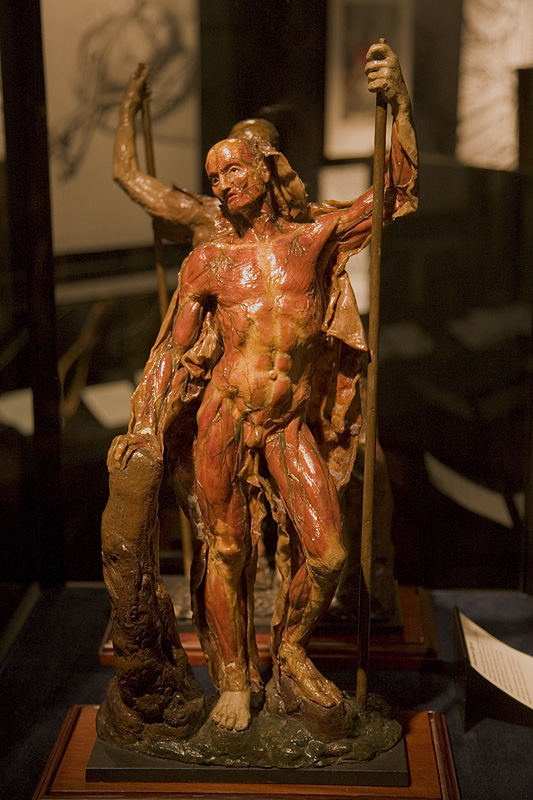
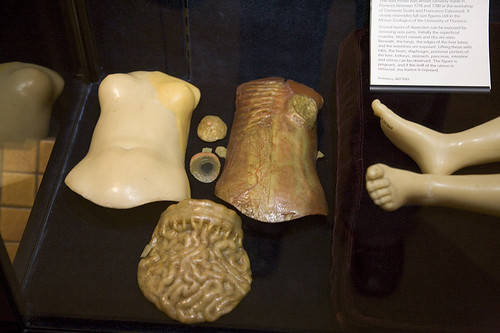
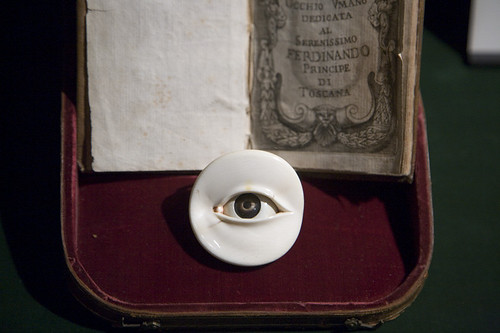
Who knew you could visit a 18th Century miniature wax anatomical Venus (images 3-5) in London? Or, how about anatomical waxes possibly rendered by 18th Century anatomist and artist Anna Morandi Manzolini (image 2)? Or, perhaps an anatomical model of an eye prepared for the Duke of Tuscany in 1674, presented magnificently in its original velvet box (image 6)?

"The Science and Art of Medicine" galleries of London's Science Museum has all this and more, thanks to the obsessive collecting of all things medicine and mankind by 19th Century pharmaceutical magnate Henry Wellcome (and, of course, the good sense of the Science Museum to accept objects "on permanent loan" from the Wellcome Trust in 1976). The dark , somber galleries are tucked into a quiet nook of the bustling-with-children Science Museum, and the narrative detailed within is engaging and thought-provoking, cutting a broad swath through the art, history, science, and cultures of medicine from pre-history to the present. The text is illustrated with dozens of extraordinary artifacts--such as the ones you see above--from Wellcome's collection. Yet more noteworthy objects from Wellcome's collection can be seen in the eponymous Wellcome Collection.

If you are interested in knowing more about Henry Wellcome and his collection, I cannot recommend more highly the wonderful (and wonderfully illustrated) book Medicine Man: The Forgotten Museum of Henry Wellcome. You might also want to check out the Quay Brothers' short film The Phantom Museum: Random Forays Into the Vaults of Sir Henry Wellcome's Medical Collection (2003), found on the DVD collection "Phantom Museums: The Short Films of the Quay Brothers." For the short, which accompanied the Medicine Man exhibition at the British Museum (and plays on an infinite loop in the Wellcome Collection's "Medicine Man" gallery), The Brothers take us on an evocative tour of an imaginary Wellcome archive, peopled with mysteriously animated prosthetics, coupling erotic figurines, and swooning anatomical mannequins. Lovely stuff, and a great introduction to the vast wonder that is the collection of Henry Wellcome, even in its current diminished incarnation. (Note: if you live in the NYC area, feel free to stop by the Morbid Anatomy Library for a complementary viewing.)

You can view a full collection of images from my visit to the museum (and find out more about the objects pictured above) here. Also, as I mentioned in yesterday's post, these artifacts (and many more!) will be accessible on the Brought to Life website being launched by the Science Museum in March. Hopefully, this will bring more exposure to this world-class medical collection. You can find out more about the museum and its gallery here.

Special thanks to Jim Edmonson of the Dittrick Medical History Center for urging me to visit the museum! It is definitely one of my new favorite museum exhibits.

Monday, October 8, 2012

Morbid Anatomy Presents at Observatory: Upcoming Events, Parties, and Spectacles


Cocktails and "Gross America!" Morbid Anatomy Library Open Studios! Films that influenced the Quay Brothers! "Morbid Anatomy Compendium"--published in tandem with Strange Attractor Press--" Fundraising and launch Party! Insect Shadowboxes for Halloween! Sugar skull workshop! Day of the Dead Costume Party with tequila, traditional altar, Aztec dances and our annual Lady Death Piñata! Macabre New York! Mark Pilkington of Strange Attractor Press on the abuses of enchantment an occult British music! Morbid Anatomy presents for the upcoming week and beyond:
"Gross America" Book Launch PartyAn Illustrated Lecture and Book Signing with Richard Faulk, with Music and Cocktails by Friese Undine
Date: **** Thursday, October 11 (NOTE DATE CHANGE)
Time: 8:00
Admission: $5
Produced by Morbid Anatomy
*** Copies of Gross America will be available for sale and signing
Don’t judge a book by its cover. And don’t judge this collection of American oddities solely by their gross exterior. With wit and insight backed up by meticulous research, Gross America, the debut book by genial polymath Richard Faulk, takes you places you thought you never wanted to see, to unearth stories you’d never imagined.
What is Gross America?
Gross America is toothsome concoction of science and nature trivia, served with a side of sagacity and wit, and delivered in an irresistibly putrescent bundle.
No, really: What is Gross America?
Ok, it’s a travel guide to the grossest sites our 50 states have to offer. Sniff out the chemical secrets of the celebrated “sperm tree” of Los Angeles; gaze into the innards of North America’s sole surviving anatomical Venus; thumb the pages of a prison memoir bound in the memoirist’s own skin; or sneak a peek into the chamber pot used by the real-life Uncle Sam.
And those are just a fraction of the potential verb-object parings made possible by this nasty little book.
On top of being a sheer joy to read (he wrote modestly), Gross America offers an introduction to the wild nature of our 50 states and a window into some of the more perplexing moments of science, past and present. It will answer questions you might never have realized you had, and change the way you think about things you never wanted to think about in the first place.
You may never look at toxic waste the same way again.
Why should I come to the release party?
Well, at the very least, you’ll probably get drunk. There will be music, too. There will also be a discussion, and you will be able to ask the author impertinent questions about his book, and you will become intrigued enough to buy it. Which you will also be able to do.
RICHARD FAULK is a writer, editor, and Observatory habitué. A onetime time-travel columnist and occasional education reporter, he has also written about Vikings for Australian tweens, covered academic conferences for Columbia University, and celebrated the films of Pam Grier in Penthouse. He now lives in the San Francisco Bay Area, where he thinks deeply about trivial matters.
Image: Model from The Monroe Moosnick Medical and Science Museum, Transylvania University in Lexington, KY; by Merkin J. Pus-Tart, Kingdom of Fife blog.
__________________________________________
Morbid Anatomy Library Open StudiosDates: Saturday October 13 and Sunday October 14
Time: 12-6
Admission: FREE
Produced by Morbid Anatomy
This weekend, October 13th and 14th, please join the Morbid Anatomy Library as we join dozens of other Gowanus-based galleries and artist studios in opening our spaces to the public for the Gowanus Artists Studio Tour, or "A.G.A.S.T."
So stop by, peruse the stacks, take a gander at the human articulated skeleton, and join us for a glass (or 3) of cheap red wine.
Directions: Enter the Morbid Anatomy Library and Observatory via Proteus Gowanus GalleryR or M train to Union Street in Brooklyn: Walk two long blocks on Union (towards the Gowanus Canal) to Nevins Street. 543 Union Street is the large red brick building on right. Go right on Nevins and left down alley through large black gates. Gallery is the second door on the left.
F or G train to Carroll Street: Walk one block to Union. Turn right, walk two long blocks on Union towards the Gowanus Canal, cross the bridge, take left on Nevins, go down the alley to the second door on the left.
You can find out more information about A.G.A.S.T., and get a full list of participants, by clicking here. You can find out more about Observatory and the exhibition now on view by clicking here.
Photo of The Morbid Anatomy Library by Shannon Taggart.
And in the weeks and months to come:
 More here.

Sunday, February 7, 2010

"The Ossuary," Jan Švankmajer, 1970


To continue on the theme of bone chapels begun in my last post, thanks so much to Morbid Anatomy reader and commentator Mirloniger for pointing me in the direction of Jan Švankmajer--muse to the Brothers Quay--and his short film "Kostnice" (The Ossuary), devoted to the wonders of the Sedlec Ossuary in Kutná Hora, a truly epic bone chapel located in an ancient town near Prague in the Czech Republic. This film was commissioned in 1970 to celebrate the work of František Rint--the man responsible for the bone compositions that fill the chapel--on the centenary of the completion of his osteo-masterwork in 1870.

Kinoeye: New Perspectives on European Film describes the film thusly:
One of the neglected masterpieces produced during Švankmajer's early career is Kostnice (The Ossuary, 1970), a "horror documentary" shot in one of his country's most unique and bleakest monuments, the Sedlec Monastery Ossuary. The Sedlec Ossuary contains the bones of some 50 to 70 thousand people buried there since the Middle Ages. Over a period of a decade, they were fashioned by the Czech artist František Rint with his wife and two children into fascinating displays of shapes and objects, including skull pyramids, crosses, a monstrance and a chandelier containing every bone of the human body. Their work was completed in 1870, and these artifacts have been placed in the crypt of the Cistercian chapel as a memento mori for the contemplation of visitors.
You can watch the entire film above, or by clicking here. Click here to buy a copy of it from the Morbid Anatomy Bookstore. To see previous post on osteo-architecture, click here. To see a previous post on the art of the Brothers Quay, click here. More on the Sedlec Ossuary in Kutná Hora can be found by clicking here. Thanks, Mirloniger, for sending this along!

Monday, October 18, 2010

The Brothers Quay at the Mütter Museum


This just in from the New York Times: The Brothers Quay--creators of so many memorable films including "The Phantom Museum," their homage to the Wellcome Collection--are in the process of producing a "as-yet-untitled documentary on the [Mütter] museum and its adjoining 340,000-volume library!" Better yet, when it is completed, the final film will be screened as part of a symposia to be hosted in turn by the Mütter Museum, New York's Museum of Modern Art, and the incomparable Museum of Jurassic Technology.

Click here to read the entire story, entitled "Animators Amok in a Curiosity Cabinet" in today's New York Times.

Thanks, Alison, for sending this my way!

Image: Evi Numen/College of Physicians of Philadelphia, via the New York Times.

Monday, August 16, 2010

Upcoming Morbid Anatomy Presents Events at Observatory This August


The remainder of August will be a very exciting and busy time for Morbid Anatomy Presents at Observatory. The weeks ahead will bring a New Zealand-based medical museum curator giving a virtual tour of his collection, Wellcome Collection curator Kate Forde lecturing about popular anatomical museums of 19th Century Europe as explored in last years popular "Exquisite Bodies" exhibition (for which I provided curatorial assistance), a screening of obscure films which influenced the Brothers Quay, an art exhibition opening party, and illustrated lectures on hermaphroditism, posthumanism, Japanese paper theater and spiritualism by a variety of artists, scholars and authors.

Full details for each of the seven (!!!) events follow below. Very much hope to see you at some, all, or even one of these amazing events!

"Angels, Animals and Cyborgs: Visions of Human Enhancement"
An illustrated lecture by Salvador Olguin
Date: Friday, August 20
Time: 8:00 PM
Admission: $5
Presented by Morbid Anatomy
** Note: This event is followed by the free Substructure Superstructure exhibition--featuring artworks by Friese Undine-- opening party, which will begin at 9:30.

Posthumanism is currently a hot term in certain scientific and academic circles. Deplored by many as yet another fashionable post, defended by its supporters as a term that reflects our current fears, hopes and changing reality, posthumanism is an attempt to think seriously about the effects that technology and its rapid pace has in our society, our bodies and our minds, and to consider that these effects might change the human species as we know it.

Throughout history, the desire to transcend the limitations of our condition as biological beings has been constantly present. From theological discussions regarding the nature of the human body after the resurrection of the flesh, to the projections of today’s futurists, and including figures such as the Golem, Frankenstein’s monster, angels and cyborgs, our culture has imagined bodies with wider possibilities than ours. Myth, science, art and literature have treated the topic of body enhancement, considering its pros, its cons and its limitations. In a time when pacemakers, prostheses, cloning and cryogenics are making these old dreams of human enhancement a reality, it can be fruitful to look back and compare the wildest fantasies of posthumanism with its intellectual predecessors, to get a better picture of what is going on.

This lecture will touch on some key examples of visions of human enhancement, in order to put the hopes and dreams of posthumanism in perspective, and try to sketch a genealogy of this set of ideas.

Salvador Olguin was born in Monterrey, Mexico. He holds a Master’s degree in Humanities by the Instituto Tecnológico y de Estudios Superiores de Monterrey, and he worked as an Assistant Professor and Course Coordinator for three years in that same institution. He is a writer and playwright, and has published poems and essays in magazines –such as Tierra Adentro, Parteaguas, Revista de Literatura Mexicana Contemporánea and the journal Anamesa, among others– both in Mexico and the United States. His research interests orbit around the conjunction of death, the body, technology and representation. He quit his former job and life in order to come to New York, where he is currently a second year student in the Draper Masters Program in Humanities and Social Thought.

"Manga Kamishibai: The Art of Japanese Paper Theater, 1930 to 1960"
An Illustrated Lecture and artifact demonstration by Eric P. Nash, author of Manga Kamishibai: The Art of Japanese Paper Theater
Date: Monday, August 23rd
Time: 8:00
Admission: $5
Presented by Morbid Anatomy and part of the Oxberry Pegs Presents series
*** Please note: Books will be available for sale and signing and authentic kamishibai theatre will be available to view

Before giant robots, space ships, and masked super heroes filled the pages of Japanese comic books–known as manga–such characters were regularly seen on the streets of Japan in kamishibai stories. Manga Kamishibai: The Art of Japanese Paper Theater tells the history of this fascinating and nearly vanished Japanese art form that paved the way for modern-day comic books, and is the missing link in the development of modern manga.

During the height of kamishibai in the 1930s, storytellers would travel to villages and set up their butais (miniature wooden prosceniums) on the back of their bicycles, through which illustrated boards were presented. The story boards–colorful, hand-painted, original art drawn with the great haste that signifies manga, glued on cardboard and lacquered to protect them in the rain–told stories ranging from action-packed westerns to science-fiction stories to ninja tales to monster stories to Hiroshima stories to folk tales and melodramas for the girls. Golden Bat, a supernatural, cross-eyed, skull-faced superhero; G-men; Cinderella; the Lone Ranger; and even Batman and Robin starred in kamishibai stories. The storytellers acted as entertainers, acting out the parts of each character with different voices and facial expressions, and sometimes too, they became reporters, when the stories were the nightly news reports on World War II. Kamishibai was so popular and widespread, that when television hit Japan in the mid-1950s, it was known as denki kamishibai–electric paper theater.

Tonight, author Eric P. Nash will tell the story of kamishibai as detailed in his gorgeous new book Manga Kamishibai: The Art of Japanese Paper Theater. He will also bring in a genuine kamishibai set from the 1930s and make copies of his book available for sale and signing.

Eric P. Nash has been a researcher and writer for the New York Times since 1986. He is the author of several books about art, architecture, and design, including Manga Kamishibai: The Art of Japanese Paper Theater, MiMo: Miami Modernism Revealed, and The Destruction of Penn Station. His work has also appeared in The Wall Street Journal, The San Francisco Chronicle and Discover magazine.

Hermaphrodites: Sex Undetermined
An illustrated lecture by Artist and Animator Halli Gomberg on the 1937 publication Genital Abnormalities Hermaphoditism & Related Adrenal Diseases
Date: Tuesday, August 24th
Time: 8pm
Admission: $5
Presented by Morbid Anatomy
***PLEASE NOTE: Please be advised that this event will contain graphic images that may be offensive to some viewers.

Although American society prides itself on the appearance of sexual liberation, intersexed people–traditionally called hermaphrodites–remain a taboo subject. Little is known and much is speculated. It is a topic that both fascinates and repulses, and too often it is easy to overlook the human element and instead see an object of confused sexuality and genitalia.

Tonight’s lecture looks to break through some of these walls with the discussion of the book Genital Abnormalities Hermaphoditism & Related Adrenal Diseases. Published in 1937 by John Hopkins University, this medical text contains over 50 years of studies on intersexed cases; procedures used to “fix” this problem, and most importantly the stories of the people whose lives were forever altered by the result of a genetic mutation. Discussed will be the surgical techniques employed on patients (predecessors of today’s genital reassignment surgeries), the lives of the patients behind the case numbers, and lastly modern repercussions of Hermaphoditism.

Halli Gomberg is a 2011 candidate for Master of Fine Arts in Design and Technology at Parsons, The New School. There, she specializes in motion graphics and interactive web technology. She has always fostered a passion for the obscure and forgotten elements of humanity. This has led her to build an impressive curiosity cabinet of rare medical photos, books, religious reliquaries, and antique glass. Her animation and physical computing work can be seen here.

Exquisite Bodies: or the Curious and Grotesque History of the Anatomical Model
An illustrated lecture by Wellcome Collection Curator Kate Forde
Date: Thursday, August 26
Time: 8:00 PM
Admission: $5
Presented by Morbid Anatomy

Tonight, Kate Forde of London’s Wellcome Collection will deliver an illustrated lecture detailing the rise and fall of the popular anatomical museum in 19th century Europe as detailed in The Wellcome’s recent ‘Exquisite Bodies’ exhibition.

The ‘Exquisite Bodies’ exhibition, which was curated with the assistance of Morbid Anatomy’s Joanna Ebenstein, was inspired by the craze for anatomy museums and their artifacts–particularly wax anatomical models–in 19th century Europe. In London, Paris, Brussels and Barcelona displays of wax models became popular with visitors seeking an unusual afternoon’s entertainment. The public were invited to learn about the body’s internal structure, its reproductive system and its vulnerability to disease–especially the sexually transmitted kind–through displays that combined serious science with more than a touch of prurience and horror.

At a time when scandal surrounded the practice of dissection, the medical establishment gave these collections of human surrogates a cautious welcome; yet only a few decades later they fell into disrepute, some even facing prosecution for obscenity. This talk will trace the trajectory of these museums in a highly illustrated lecture featuring many of the historical artifacts featured in the show.

To find out more about the exhibition ‘Exquisite Bodies,’ click here and here.

Kate Forde is Curator of Temporary Exhibitions at the Wellcome Collection, London. She is interested in the role of museums in the shaping of cultural memory and in the display of fine art within science-based institutions. Her current research is taking her from the great dust-heaps of Victorian London to Staten Island’s landfill Fresh Kills for an exhibition with the working title ‘Dirt’. You can see a preview of tonight's lecture by clicking here.

It’s Scotland Jim, But Not As We Know it: The W.D. Trotter Anatomy Museum - A Brief History
An illustrated lecture and virtual tour by Chris Smith, Curator of the W.D. Trotter Anatomy Museum, University of Otago, Dunedin, New Zealand
Date: Friday, August 27
Time: 8:00 PM
Admission: $5
Presented by Morbid Anatomy

Tonight, Chris Smith, curator of the W.D. Trotter Anatomy Museum of the University of Otago in Dunedin, New Zealand, will give a brief history of the Museum, its collections and the role it plays today. As part of the southern-most Medical School in the world, this isolation can be both a hindrance as well as of benefit; but with its foundation built upon a strong Scottish heritage, the traditions of Anatomical Teaching have been sustained and continue to strengthen in this proud institution. From the early plaster, wax and papier-mâché through to todays technologies of 3D imaging and plastination, you will be given a whirlwind tour of this collection and some of the personalities responsible for its creation and development over the last 135 years.

Chris Smith is a trained Secondary School Teacher with 10 years experience in teaching and education and a passion for the collection, teaching and preservation of history. Chris changed gears in 2005 to take up the role as Anatomy Museum Curator and Anatomy Department Photographer at the University of Otago. In this role Chris has maintained and further developed the use of anatomical specimens, both historic and modern, for teaching and research, as well as increasing public awareness of the collection and the history of the museum and department. In 2007 and 2008 he traveled to Thailand as part of the Bio-archaeology team to excavate and photograph human remains at Ban Non Wat (Origins of Angkor Project), a prehistoric Neolithic to Iron Age site. He regularly attends conferences within New Zealand and neighboring Australia, visiting institutions and collections and in 2008 received a Queen Elizabeth the 2nd (QEII) Technicians’ Study Award, which enabled him to visit institutions and collections in United Kingdom and attend the European Association of Museums of the History of Medical Science Congress held that year in Edinburgh. It was at this event that he and Joanna crossed paths and as such with a visit to meet new family in the US in 2010 and making contact with Joanna, he has been put in this privileged position of being able to share a little about ‘his’ museum.

Animators The Brothers Quays Have Watched and Other Likely Things
A collection of short films presented by SVA’s Thyrza Nichols Goodeve
Date: Monday, August 30rd
Time: 8:00
Admission: $5
Presented by Morbid Anatomy and part of the Oxberry Pegs Presents series

Although The Brothers Quay are a union of imagination completely their own, they have been influenced by specific Eastern European animators. On August 30th Thyrza Nichols Goodeve will present a selection of films from Walerian Borowczyk, Jan Lenica, Priit Pärn, Yuri Norstein, and Igor Kovalyov followed by various animations from the Polish and Zagreb school who might sit happily, albeit covered with dust, inside a Quay-esque universe.

Thyrza Nichols Goodeve is a writer and interviewer active in the field of contemporary art and culture. She is on the School of Visual Arts faculty, active in the MFA Art Writing and Criticism Program, the art history program, and the masters computer art and film programs. She teaches also in the MFA Digital + Media Program at the Rhode Island School of Design and is the program co-ordinator for the Maryland Institute College of Art (MICA) “MICA in NYC (DUMBO)” Summer Intensive program in Brooklyn, New York. She has published in Artforum, Parkett, Art in America, Artbyte, Guggenheim Magazine, The Village Voice, Tribeca Trib and Camerawork.

Documenting the Invisible: Spiritualism, Lily Dale, and Talking to the Dead
An illustrated lecture by photographer Shannon Taggart
Date: Tuesday, August 31
Time: 8:00 PM
Admission: $5
Presented by Morbid Anatomy

Spiritualism is a loosely organized religion based primarily on a belief in the ability to communicate with spirits of the dead. The movement began in upstate New York in 1848 when two young girls named Margaret and Kate Fox claimed to be in contact with the spirit of a dead peddler buried beneath their home. Photographer Shannon Taggart first became aware of Spiritualism as a teenager when her cousin received a reading in Lily Dale, NY, The World’s Largest Spiritualist Community. A medium there revealed a strange family secret about the death of their grandfather that proved to be true. Taggart became deeply curious about how someone could possibly know such a thing.

Thus began a five year photography project focused on Modern Spiritualism. During her image making she immersed myself in the history and philosophy of Spiritualism, had more readings than she can count, experienced spiritual healings, took part in séances, attended a psychic college and sat in a medium’s cabinet, all with her camera. Despite this exposure she finds herself no closer to any definitive answer of what it all means. She feels as if she has peered into a mystery.

Shannon Taggart is a freelance photographer based in Brooklyn, New York. She received her BFA in Applied Photography from the Rochester Institute of Technology. Her images have appeared in numerous publications including Blind Spot, Tokion, TIME and Newsweek. Her work has been recognized by the Inge Morath Foundation, American Photography, the International Photography Awards, Photo District News and the Alexia Foundation for World Peace, among others. Her photographs have been shown at Photoworks in Brighton, England, The Photographic Resource Center in Boston, Redux Pictures in New York, the Stephen Cohen Gallery in Los Angeles and most recently at FotoFest 2010 in Houston. For more about Shannon Taggart, visit www.shannontaggart.com.
You can find out more about these presentation here, here, here, here, here, here and here. You can get directions to Observatory--which is next door to the Morbid Anatomy Library (more on that here)--by clicking here. You can find out more about Observatory here, join our mailing list by clicking here, and join us on Facebook by clicking here.

Saturday, August 28, 2010

CANCELLATION ALERT: "Animators The Brothers Quays Have Watched and Other Likely Things" Observatory, Monday August 30


Hi all!

My sincere apologies, but due to the poor health of the presenter, Monday night's Observatory event, "Animators The Brothers Quays Have Watched and Other Likely Things," has been canceled. Please stay tuned for the new date, and the sincerest of apologies for any inconvenience!

Image: From the exhibition at Parsons School of Design in NYC: "Dormitorium: Film Decors by the Quay Bros; more here.

Thursday, March 26, 2009

"Medicine Cabinet of Curiosities," Fortean Times "Dead & Buried?" Issue


Friend of Morbid Anatomy Ky Olsen has just sent me a wonderful link: it seems the Fortean Times (in this month's "Dead & Buried?" issue!) has published a story about "Blythe House"--the storehouse that holds artifacts of the Henry Wellcome collection not currently on display at either the Science Museum or the Wellcome Collection. Called "Medical Cabinet of Curiosities," the piece is a sort of lyrical ode to the overstuffed storehouse, also memorably paid homage to by The Brothers Quay in their short film "The Phantom Museum." I only wish there were more photographs of the backrooms to accompany the piece, but alas. Words will have to do.

Here are some of those words, from the article (with the original links intact):

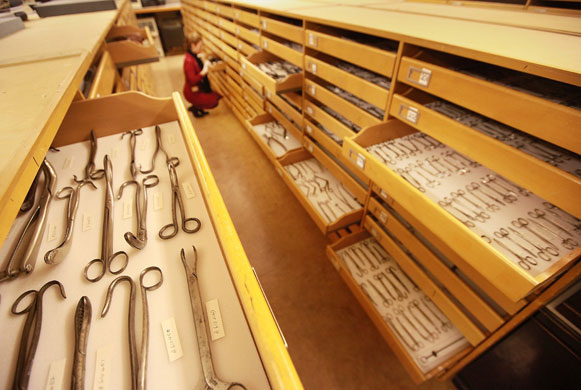
Most of the medical history objects crammed into Blythe House’s cupboards and jostling for space on its shelves come from the collection of the pharmacist and philanthropist Henry Wellcome (1853-1936), and the air of barely contained chaos seems somehow to bear the echo of his exuberant, omnivorous delight in things. In the surgery room, lines of near-identical scalpels and tonsil guillotines are marshalled in drawerfuls of menace; nestling nearby are materials and skull fragments used in experiments by an English doctor interested in Neolithic trepenation; German WWI cotton wool is bundled in corners; surgeons’ ornate walking sticks hang over high shelves, lasting testimony to the status anxiety of their owners. Locked up in the drugs room are the antidote cases and medicine chests sent by the publicity-savvy and lionizing Wellcome on famous adventurers’ expeditions to Everest or Brazil or the Antarctic, and thousands of jars of exotically strange natural medicines collected from around the world and inscribed with apothecary-evoking legends like ‘East Indian Blistering Fly’ or ‘Dragon’s Blood’. The room of x-ray machines crosses an eccentric inventor’s workshop with a torture chamber, and contains oddities like the Pedoscope, left-over from the days when irradiation seemed a fun way to fit shoes, and early MRI brain scan equipment disguised as Jedi helmets so as not to scare the children...

Click here to read the whole article--well worth checking out! Click here to see David Pescovitz's post on Boing Boing about the article. Visit the Science Museum's infinitely browsable "Brought To Life" website, which makes this entire collection available via beautiful photos and accessible information (and from which the above image is drawn), by clicking here. For more about the Science Museum and the Wellcome Collection, see a recent Morbid Anatomy post by clicking here.

Image: Set of 60 miniature heads used in phrenology, Manchester, 1831
The heads were made by William Bally who studied phrenology under Spurzheim from 1828 onwards. The heads may have been used to teach phrenology but were probably made as a general reference collection. A wide range of different heads are present. For instance head number 54 is that of a scientific man, and head number 8 is recorded as the head of an ‘idiot.’ © The Science Museum

Tuesday, March 3, 2009

Behind The Scenes of The Science Museum's Medical History Collection


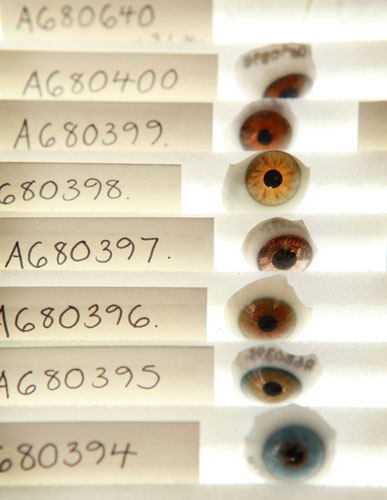
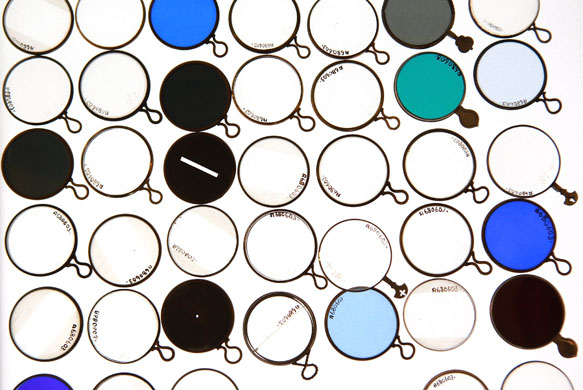
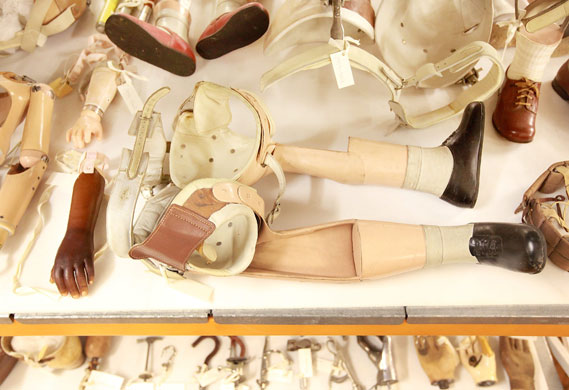
Rare and unseen items from the Science Museum's object store, from the Gaurdian.co.uk slideshow. Copy reads: "Many objects in the Wellcome Trust collection, held by the Science Museum, will be on view for the first time in the museum's new multimedia resource "Brought to Life: Exploring the History of Medicine."

Click here to see full slide-show and find out more about the images. For more on "Brought to Life: Exploring the History of Medicine," see these recent posts: 1, 2, 3. To visit the "Brought to Life" web exhibition, click here. For more visual exploration of the back room of the Wellcome Trust, see the Brothers Quay's "Phantom Museum."

Thanks to Lisa O'Sullivan, Senior Curator of Medicine at the Science Museum, for the tip! And congratulations on the fantastic website.