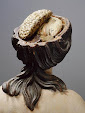
Click image to see larger version. For more on phenakistoscopes, click here.
Found on the la Meduse et le Renard website.


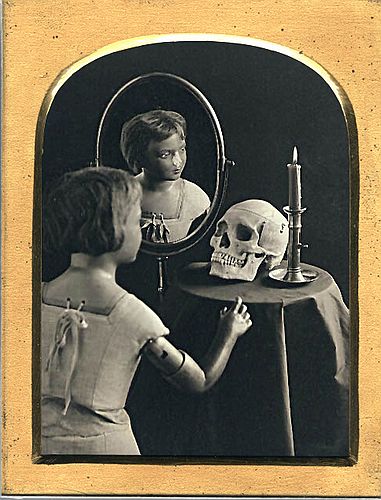

Zoe Beloff, artist and archivist and Aaron Beebe, Director of The Coney Island Museum
Date: TOMORROW! Friday, August 28th
Time: 8:00 PM - Sharp
Admission: $5.00
Wine will be served
A discussion with Zoe Beloff, artist and archivist and Aaron Beebe, Director of The Coney Island Museum
The Coney Island Amateur Psychoanalytic Society was a unique organization which flourished from 1926 through the early 1970s. Members, most of them working people from a wide variety of cultural backgrounds, were filled with the desire to participate in one of the great intellectual movements of the 20th century. The exhibition currently on view at the Coney Island Museum presents a range of their activities which reveal an incredibly brave, unapologetic exploration of their inner lives. Beloff and Beebe will present an overview of the work of the Society including the long lost “Dream Films”, the Sunday lectures, plans for Dreamland and the controversy over the lost “Sigmund Freud” figure at the World in Wax Musée.
The book/DVD “The Coney Island Amateur Psychoanalytic Society and their Circle 1926-1972″(more on that here) published by Christine Burgin (June 2009) will be available for purchase.







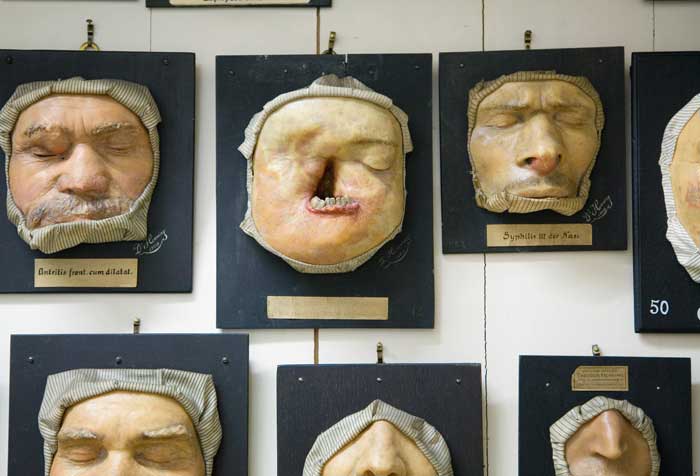
WAX MOULAGES AS CULTURAL ARTEFACTSFull info (and sign up!) here. Hope to see you there.
INVESTIGATION, CONSERVATION AND RESTORATION
INTERNATIONAL CONFERENCE, 24 - 26 SEPTEMBER 2009
The international conference is devoted to interdisciplinary communication on the aesthetic, historical and physical properties of moulages, and will permit an exchange on the use, study, conservation and restoration of the moulage collections still extant throughout the world.
Moulages, once a medium of medical documentation and education, are increasingly drawing the attention of international specialists. Through reinterpretation and reappraisal moulages have sometimes found their way into museums. Meanwhile, forgotten moulage collections continue to come to light.
Many of these moulages are in a poor state of conservation. In many institutions the preservation of moulages is endangered. Conservation and restoration are necessary to combat this urgent problem. The collections concerned must first be closely examined, however.
The conference will close this gap by presenting the first projects concerned with cataloguing and investigating the world's moulage collections, and with their use, restoration and conservation. The project Wax Moulages: Precious Craftsmanship In Danger of Extinction, funded by the German Federal Cultural Foundation and the Cultural Foundation of the German States, is among those presented. As part of that project, specialized restoration and conservation concepts will be developed on the moulages in the collection of the Deutsches Hygiene-Museum. The results will help to establish the first general standards and guidelines for the future conservation of moulages.
The conference aims to bring together custodians of moulage collections, medical scientists and medical historians, furthermore conservators/restorers, conservation scientists and museologists as well as cultural scientists and curators.
SEPTEMBER 24, 2009, THURSDAY
17:30
Opening
Welcome: Prof. Klaus Vogel, Direktor Deutsches Hygiene-Museum
Introduction: Susanne Roeßiger, Leiterin Sammlung Deutsches Hygiene-Museum
18:00
THE WAX MOULAGE: ART OBJECT AND/OR TEACHING AID IN MEDICAL EDUCATION?
Chair: Prof. Dr. Thomas Schnalke, Berliner Medizinhistorisches Museum der Charité
Presentations:
Moulages in the Museum: An Approach in Layers
Prof. Dr. Marion Maria Ruisinger, Deutsches Medizinhistorisches Museum Ingolstadt
The Model from Zürich: Wax Moulages in Medical Education
Dr. Michael Geiges, Moulagenmuseum der Universität Zürich
Principles of Restoration
Ute Hack, Restaurierungsabteilung des Bayerischen Nationalmuseums München
Panel Discussion
20:00
Reception
SEPTEMBER 25, 2009, FRIDAY
9:00
Entrée
Chair: Dr. Sandra Mühlenberend
WAX IMPRINTING AND WAX CASTING IN CONTEMPORARY ARTS
Dr. Jessica Ullrich, Universität der Künste, Berlin
9:45-12:30
Revision of the Collections of Wax Moulages
Chair: Prof. Dr. Albrecht Scholz, ehem. Direktor des Medizinhistorischen Instituts der Technischen Universität Dresden
9:45
The Wax Project: The Locating and Recording of Moulage Collections in European Institutes, Clinics and Museums
Prof. Dr. Thomas Schnalke, Navena Widulin, Isabel Atzl, Berliner Medizinhistorisches Museum der Charité
10:30
Coffee Break
11:00
The Moulage Collection at the Scott and White Memorial Hospital in Temple, Texas/USA
Adrian Winters, Scott & White Memorial Hospital, Temple, Texas
11:30
On the Presentation and Storage Situation of the Moulage Collection at the University of Medicine in Kaunas/Lithuania
Prof. Dr. Skaidra Valiukeviciene, University of Medicine, Kaunas/Litauen
12:00
Between Sciences and Exhibition: The Wax Moulages at the Deutsches Hygiene-Museum
Dr. Sandra Mühlenberend, Deutsches Hygiene-Museum
12:30
Lunch Break
13:30-17:30
THE CONSERVATION/RESTORATION OF WAX OBJECTS
Chair: Ute Hack
13:30
On the Conservation of Wax Moulages of the Musée du Service de Santé des Armées au Val de Grâce in Paris and on the Conservation Treatment on the Collection at the Université de Montpellier
Laurence Chicoineau, freie Restauratorin, Ris-Orangis/ Frankreich
14:30
Restoring Shapes: On the Conservation of Wax Moulages at the Medical Museum of the University of Copenhagen/Denmark
Ion Meyer, Medical Museion Copenhagen
15:00
Recommendations for Transport, Exhibition and Storage of Wax Moulages
Marcus Herdin, Bayerisches Nationalmuseum München
15:30
Coffee Break
16:00
The Wax Moulages of the Deutsches Hygiene-Museum: Damage Analysis, Treatment Catalogue and Conservation
Johanna Lang, Deutsches Hygiene-Museum
16:45
Further Education via Internet: E-Learning as a Contribution to the Conservation of Art Collections
Barbara Hentschel, Dr. Angela Weyer, Hornemann Institut Hildesheim
18:00
Guided Museum-Tours
SEPTEMBER 26, 2009, SATURDAY
9:00 -11:00
THE TECHNIQUES AND NATURE OF WAX MOULAGES
Chair: Dr. Michael Geiges
9:00
The Moulages of Richard Hoffman at the Wax Collection of Dermatology "Coriolan Tataru" in Cluj Napoca/Romania
Prof. Dr. Alexandru Tataru, Universität der Medizin und Pharmazie Cluj-Napoca
9:30
The Moulages of Alfons Kroener and Paul Berliner at the Institute for Dermatology of the University of Wroclaw/Poland
Dr. Rafal Bialynicki-Birula, Medical University Wroclaw
10:00
Scientific Analysis of Wax Moulages: Composition and Damages
Dr. Patrick Dietemann, Ursula Baumer, Doerner Institut, München, Prof. Dr. Christoph Herm, Hochschule für Bildende Künste, Dresden
11:00
Coffee Break
11:30-13:30
THE CUSTODY AND UTILIZATION OF WAX MOULAGES
Chair: Johanna Lang
11:30
On the Exhibition and Storage Situation of the Moulage Collection in the Andreas Sygros Hospital in Athens/Greece
Dr. Panagiota Emmanouil, Pedeli's Children Hospital, Athen
12:00
Custody and Utilization: The Moulage Collection at the National Museum for Pathology and Anatomy in Vienna/Austria
Dr. Beatrix Patzak, Pathologisch-Anatomisches Bundesmuseum Wien
12:30
Snacks/Refreshments
13:00
The Moulage Collection of the University Hospital Hamburg-Eppendorf (UKE) -The Challenge of Transition from the Clinic to the Medical Historical Museum
Prof. Dr. Heinz-Peter Schmiedebach, Antje Zare, Institut für Geschichte und Ethik der Medizin, UKE
Comments
Prof. Dr. Thomas Schnalke und Susanne Roeßiger

An Iconography of the Flesh: The Bizarre Afterlife of Eva PerónYou can directions by clicking here and find out more about Observatory by clicking here.
Professor Margaret Margaret Schwartz
Date: Friday, August 21
Time: 8:00
Admission: $5
Wine (some of it chilled, I promise!)
When Argentine First Lady Eva Perón died in 1952, the intent was to embalm her body for display in a monument to the Argentine worker: a fitting tribute for the martyred patron saint of the working classes. This ambitious project—it was to be three times the height of the Statue of Liberty—was never realized, and when Perón was overthrown in 1955, the embalmed corpse became the new regime’s most stubborn problem and potent secret. In its thirty years in search of a permanent resting place, the embalmed body left a trail of death, insanity, and corpse-napping in its wake as Evita sympathizers sought to find the body of their saint and Evita’s enemies tried to keep the body’s whereabouts a secret. Professor Margaret Schwartz tells the story of the corpse’s afterlife and shows how Evita has stubbornly refused to die a proper death, thus rendering her corpse one of the world’s most unique and potent objects.


Classified: Contemporary Art at Tate BritainYou can find out more, see more images, and watch a video about the exhibition by clicking here. But better yet, visit it in person, if possible. A small but lively and engaging exhibition.
How we see the world is how we understand it. Things are seen in relationship to other things and actions. Connections are made, naming takes place and meaning is formulated. We all engage with the world around us in diverse ways, both actively and passively.
The meanings and names given to things are not fixed, but instead fluid. We classify and catalogue but over time these categories and attendant meanings change, as does the importance they hold for us. The medieval world view, or cosmology, bears little relationship to the way we understand our place in the world today.
The works in this exhibition are drawn from Tate Collection. They adopt various forms, suggest diverse types of interpretation and provide a means of suggesting how the different types and arrangements of material culture inform our daily life. The exhibition also makes explicit the museum's role in collecting, classifying and displaying objects. It reveals how the arrangements of objects feed into museum systems of classification and interpretation bringing a sort of order to the world.
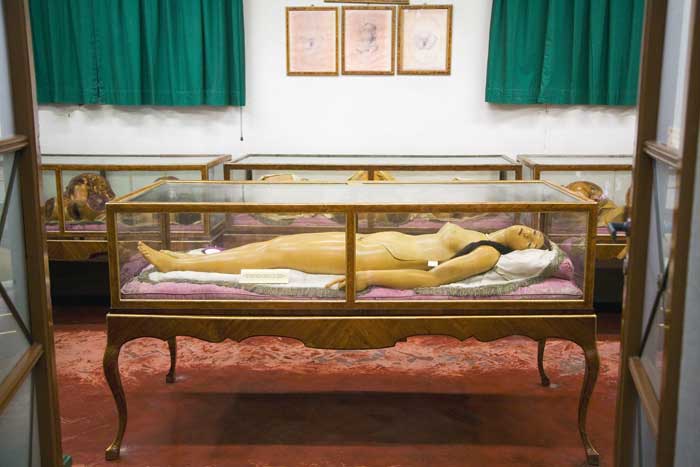
Why have we not developed an aesthetic of the inside of the body?," wonders one of the twin gynecologists in David Cronenberg's Dead Ringers. He speaks for Cronenberg, who took up the thread in an interview he and I conducted. "We have contests in which we decide who is the most beautiful woman in the world," said Cronenberg, "and yet, if you were to show the inside of that woman's body, you would have a lot of grossed-out people. Why is that? We should be able to have a World's Most Perfect Kidney contest, where women or men unzip to show their kidneys. We can't become integral creatures until we come to terms with our bodies and we haven't come remotely close to that. We're incredibly schizophrenic."Check out the whole post by clicking here.
Cronenberg's visceral aesthetic is bodied forth (so to speak) in La Specola, an 18th century anatomical museum at the University of Florence. It's fitting that the name, from the Latin for mirror (the museum is housed in a former observatory), is close etymological kin to speculum, an instrument used, as every woman knows, to dilate the opening of a body cavity for examination. La Specola is home to a collection of visible women and men, medical teaching aids that comprise some of the finest examples of ceroplasty, the art of modeling anatomical specimens in wax...

#1: An Iconography of the Flesh: The Bizarre Afterlife of Eva PerónThese events promise to be great--hope you can make it to one or both! And be sure to arrive early as events often fill up.
Professor Margaret Margaret Schwartz
Date: Friday, August 21
Time: 8:00
Admission: $5
Wine will be served
When Argentine First Lady Eva Perón died in 1952, the intent was to embalm her body for display in a monument to the Argentine worker: a fitting tribute for the martyred patron saint of the working classes. This ambitious project—it was to be three times the height of the Statue of Liberty—was never realized, and when Perón was overthrown in 1955, the embalmed corpse became the new regime’s most stubborn problem and potent secret. In its thirty years in search of a permanent resting place, the embalmed body left a trail of death, insanity, and corpse-napping in its wake as Evita sympathizers sought to find the body of their saint and Evita’s enemies tried to keep the body’s whereabouts a secret. Professor Margaret Schwartz tells the story of the corpse’s afterlife and shows how Evita has stubbornly refused to die a proper death, thus rendering her corpse one of the world’s most unique and potent objects.
#2: The Coney Island Amateur Psychoanalytic Society and their Circle 1926-1972
Zoe Beloff, artist and archivist and Aaron Beebe, Director of The Coney Island Museum
Date: Friday, August 28th
Time: 8:00 PM - Sharp
Admission: $5.00
Wine will be served
A discussion with Zoe Beloff, artist and archivist and Aaron Beebe, Director of The Coney Island Museum
The Coney Island Amateur Psychoanalytic Society was a unique organization which flourished from 1926 through the early 1970s. Members, most of them working people from a wide variety of cultural backgrounds, were filled with the desire to participate in one of the great intellectual movements of the 20th century. The exhibition currently on view at the Coney Island Museum presents a range of their activities which reveal an incredibly brave, unapologetic exploration of their inner lives. Beloff and Beebe will present an overview of the work of the Society including the long lost “Dream Films”, the Sunday lectures, plans for Dreamland and the controversy over the lost “Sigmund Freud” figure at the World in Wax Musée.
The book/DVD “The Coney Island Amateur Psychoanalytic Society and their Circle 1926-1972″(more on that here) published by Christine Burgin (June 2009) will be available for purchase.
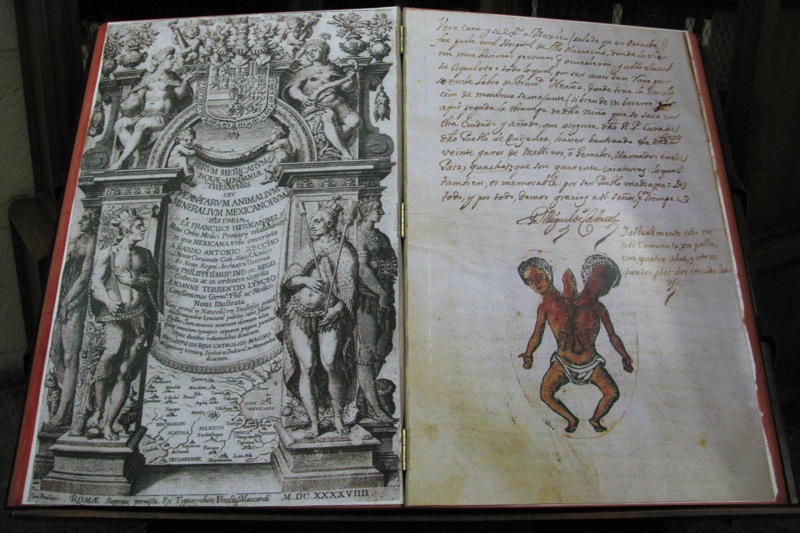
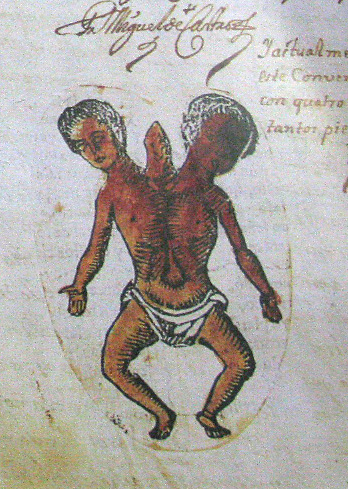
I thought you would be interested in seeing this item I came across while on vacation last week. Attached is a picture of a manuscript about a girl born with two heads. It is kept in the Biblioteca Francisco de Burgoa in the ex-monastery of Santo Domingo in the city of Oaxaca, Mexico. I'm guessing from the roman numerals on the bottom right of the left-hand page that it is from 1649. Unfortunately, it was storming, and the light was too low for me to be able to capture the script any better. The library is very beautiful, I recommend visiting if you are ever in southern Mexico.You can visit the website for the Biblioteca Francisco de Burgoa by clicking here. You can see some of Katherine's work by clicking here. Click on top image to see larger version.
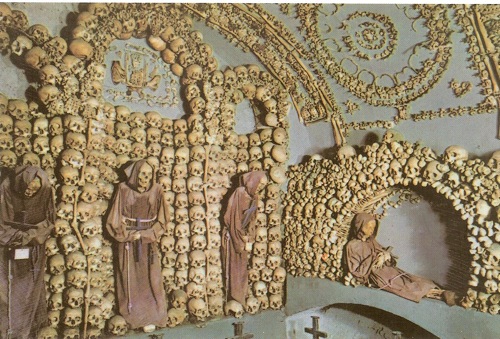

[Anatomical Fugitive Sheets] depict the human body through labelled illustrations, often using a three-dimensional 'pop-up' device of superimposed flaps, which can be raised in sequence to display the internal anatomy of the male or female figure. The fugitive sheet thus mimics the act of dissection. They were a popular instructional aid in the 16th century and many were produced in vernacular languages which could be read by a lay audience interested in the workings of the human body.To read the full original post and learn more about anatomical fugitive sheets, click here. You can watch the videos by clicking here. You can view the still images by clicking here and typing in "anatomical fugitive sheet."
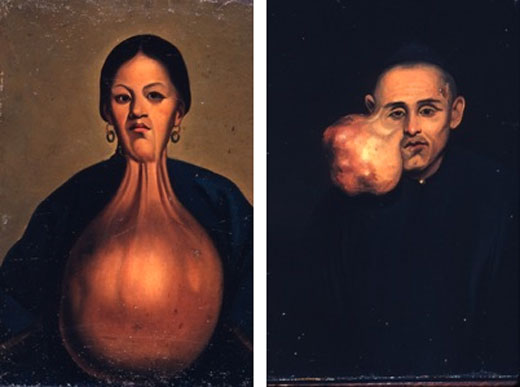




Scott Holloway’s current work centers on the holy relics of Saints and biblical figures as highly detailed anatomical icons. Holloway fuses these images with passages from the Bible and text from medical treatise, sprinkled with a bit of Surrealism. Working with oil on panel as well as mixed media, Holloway’s pieces conjure up images torn from an old anatomy book, an icon that emerged from an unknown religion and skulls that remind us of our own mortality.To find out more about the show, click here. To see more of his work (as shown above) click here.
Born in Bellingham, Massachusetts in 1969, Holloway discovered his talent at an early age. Encouraged by his teachers to pursue an art career, he explored realism in the tradition of the Northern Renaissance. His efforts won him several awards for his work in the late 1980s. In the 1990s, Holloway spent four years studying the oil painting techniques of the Old Masters at Montserrat College of Art in Beverly, Massachusetts.
Since then, Holloway has been working steadily from his studios in Worcester, and exhibiting his work at area galleries as well LA, NYC, Berlin and London. “I love to work with concepts. I have also created a Madonna and Child series. These works at first appear to the viewer as religious icons. But if you look closer, you will notice I have included an underlying ‘femme fatale’ theme using a lot of ironic symbolism” states Holloway.


The tattoo on Olivier Lux’s chest, living in Belgium and Morbid Anatomy’s great fan, was tattooed by One More Tattoo Studio in Luxemburg-City. It represents Annie Jones Elliot, a well known bearded lady who I chose because of her particular femininity. The « tattooed guy » also collects all manner of things relating to other bearded ladies, especially Clémentine Delait of France.Thanks so much, Oliver, for sending this photo and story along.
For reminder (thanks Wikipedia!), Annie Jones-Elliot (c. 1860 – 1902) was an American bearded woman, born in Virginia. She toured with showman P. T. Barnum as a circus attraction. It is unconfirmed if this was a case of Hirsutism or an unrelated genetic condition that affects children of both sexes and continues into adult years.